


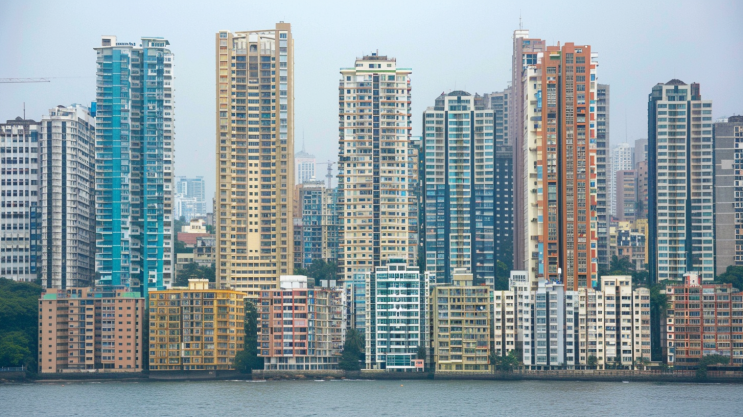
Mumbai’s commercial real estate landscape is set for a major transformation after a central government land agency awarded its largest-ever development contract for a prime rail-adjacent site in Bandra East. Valued at Rs 5,400 crore, the project marks a significant moment for public land monetisation and signals renewed confidence in structured, long-term commercial development within the city’s core growth corridors.
The project, awarded through an open and competitive tender, involves the redevelopment of a large parcel of railway land on a long-term lease basis. The winning bid not only exceeded the reserve price but also committed to a revenue-sharing arrangement that allocates nearly half of the project’s earnings to the public authority over time. Urban economists view this as a milestone in how public assets are leveraged to generate recurring income rather than one-time sales. Spread across more than 45,000 square metres, the Bandra East site allows for high-density development under a generous floor area ratio, making it suitable for a large-scale commercial district. Its strategic location near a major suburban railway station, the Bandra Kurla Complex, arterial highways, and upcoming metro links places it at the intersection of Mumbai’s most active employment and transit networks. This connectivity is expected to significantly reduce last-mile friction for workers while reinforcing Bandra East’s role as an extension of the city’s primary business hub. The tender process attracted strong interest from established domestic developers as well as global institutional capital, reflecting the growing appetite for transparent public–private partnership models.
A closely contested bidding outcome highlighted the premium attached to well-located, policy-clear land parcels in land-scarce cities like Mumbai, where regulatory certainty often matters as much as location. The project is being executed under a revenue-share framework introduced recently to ensure that public agencies retain long-term upside from land development. Under this model, the authority contributes land while the private partner is responsible for design, construction, financing, and commercialisation, with revenues channelled through monitored mechanisms. Urban policy experts say this approach balances fiscal responsibility with development efficiency and can reduce speculative holding of public land. From a city-planning perspective, the redevelopment aligns with broader goals of compact, transit-oriented growth. Concentrating commercial activity near rail and metro infrastructure supports lower carbon commuting patterns and reduces pressure on peripheral greenfield areas. If integrated with pedestrian infrastructure and energy-efficient building standards, the project could set a benchmark for climate-responsive commercial districts.
Looking ahead, the Bandra East redevelopment is expected to influence land valuations and office supply dynamics across central Mumbai. More importantly, it provides a replicable framework for unlocking underutilised public land in dense urban centres demonstrating how cities can fund infrastructure and services while steering growth toward accessible, well-connected locations.
Also Read: Mumbai BKC commercial property attracts Rs 197 crore deal
Mumbai Bandra East commercial project crosses Rs 5400 crore
