


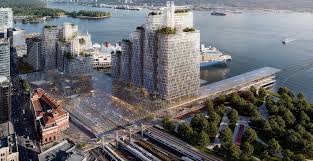
Mumbai’s luxury housing landscape is undergoing a quiet but significant shift as Bandra Bay, a waterfront stretch at Bandra Reclamation, begins to take shape as a distinct high-end residential micro-market. Over the coming months, multiple premium residential towers are expected to enter the market, signalling a new phase in the city’s long-running search for scarce, sea-facing real estate with redevelopment potential.
Located along the western coastline, Bandra Bay benefits from a rare convergence of factors that continue to drive Mumbai’s most expensive housing clusters: unobstructed sea views, proximity to established commercial districts, and improving regional connectivity. Urban planners note that as traditional luxury hubs such as Worli approach saturation, developers and investors are increasingly scanning reclaimed and underutilised waterfront parcels for long-term value creation. Bandra Reclamation has historically functioned as an extension zone rather than a destination in its own right. That perception is now changing. The area sits close to Bandra-Kurla Complex, Mumbai’s largest central business district, while remaining within short commuting distance of South Mumbai and the western suburbs. Infrastructure upgrades, including improved road access and coastal connectivity projects, have further enhanced its residential appeal. Developers preparing projects in Bandra Bay are focusing on ultra-low-density formats, large floor plates, and climate-responsive design elements such as shaded balconies, energy-efficient façades, and integrated green spaces. Industry experts say this reflects a broader shift in Mumbai’s luxury housing demand, where buyers are placing greater emphasis on liveability, sustainability, and privacy rather than just address value.
The emergence of Bandra Bay also reflects changing land economics in Mumbai. With few greenfield sites available, redevelopment and reclamation-led growth have become the primary pathways for new supply. Analysts point out that waterfront projects carry higher construction and compliance costs, but also offer long-term pricing resilience due to limited supply and enduring lifestyle appeal. From a civic perspective, the transformation of Bandra Bay raises important questions around coastal regulation, public access, and environmental resilience. Urban development specialists stress that future growth must balance private investment with shoreline protection, pedestrian-friendly public spaces, and climate-adaptive planning, particularly as sea-level rise and extreme weather events increasingly shape Mumbai’s urban agenda. For the residential market, Bandra Bay represents more than a new luxury address. It signals how Mumbai’s real estate growth is expanding outward from established cores into carefully positioned micro-markets shaped by infrastructure, planning policy, and changing buyer expectations. If executed responsibly, the precinct could help redistribute luxury housing demand while reducing pressure on older neighbourhoods.
As project launches unfold, the true test for Bandra Bay will lie in whether it can sustain long-term value without replicating congestion and exclusivity challenges seen elsewhere. Its evolution will be closely watched as a case study in how Mumbai accommodates high-end growth while navigating environmental limits and equitable urban development.
Also Read: Navi Mumbai Housing Prices Surge On Infrastructure Push
Mumbai Bandra Bay Emerges As New Luxury Waterfront Hub
