


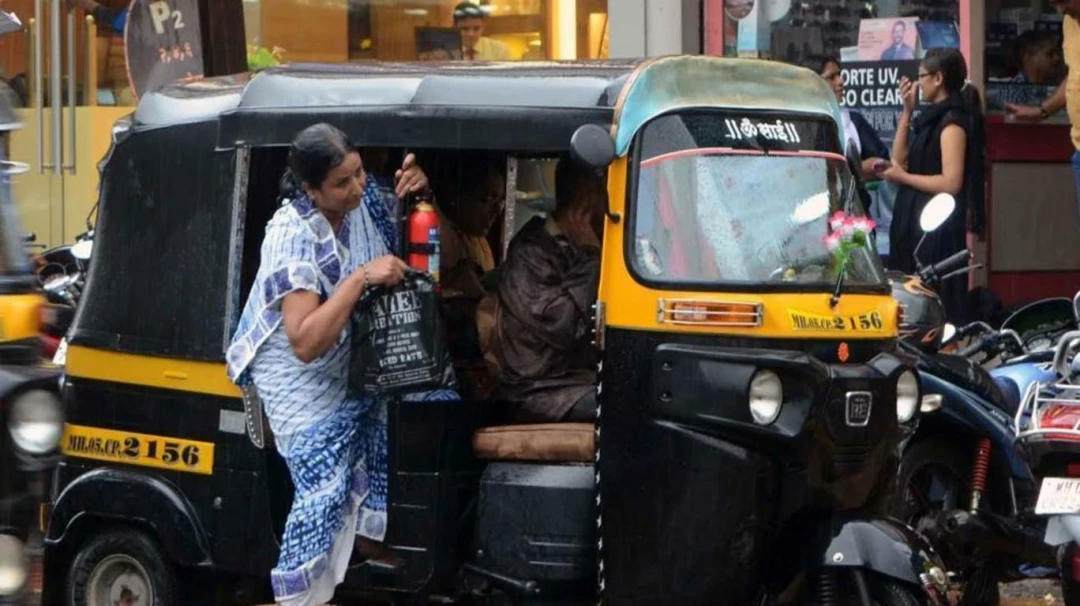
Mumbai’s daily commuters are facing an escalating challenge with auto rickshaw drivers, as new traffic department data reveals an average of more than 1,000 e-challans issued each day in 2024 for refusal to ply passengers. The annual figure stands at a staggering 3.69 lakh challans—marking a 282% increase from 2022, when 96,678 such cases were recorded.
Officials from the city’s traffic police attribute the rise to intensified enforcement measures, noting that refusals not only inconvenience commuters but also contribute to traffic chaos in busy junctions. Excess passenger carriage, another frequent violation, has nearly doubled in two years, reaching one lakh cases in 2024 from 53,611 in 2022. Transport union representatives argue that systemic measures could ease the problem. A long-delayed rooftop indicator scheme, they say, would help passengers quickly identify whether an auto is available, occupied, or off-duty. The proposal included a coloured light signal system, but it was never implemented. Union officials also called for the wider rollout of app-based booking solutions such as Yatri Mitra, which could ensure autos reach passengers directly and fares are charged strictly by the meter.
Police records further show an alarming rise in other offences. Drink driving cases among auto drivers jumped from just two in 2022 to 189 in 2024. Pollution compliance is also slipping, with 1,923 challans issued last year for non-possession of valid PUC certificates, compared to 768 in 2022. Commuter rights advocates point to recurring incidents of passenger harassment. In one recent case, two women travelling at night alleged they were threatened by a driver who refused the metered fare, demanding an inflated sum instead. Their attempts to lodge a complaint reportedly failed to elicit meaningful police support.
Activists stress the need for targeted enforcement in areas known for high refusal rates, such as near railway stations where shared-auto lanes dominate. They argue that traffic police presence in these zones would deter drivers from cherry-picking passengers. Additionally, they call for an overhaul of the transport department’s grievance redressal system, which is often criticised as ineffective. Some driver unions maintain that a minority of errant operators tarnish the image of the entire community. They recommend increasing the number of legal, RTO-approved share-auto stands with transparent rate boards to reduce fare disputes and improve commuter trust.
While the enforcement drive has brought violations to light, the sheer volume of challans suggests a deeper behavioural and systemic problem. Unless reforms in enforcement, technology adoption, and passenger services are implemented in tandem, Mumbaikars may continue to battle the daily uncertainty of finding a fair and willing ride.
Also Read : Mumbai WR Launches Three-Year Strategy to Improve Services and Rail Infrastructure
