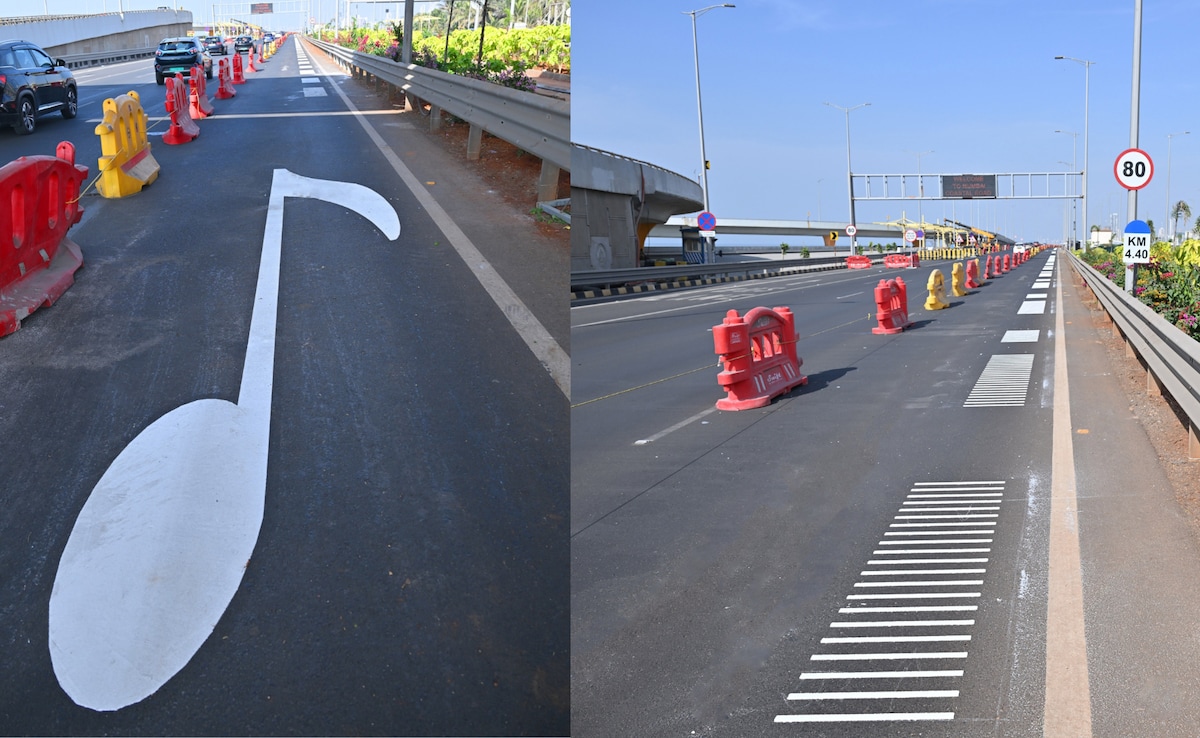
The Brihanmumbai Municipal Corporation has moved to restrict access to a recently introduced musical road feature along Mumbai’s coastal corridor following sustained objections from residents in south Mumbai. The decision to barricade the stretch, located near Breach Candy, reflects growing tensions between urban design innovation and liveability in densely populated neighbourhoods.
The experimental installation—often described as a “melody road”—was designed to play a tune through engineered grooves embedded in the road surface when vehicles pass at a specific speed. While the concept has been implemented in parts of Europe and Asia, its introduction in Mumbai marked a first for India. However, within weeks of operation, concerns emerged over its impact on surrounding residential areas. Residents living along the coastal stretch reported persistent sound disturbances, particularly due to the repetitive nature of the audio generated by passing vehicles. Although municipal assessments indicated that noise levels remained within regulatory thresholds, civic officials acknowledged that compliance with decibel norms alone may not fully address the lived experience of residents, especially in high-density urban environments.
The move to limit access to the melody road underscores a broader governance challenge: balancing infrastructure-led placemaking with community well-being. Urban planners note that while such features can enhance user experience and create identity for new infrastructure, their placement within residential zones requires careful evaluation of acoustic spillover, behavioural patterns, and long-term acceptability. The affected stretch lies along the Mumbai Coastal Road, a flagship mobility project aimed at reducing congestion and improving north-south connectivity. As cities increasingly invest in large-scale transport corridors, there is a parallel push to integrate design elements that go beyond functionality. However, experts argue that these interventions must align with the principles of inclusive and people-first urban planning.
Civic representatives and resident groups have also flagged the need for clearer guidelines on introducing sensory infrastructure—such as sound and light installations—within urban transport networks. In cities like Mumbai, where mixed land use is common, even minor design interventions can have amplified effects on surrounding communities. Municipal officials have indicated that the stretch may be reopened selectively, potentially during weekends or designated periods, suggesting a calibrated approach rather than a complete rollback. This signals an attempt to retain the innovation while mitigating its unintended consequences.
The episode highlights an evolving shift in urban governance, where citizen feedback is increasingly shaping infrastructure decisions. As Mumbai continues to expand its transport network, the focus is likely to move beyond capacity creation to include quality-of-life considerations, ensuring that infrastructure development supports both mobility and urban well-being in equal measure.
Mumbai Authorities Restrict Melody Road Over Noise Issues