


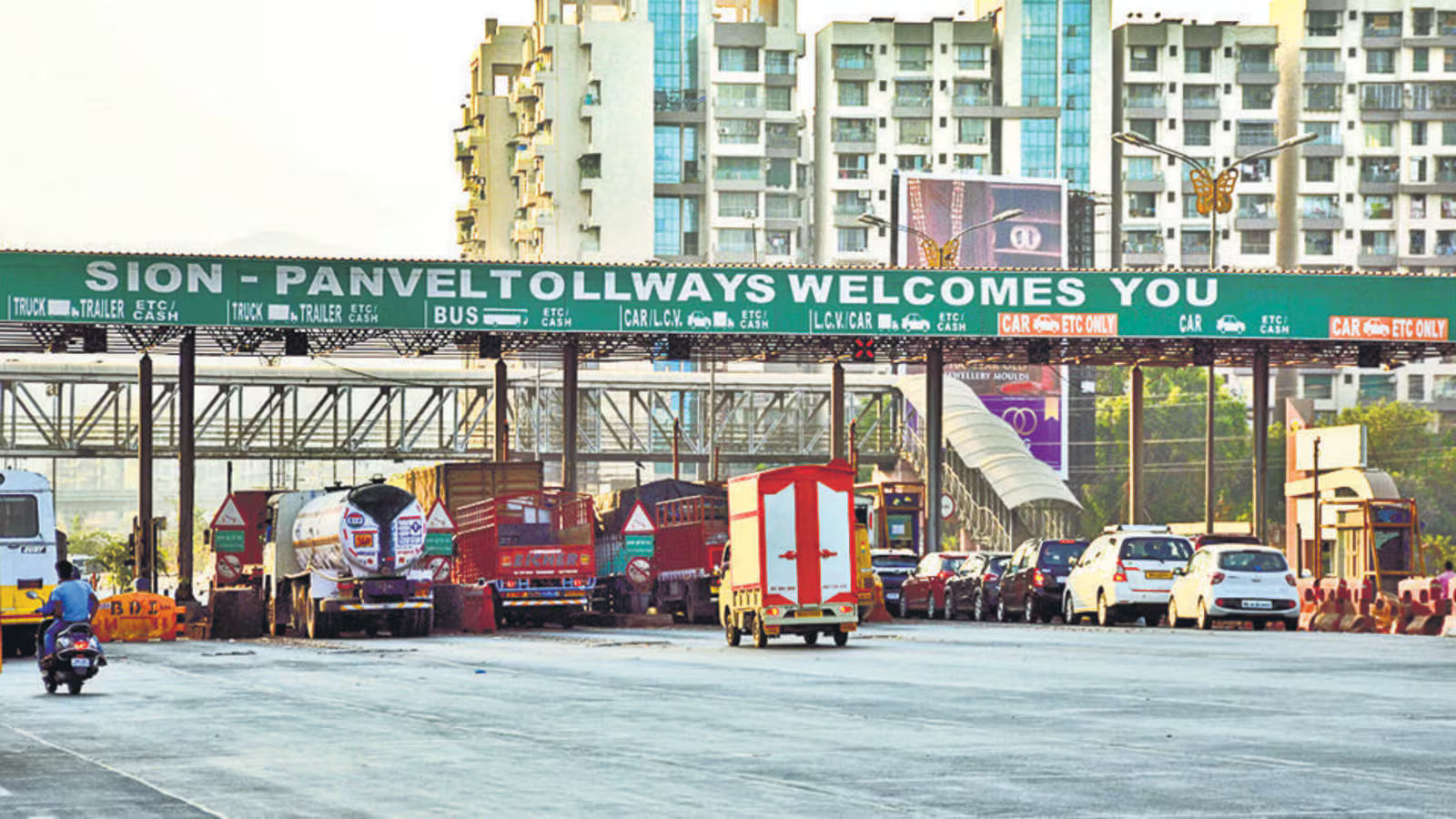
Heavy and commercial vehicles entering Mumbai will continue to pay toll at the city’s five entry points until September 2029, after the Maharashtra State Road Development Corporation (MSRDC) decided to extend toll collection to recover unpaid compensation to its contractor. The extension, nearly three years beyond the original November 2026 deadline, was taken to cover a ₹900-crore shortfall arising from last year’s waiver of toll for passenger cars and small vehicles.
The waiver, announced by the previous government in the run-up to elections, was executed without a robust compensatory mechanism, leaving the state exchequer with an unsustainable fiscal burden. MSRDC confirmed that Mumbai Entry Point Limited (MEPL), the private concessionaire managing the toll plazas, will continue collections from trucks and buses until dues are cleared. Officials clarified that while private cars and light vehicles remain exempt, the brunt of the decision falls on commercial operators, who already face rising fuel and compliance costs. Industry experts say the move may push up logistics and freight charges across the Mumbai Metropolitan Region, further straining urban mobility and supply chains.
Parallelly, MSRDC has formally asked the Brihanmumbai Municipal Corporation (BMC) to assume maintenance of 17 flyovers, five subways and two bridges earlier managed by MEPL. In a letter to the civic body, MSRDC’s engineering division stated that operational and structural upkeep of these assets will now shift to the municipal authority. However, toll collection rights and revenue from commercial activities linked to these structures will remain with MSRDC until the extended recovery period ends. Transport analysts highlight that the issue goes beyond toll recovery and reflects deeper gaps in infrastructure financing. Toll revenues, originally levied in the late 1990s to finance 55 flyovers across Mumbai, have remained politically contentious. Successive governments promised exemptions while continuing to rely on toll income to fund road assets. The absence of long-term sustainable financing models has left both commuters and businesses bearing indirect costs.
Civic engineers have already raised concerns about the deteriorating condition of several flyovers, citing potholes and delayed repairs. Public pressure has mounted on the BMC to ensure timely maintenance, with many residents assuming that the corporation had already been responsible for these assets. Officials from the civic body confirmed they have taken over only three flyovers so far, promising further review of the remaining structures. Political observers note that the toll extension underscores the financial strain caused by populist measures, including pre-election schemes. With the state budget already facing a revenue deficit of nearly ₹46,000 crore for 2025–26, questions remain on whether future infrastructure investments can be funded without burdening urban citizens through indirect levies.
For now, Mumbai’s freight and logistics ecosystem continues to bear the toll. The decision underscores the urgent need for transparent, long-term planning in transport finance, one that prioritises both sustainability and public trust over short-term political gains.
Also Read : Pune PMPML Blacklists Contractor Over Illegal Bus Stop Construction Senior Official Transferred
