


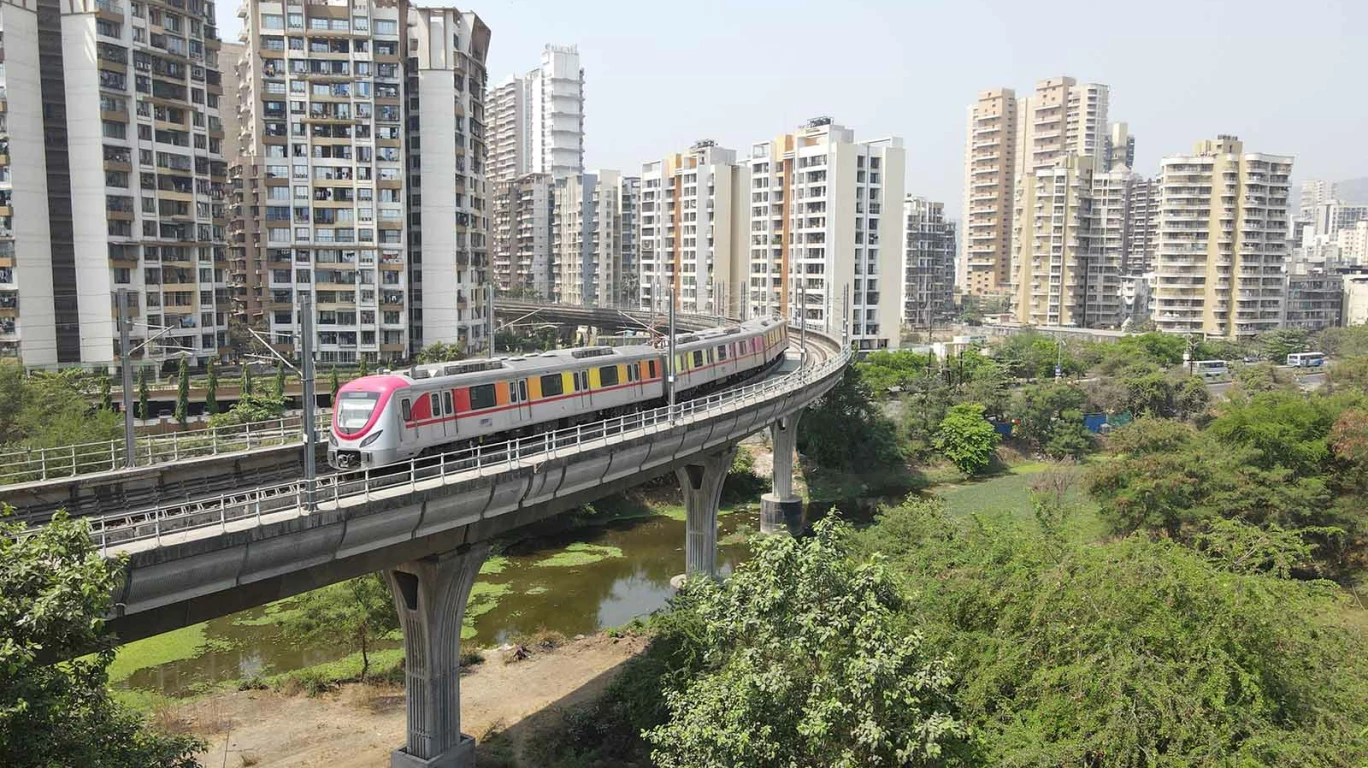
Mumbai’s long-awaited Metro Line 3, popularly known as the Aqua Line, is expected to be fully operational by Dussehra, providing the city with its first fully underground metro system. Officials confirmed that the Commissioner of Metro Railway Safety has already inspected the Worli–Cuffe Parade stretch and a final safety review is due, paving the way for operations to commence as early as late September or early October.
At present, only the 22.46 km segment between Aarey and Worli is functional, while the remaining 10.99 km stretch covering South Mumbai is undergoing final trials. Once commissioned, 11 new stations will connect areas such as Colaba, Worli, Aarey, Santacruz, and both Mumbai airports. For daily commuters, particularly those who rely on long suburban train rides and congested roads, the Aqua Line will provide seamless cross-city connectivity for the first time. The corridor, spanning 33.5 km from Colaba to Aarey, has been rolled out in phases. The Aarey–Bandra Kurla Complex segment opened in October 2024, followed by the Bandra Kurla Complex–Worli section in May 2025. Both stretches have already witnessed strong commuter uptake, with officials noting that the Aqua Line crossed one crore ridership in August.
A milestone was achieved in July when the Mumbai Metro Rail Corporation energised the 25 kV traction line across the entire alignment, confirming readiness for full-scale operations. Once fully operational, the line is expected to cater to 4.5 lakh passengers daily, with ridership projected to reach 6.5 lakh in the coming years. Experts say the Aqua Line will significantly reduce travel time between South Mumbai and the western suburbs, easing the burden on over-crowded suburban trains and traffic-clogged roads. Most importantly, it will provide long-promised direct rail connectivity to Mumbai’s airports, aligning with global benchmarks in urban mobility.
The Metro 3 project has faced multiple delays, cost escalations, and resistance over environmental concerns, particularly regarding its Aarey depot. However, its completion is being hailed as a breakthrough in Mumbai’s journey towards sustainable, low-carbon public transport. Urban mobility experts emphasise that shifting large volumes of commuters from private vehicles to underground metro services can reduce both congestion and vehicular emissions, critical for building a greener and more liveable city.
As Dussehra approaches, Mumbai stands on the brink of a transport transformation. If approvals are secured on schedule, the Aqua Line could soon emerge as a true urban lifeline—delivering faster, safer, and climate-conscious travel for lakhs of citizens each day.
Also Read : MMRDA Penalises Contractor And Blacklists Subcontractor After Metro Line Nine Mishap
