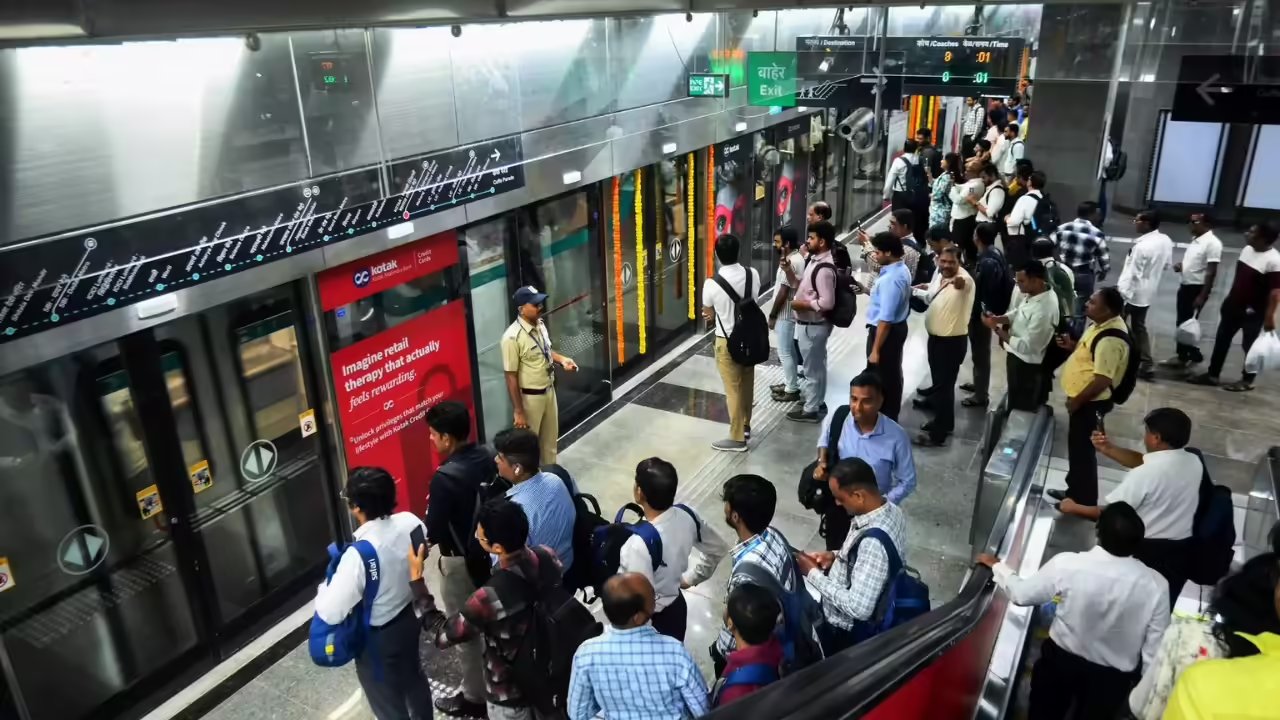
Mumbai Aqua Line Internet Dispute Leaves Metro Commuters Offline Underground
Even as Mumbai’s Aqua Line has been celebrated for completing the city’s first fully underground metro corridor, commuters remain cut off from the digital world during travel. The absence of internet connectivity inside the trains two weeks after the final stretch between Worli and Cuffe Parade was opened has sparked growing frustration and questions about planning lapses in a project positioned as a model of modern mobility.
While internet access is available in the concourse areas across all 27 stations, there is no mobile or WiFi range once passengers board the trains. The reason, officials confirmed, lies in a dispute between the Mumbai Metro Rail Corporation Limited (MMRCL) and the service provider engaged to deliver connectivity services.According to senior officials, the service provider has insisted on installing its own fibre-optic cables along the corridor, claiming it would reduce operational expenses. However, the MMRCL, which has already spent over ₹100 crore to lay the required network infrastructure, has refused to allow parallel cabling, terming it an unnecessary duplication of resources. Negotiations between both parties have been ongoing, but no resolution has yet been reached.
For nearly 1.8 lakh daily riders, the blackout has been a letdown, particularly as the Aqua Line’s 33.5-kilometre route between Aarey JVLR and Cuffe Parade was touted as a showcase of integrated urban infrastructure. The lack of in-transit connectivity is not just a matter of convenience it raises questions about the readiness of Mumbai’s transport systems to support a digitally enabled commuter experience, especially in a metropolis aspiring to world-class urban standards.
Beyond connectivity issues, MMRCL also faces pressure over the rehabilitation of political party offices displaced during construction near the Vidhan Bhavan Metro station. While temporary relocation was provided, the original 4.2-acre site has since been leased to a major financial institution for ₹3,472 crore, leading to a new round of negotiations between the corporation and the state government on alternative space in Nariman Point.Experts point out that these delays and disputes, though administrative in nature, reflect deeper challenges in coordination among urban authorities, contractors, and service providers. As Mumbai expands its Metro footprint to promote zero-emission, equitable mobility, ensuring smooth integration of technology, governance, and accessibility remains essential.
For now, the Aqua Line continues to glide silently beneath the city efficient in motion but digitally disconnected. The hope is that the ongoing dialogue will soon restore the missing digital lifeline, aligning the Metro’s promise of connectivity with the city’s broader vision of sustainable, smart urban transport.