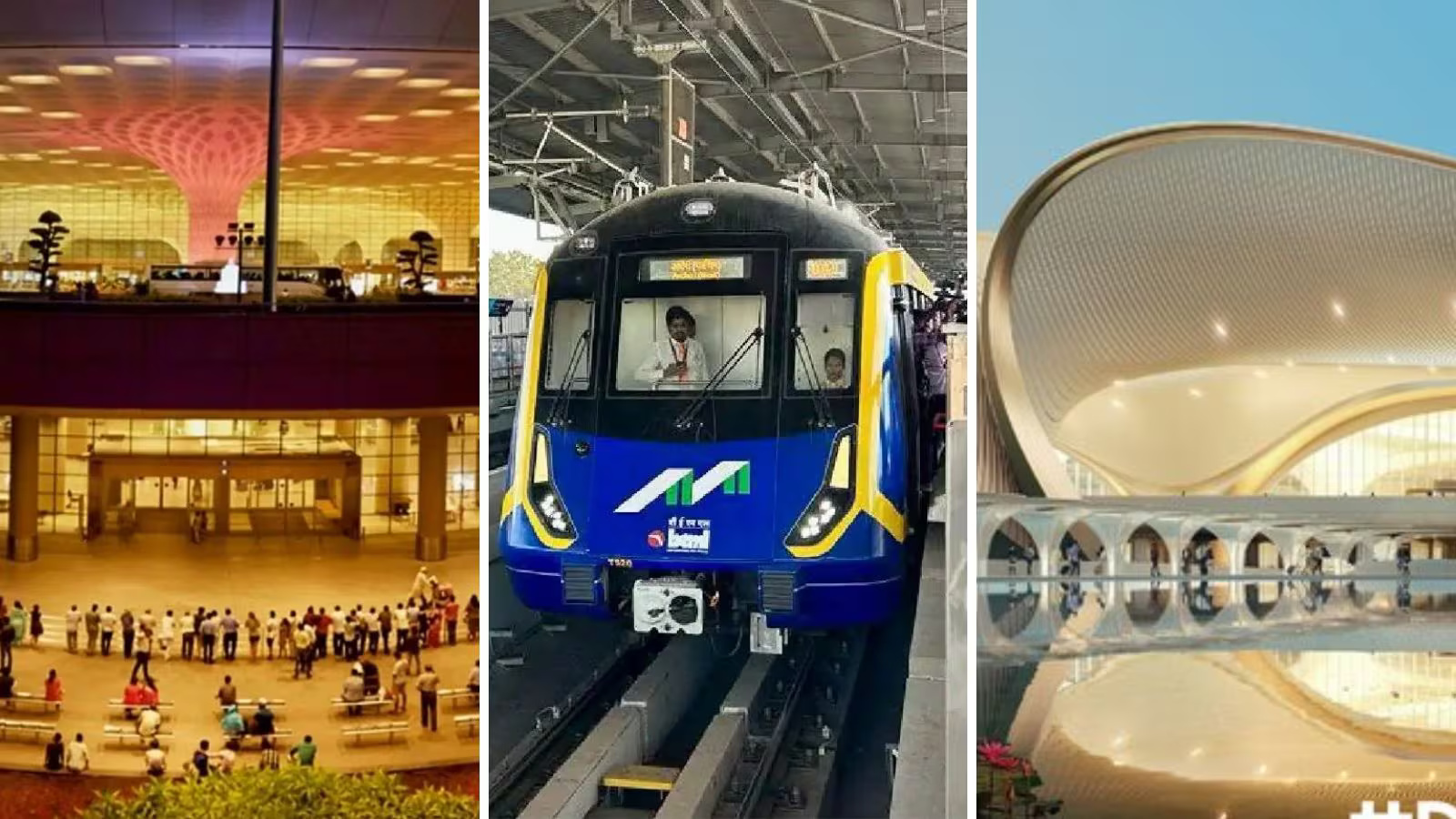
Mumbai is set to transform inter-airport travel with the formal approval of Metro Line 8, popularly known as the Gold Line, which will connect Chhatrapati Shivaji Maharaj International Airport (CSMIA) with the upcoming Navi Mumbai International Airport (NMIA). This 35‑kilometre corridor, combining 25.8 km of elevated track and 8.2 km underground, promises a fast, reliable alternative to road travel, offering both commuters and tourists a predictable and time-efficient journey between the two major aviation hubs.
Officials note that the Gold Line, being implemented through a public–private partnership with CIDCO as the nodal agency, will traverse strategic points including Kurla, Mankhurd, Vashi, Nerul, and Belapur. Industry experts anticipate that the metro could carry up to 900,000 passengers daily, significantly easing congestion along eastern corridors like the Eastern Express Highway, while also supporting NMIA’s operational readiness from its launch. “For years, travellers had limited options for moving between the two airports, relying solely on road transport prone to heavy traffic. The Gold Line provides a seamless solution,” said an urban mobility official. The current 75–120 minute commute by road is expected to reduce to a 30-minute metro ride, enhancing reliability for connecting flights and long-haul travellers alike.
From a broader urban planning perspective, the Gold Line exemplifies integrated city transport. By linking residential, commercial, and airport hubs, it not only improves last-mile connectivity but also contributes to reducing vehicular emissions on heavily trafficked routes. City planners highlight that such projects align with sustainable urban development goals, advancing Mumbai towards a low-carbon, equitable transport network. Tourism and business sectors are likely to benefit immediately. Predictable transit between airports reduces stress for international passengers, while enhanced connectivity along the route improves accessibility to key urban centres in Navi Mumbai. Moreover, experts suggest that efficient mass transit options will support economic growth by streamlining logistics, boosting regional trade, and encouraging sustainable mobility habits among residents and visitors.
The project is expected to enter the tendering phase shortly, with full construction spanning several years. The Gold Line is being designed as a flagship example of smart, zero-carbon urban transit that balances engineering innovation with environmental and social considerations. Once operational, it will redefine airport connectivity in the Mumbai Metropolitan Region, positioning the city as a forward-looking global aviation hub.
Mumbai Approves Metro Linking CSMIA With Navi Mumbai Airport For Faster Travel