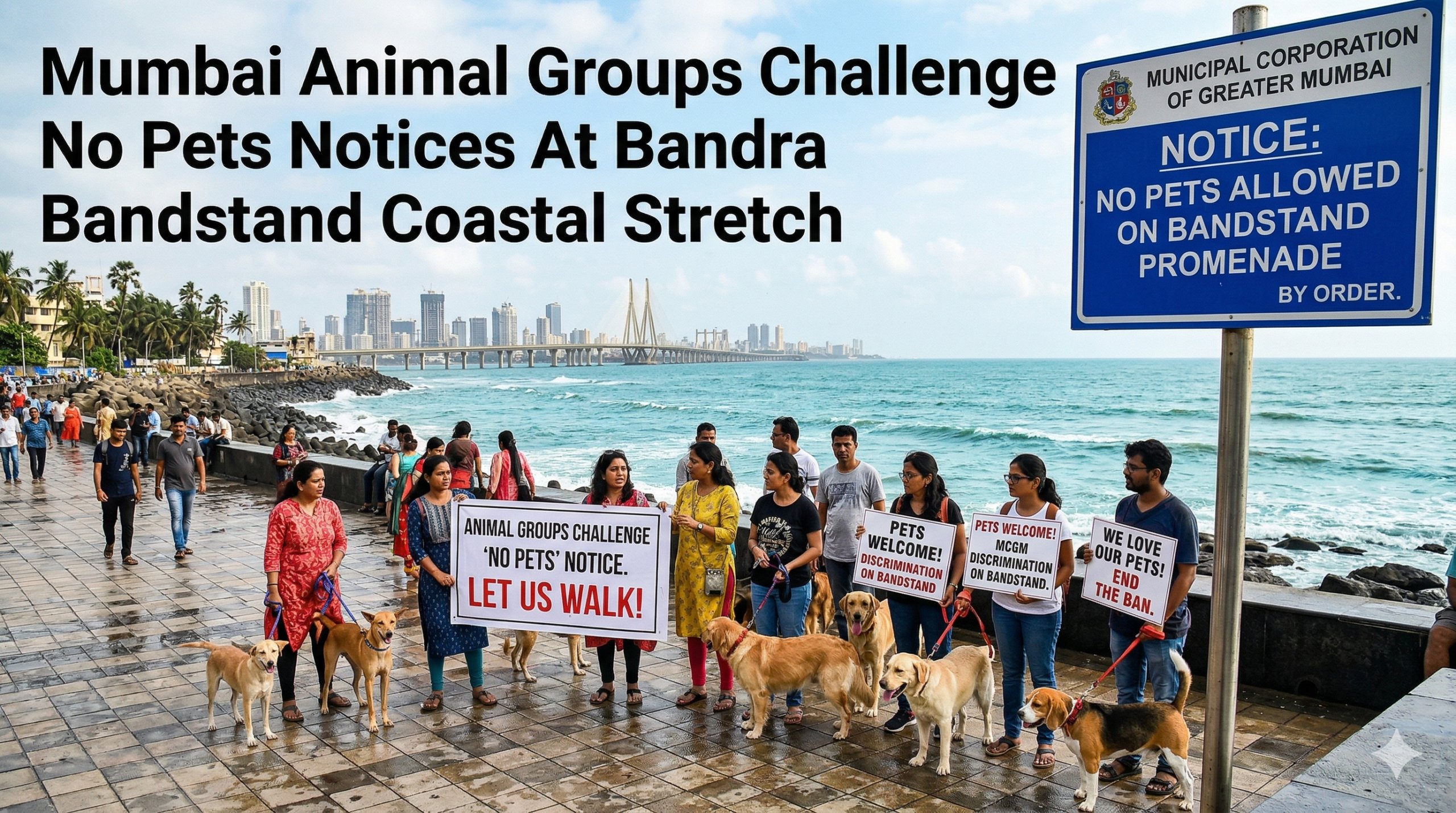
A dispute over public space usage at Bandra’s seafront has triggered a broader debate on access, governance, and inclusivity in Mumbai’s open urban areas, after animal welfare groups staged a demonstration against restrictions imposed along the Carter Road promenade. The protest highlights tensions between resident-led initiatives and the legal authority governing public infrastructure.
Activists and citizens gathered over the weekend to contest the installation of signage that sought to limit activities such as pet walking in the popular coastal stretch. Participants argued that such directives fall outside the jurisdiction of private resident bodies and should instead be regulated by municipal authorities responsible for public spaces. The Carter Road and Bandstand promenades are among Mumbai’s most visited waterfronts, drawing diverse users including families, joggers, pet owners, and informal workers. Urban planners note that such spaces play a vital role in promoting mental well-being, community interaction, and equitable access to recreational infrastructure in a densely built city.
At the centre of the dispute is the question of who defines usage norms in shared urban environments. While resident associations often advocate for maintenance and order, experts caution that informal rule-setting without statutory backing can risk excluding certain groups and undermining the inclusive nature of public spaces. Concerns have also been raised about broader accessibility, with some citizens alleging that entry restrictions have been selectively enforced. Municipal authorities have previously intervened in similar situations, removing unauthorised signage and reiterating that public promenades fall under civic jurisdiction. Officials indicate that any regulation governing activities such as pet walking or public behaviour must be aligned with established laws and city-wide policies rather than localised directives.
The episode also intersects with evolving conversations around urban animal management. As cities attempt to balance public hygiene, safety, and animal welfare, clear guidelines and infrastructure—such as designated pet zones or waste management systems—are increasingly being seen as necessary to reduce conflict. From a governance perspective, the incident reflects the need for clearer frameworks that define the role of citizen groups in managing shared spaces. While community participation is often encouraged in urban planning, it must operate within transparent and legally recognised boundaries to ensure fairness and accountability.
As Mumbai continues to invest in waterfront development and public realm upgrades, the challenge will be to ensure that such spaces remain open, accessible, and inclusive. The outcome of this dispute may shape how civic authorities and resident groups collaborate in managing the city’s limited but essential open spaces in the future.
Mumbai Animal Groups Challenge No Pets Notices At Bandra Bandstand Coastal Stretch