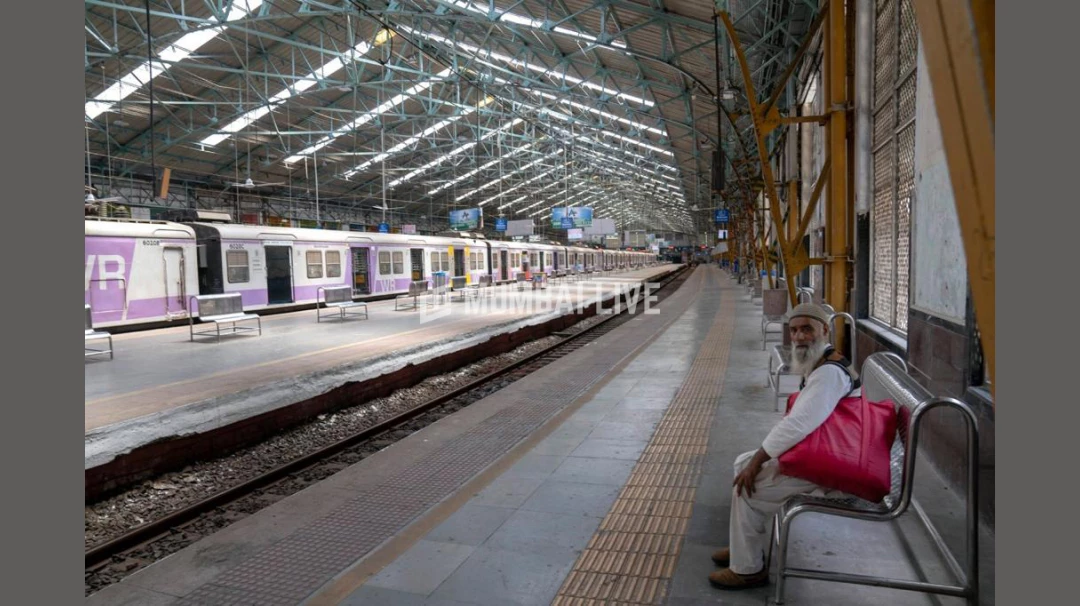
Mumbai’s uneven access to public transport has resurfaced as a major urban challenge, with a new academic study showing that nearly one-third of the city’s population continues to struggle to reach reliable mobility options. The findings highlight deep spatial and social disparities that undermine the city’s transition towards cleaner, more inclusive transport systems.
A detailed assessment by researchers from a leading engineering institute has mapped how easily residents can reach trains, buses, and metro services. The study suggests that inadequate first- and last-mile connectivity, combined with uneven service distribution, has left approximately 3.95 million people without satisfactory access to public transport. Analysts say the issue holds critical implications for congestion, air quality, and social equity. According to the study, more than half of the city—around 6.5 million residents—live in what researchers categorise as “high transit-gap zones”. These are neighbourhoods where the demand for mobility far exceeds the availability of services. Another 1.7 million residents occupy “transit deserts”, areas with high mobility dependence but very limited options. An urban planner involved in the research explained that these gaps reflect long-standing imbalances in transport investment, especially in emerging and low-income districts.
The analysis draws on three indicators: Public Transport Accessibility Levels (PTAL), social vulnerability, and transit demand. The methodology assesses distance to transit stops, frequency of services, and the reliability of connections. The researchers found a strong correlation between low PTAL scores and communities with high socio-economic vulnerability, revealing that marginalised groups are disproportionately affected.
A senior mobility expert noted that this overlap demonstrates how transport inequity reinforces wider social exclusion, particularly for households that rely heavily on affordable public mobility. The geographic divide is particularly striking. South and west Mumbai—areas with higher incomes, established rail corridors, and dense bus routes—record some of the strongest access scores. In contrast, large pockets of the north and east continue to experience weak transit availability despite significant population growth. Neighbourhoods within industrial belts and informal settlements face especially low access levels, with wards such as M East, P North, S, and T consistently ranking at the bottom.
Residents in affected areas often walk long distances to reach a bus stop or contend with infrequent train services and overcrowded corridors. Experts warn that merely expanding the number of metro lines will not resolve these challenges unless seamless integration with existing networks is ensured. First-mile and last-mile connectivity—through safe footpaths, feeder buses, cycle infrastructure, and better interchange facilities—remains critical. The study urges coordinated action between municipal authorities and metropolitan transport agencies. Recommendations include prioritising investment in neighbourhoods with the lowest accessibility scores and highest vulnerability levels. With Mumbai working towards cleaner, more equitable mobility systems, the report underscores that addressing transit deserts must be central to future planning if the city aims to advance its sustainable urban mobility goals.
Mumbai Analysis Reveals Severe Transport Gaps Impacting One Third Of City Residents