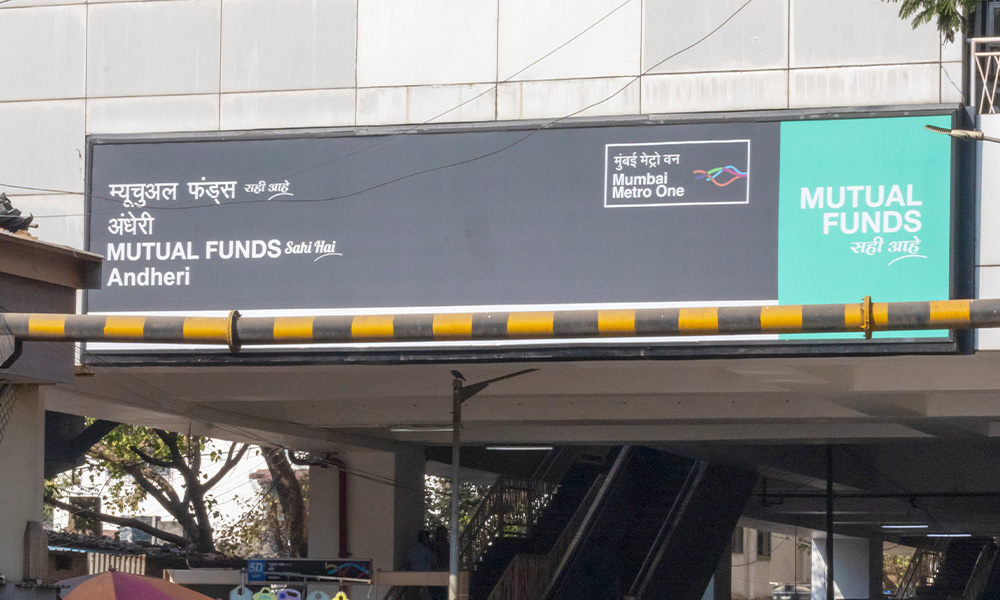
One of Mumbai’s busiest metro stations has been transformed into an unconventional platform for financial education, as the Association of Mutual Funds in India rolls out exclusive station branding at Andheri on Metro Line One. The initiative places investor awareness messaging within a high-footfall public transport space, reflecting a growing trend of using everyday urban infrastructure to communicate civic and economic information.
Andheri Metro Station, which serves nearly 1.8 lakh commuters daily, now features a refreshed visual identity centred on informed and goal-based investing. Officials associated with the project said the idea was to reach citizens during their daily routines, outside formal financial or institutional settings, and present investment concepts in a simplified, relatable manner. The branding extends across the station’s key touchpoints, including entry signage, elevators, escalators, stairway panels, platform maps, train route displays and even in-train announcements. By embedding messages throughout the commuter journey, the campaign seeks to ensure repeated exposure without disrupting passenger movement or station functionality.
A senior market regulator present at the unveiling said public transport spaces offer a rare opportunity to engage a wide demographic simultaneously. “Metro systems bring together students, professionals, senior citizens and informal workers every day. Using such spaces responsibly for public-interest messaging can significantly widen awareness,” the official noted. Industry experts see the initiative as part of a broader shift in how financial literacy is communicated in dense urban environments. Rather than relying solely on digital platforms or seminars, authorities and industry bodies are increasingly turning to physical spaces that people already trust and use regularly. Metro stations, in particular, are viewed as inclusive environments where messaging can cut across income and education levels.
From an urban design perspective, planners point out that integrating non-commercial public messaging into transport infrastructure must be handled carefully. Clear wayfinding, accessibility and passenger safety cannot be compromised. In this case, officials said the visual elements were designed to align with existing station aesthetics and avoid clutter, ensuring that mobility remains the primary function. The Andheri Metro branding also reflects the evolving role of public infrastructure in city life. Beyond moving people efficiently, transit systems are being seen as shared civic spaces that can support broader social goals, from sustainability awareness to financial inclusion. When done thoughtfully, such initiatives can enhance the everyday commuter experience rather than distract from it.
As Mumbai continues to expand its metro network, the Andheri experiment may serve as a reference point for how public spaces can be used to promote informed citizenship. Whether the approach translates into measurable improvements in financial behaviour remains to be seen, but it signals a growing recognition that urban journeys are also opportunities for learning and long-term planning.
Mumbai AMFI Takes Over Andheri Metro Station With Mutual Funds Sahi Hai Campaign