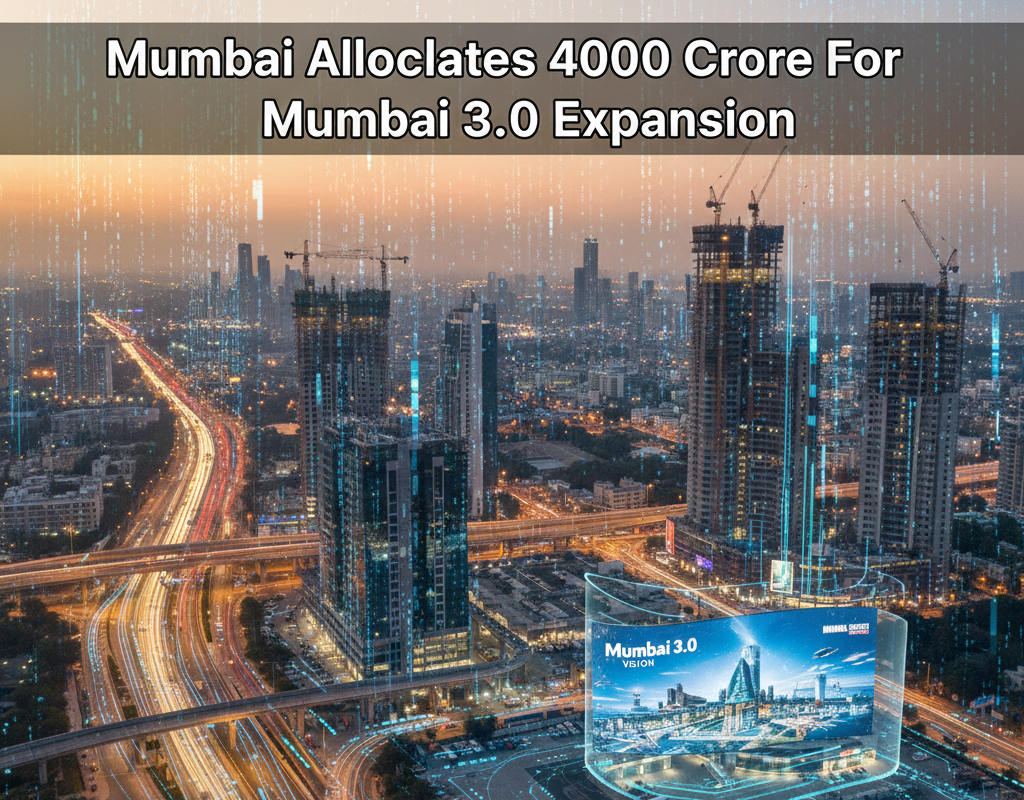
The Mumbai Metropolitan Region Development Authority (MMRDA) has unveiled its 2026–27 budget, allocating nearly 87% of the Rs 48,072.5 crore outlay to infrastructure projects, signalling a decisive push towards urban expansion and transport modernisation. Notably, Rs 4,000 crore has been earmarked for the Karnala–Sai–Chirner township, part of the broader Mumbai 3.0 decentralisation plan aimed at relieving pressure on the city’s core and creating structured economic hubs.
This is the MMRDA’s first surplus budget in nine years, projecting a marginal surplus of Rs 17 lakh after recording a Rs 7,468 crore deficit in 2024–25. The total outlay represents a 58.6% increase from the revised 2025–26 budget, while expenditure has risen by 53.5%, reflecting the authority’s aggressive capital mobilisation and fiscal consolidation. A senior urban planner observed that the substantial allocation to infrastructure, totalling Rs 42,026 crore, is expected to accelerate the completion of metro, road, and tunnel projects across the Mumbai Metropolitan Region. Metro expansions account for the largest share at Rs 13,838.8 crore, covering corridors such as Wadala–Kasarvadavali, Swami Samarth Nagar–Kanjurmarg, Thane–Bhiwandi–Kalyan, and Dahisar–Mira Bhayander. Road and elevated corridor projects have been allocated Rs 12,816.5 crore, while tunnel initiatives, including Thane–Borivli and Orange Gate–Marine Drive, receive Rs 5,543.5 crore.
Beyond transport, the budget dedicates resources to social and civic infrastructure, including Rs 731.3 crore for housing and rehabilitation, Rs 980.8 crore for water supply projects, and Rs 250 crore for climate resilience initiatives. Memorial development projects account for Rs 571.5 crore. Analysts note that this integrated approach aligns with sustainable urban development goals by combining mobility, housing, and environmental resilience in a single strategic plan. The Mumbai 3.0 initiative, with its Rs 4,000 crore allocation, is positioned as the MMR’s next urban frontier, intended to attract investment, expand employment opportunities, and support NITI Aayog’s Growth Hub framework. Additional allocations include Rs 500 crore for the Pen growth centre and Rs 100 crore for the Kharbav business park, reflecting a multi-node approach to decongestion and equitable regional development.
Funding for the budget is expected from borrowings of Rs 23,711 crore, land monetisation of Rs 11,177.95 crore, and urban transport fund collections of Rs 6,368.4 crore. Officials emphasise that disciplined capital mobilisation and sustained project delivery were key to achieving the surplus and maintaining investor confidence. The 2026–27 budget sets the stage for Mumbai’s next phase of infrastructure-led growth, strengthening transport networks, urban resilience, and decentralised economic hubs, while signalling the region’s readiness for long-term sustainable development.
Mumbai Allocates 4000 Crore For Mumbai 3.0 Expansion