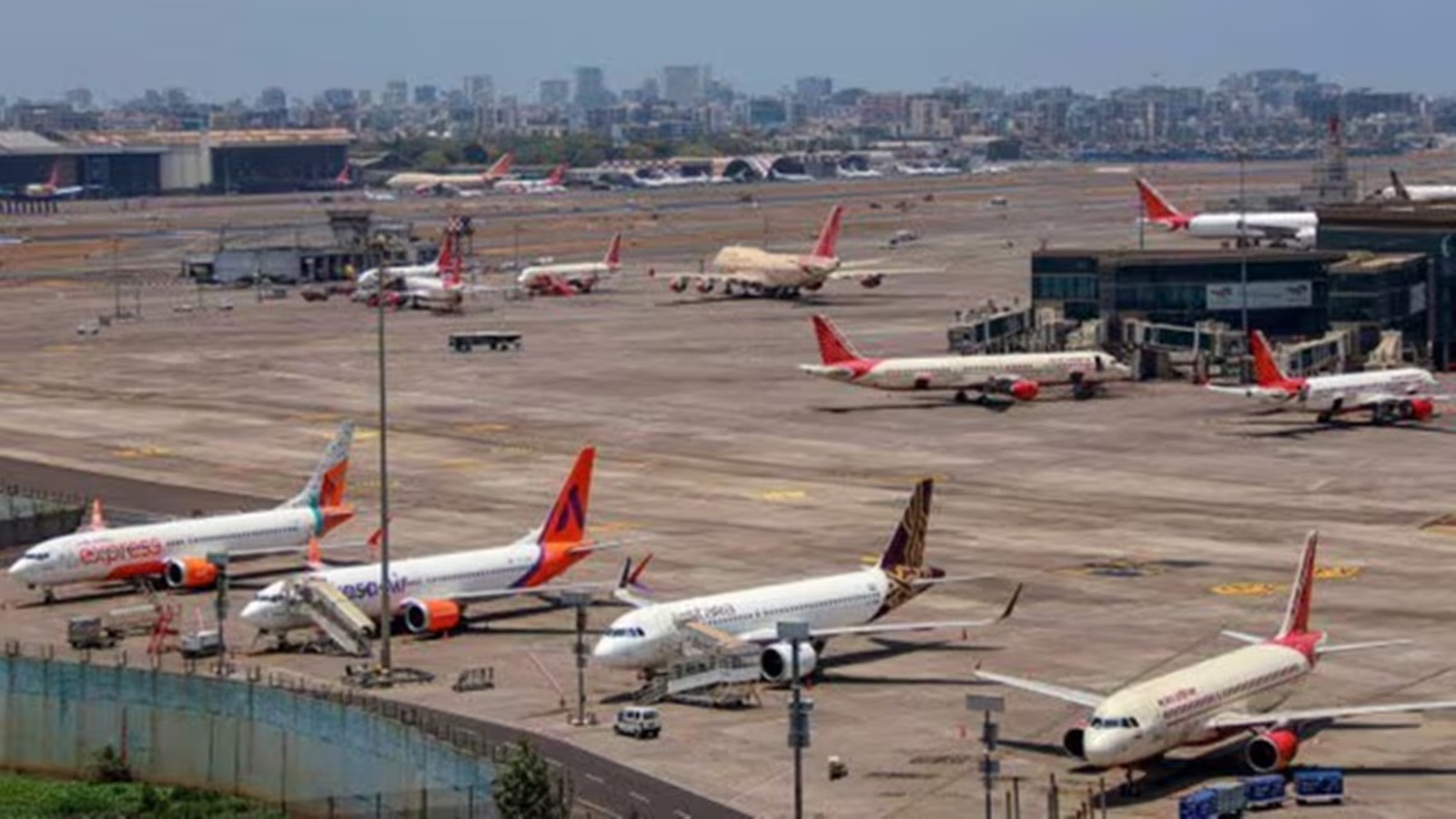
International travel through Mumbai’s primary aviation gateway faced major disruption over the weekend as airlines cancelled dozens of flights following airspace restrictions across parts of the Middle East. The cancellations at Chhatrapati Shivaji Maharaj International Airport highlight how geopolitical tensions thousands of kilometres away can quickly ripple through global aviation networks, affecting passengers, airline schedules and international business travel linked to India’s financial capital.
Airport officials reported that several arrivals and departures on west-bound international routes were called off after airlines adjusted schedules to avoid restricted air corridors. In total, 35 departing and 36 arriving flights were cancelled at Mumbai airport, as carriers scrambled to respond to sudden operational constraints linked to the ongoing Middle East crisis.The disruption forms part of a wider aviation challenge affecting multiple Indian airports. Across Delhi and Mumbai combined, more than 100 international services were cancelled as airlines reassessed flight paths through the Gulf and neighbouring regions where several countries imposed airspace restrictions.
Most of the affected flights were scheduled on routes connecting India with Europe, the Gulf and North America, many of which typically pass through Middle Eastern air corridors. Aviation analysts note that when large segments of regional airspace become inaccessible, airlines are forced to reroute flights over longer paths, reduce frequencies or temporarily suspend services. These adjustments can increase operating costs, extend travel time and create scheduling bottlenecks for aircraft and crews.Airlines have begun adjusting operations in response. Some carriers are continuing limited services on routes considered operationally safe while monitoring the evolving situation. In addition, certain airlines are planning extra flights on selected Gulf routes to help accommodate passengers whose travel plans were disrupted by the cancellations.
The impact extends beyond passenger inconvenience. Mumbai, as India’s commercial and financial hub, relies heavily on international connectivity for trade, investment flows and corporate travel. Sudden interruptions to global air routes can affect business travel schedules, cargo logistics and tourism flows, particularly for sectors that depend on rapid international mobility.Industry observers also point out that prolonged airspace disruptions can reshape airline network strategies. When geopolitical tensions affect major aviation corridors, carriers often reroute through alternative paths over Central Asia, the Arabian Sea or southern Europe—changes that may add up to 60–90 minutes of flying time on some long-haul routes.For passengers travelling through Mumbai in the coming days, airlines and airport authorities are advising travellers to verify flight schedules before heading to the airport, as further changes remain possible depending on how the regional situation evolves.
The episode underlines the interconnected nature of global aviation infrastructure. Even local transport hubs such as Mumbai’s airport—critical to the city’s economic ecosystem—remain closely tied to international air corridors and geopolitical stability. As airlines continue adjusting routes and schedules, the priority for airport operators will be managing passenger flow, providing clear travel updates and ensuring operational continuity during the disruption.