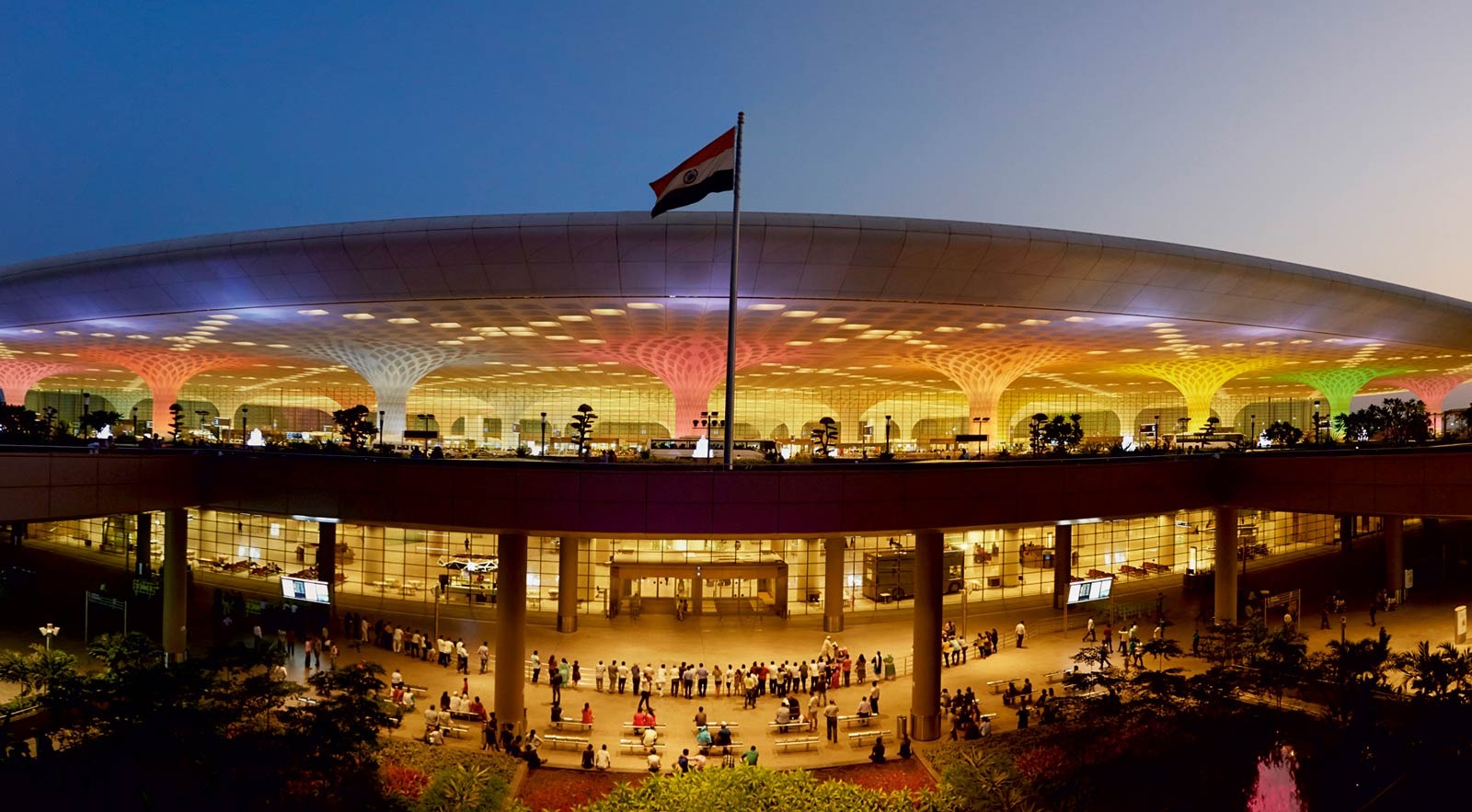
Authorities in Mumbai are re-examining how religious needs of transport workers can be accommodated around one of India’s busiest aviation hubs, after the Maharashtra government flagged security risks linked to prayer gatherings near the city’s domestic airport terminal. The issue, now before the Bombay High Court, raises broader questions about inclusive urban planning in high-security infrastructure zones.
The matter centres on requests by organised groups of taxi, autorickshaw and app-based cab drivers seeking a temporary space to offer prayers during Ramadan in the vicinity of the Chhatrapati Shivaji Maharaj International Airport. A previously used makeshift structure in the airport’s peripheral zone was removed last year during an enforcement drive, triggering legal action from drivers’ unions who argue that long working hours make access to distant places of worship impractical. In recent proceedings, state authorities told the court that the specific location sought by the drivers lies close to sensitive access points used for airport operations and high-profile movements. Officials cited intelligence assessments and crowd management concerns, noting that repeated daily gatherings could stretch policing resources in an area already under constant threat monitoring.
Urban transport experts say the dispute reflects a recurring challenge in megacities: integrating informal worker needs into formal infrastructure planning. Mumbai’s airport zone is not only a transport hub but also a workplace for thousands of drivers, loaders, hotel staff and service workers who sustain the city’s mobility economy. “When cities grow denser and more security-driven, worker welfare spaces often disappear unless they are formally planned,” said an urban policy analyst familiar with airport precinct development. The court, while acknowledging security imperatives, has urged authorities to explore alternate sites nearby that do not interfere with airport safety protocols. Judges emphasised that the issue should not be treated as adversarial, but as a governance problem requiring coordination between security agencies, planning bodies and transport unions. The Mumbai Metropolitan Region Development Authority, which oversees large parts of the surrounding infrastructure, has been asked to assess potential locations with minimal risk exposure.
Airport operators, including the private concessionaire managing day-to-day operations through Adani Airport Holdings, have pointed out that established places of worship exist within walking or short driving distance. However, labour representatives argue that expecting drivers to leave the airport zone multiple times a day affects earnings, increases fuel use and adds to local congestion—ironically undermining sustainability goals. From a city-planning perspective, the episode highlights the absence of multi-faith, low-impact community spaces in transport-oriented developments. Planners note that globally, major airports increasingly integrate quiet rooms or neutral prayer spaces within secure perimeters, reducing external crowding while respecting diversity.
The court has asked the state and planning authorities to return with a practical proposal within days. Whatever the outcome, the case is likely to influence how Mumbai—and other Indian cities—design people-first, secure and inclusive infrastructure as they expand critical transport assets under rising economic and climate pressures.
Mumbai Airport Area Balances Security And Religious Access