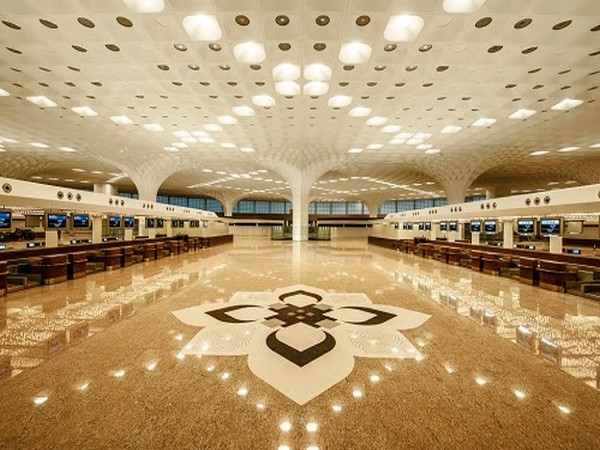
Mumbai’s Chhatrapati Shivaji Maharaj International Airport (CSMIA) has achieved a landmark in sustainable aviation, diverting 98.7% of its waste from landfill and cutting its energy intensity by 5.5% during FY 2024–25, according to its latest sustainability report. The findings underscore the airport’s transition towards circular waste systems, renewable energy, and inclusive workplace practices — setting an ambitious benchmark for India’s infrastructure sector.
Released by Mumbai International Airport Limited (MIAL), the report highlights CSMIA’s integrated approach to environmental stewardship and operational efficiency. The airport handled over 55 million passengers and an 8.1% rise in cargo throughput, while maintaining its position as one of the world’s few aviation hubs to combine high traffic with measurable sustainability outcomes. A senior airport official said the results reflect “a conscious balance between business growth and environmental responsibility,” adding that all concessionaires and service partners now operate entirely on green energy — a transition completed in 2022. The airport has also sustained its Airport Carbon Accreditation (ACA) Level 4+ ‘Transition’ status, signalling carbon neutrality for Scope 1 and 2 emissions.
CSMIA’s waste management strategy has been a central pillar of this achievement. By diverting almost all waste from landfill, the airport has advanced its zero-waste agenda through segregation, composting, and recycling. Industry observers note that such success in circular waste systems can serve as a replicable model for other urban transport hubs. “This is where large infrastructure projects can lead the way in decoupling growth from waste generation,” said an environmental policy expert. The report also sheds light on the airport’s biodiversity and water stewardship initiatives. Over 2,000 native trees were planted using the Miyawaki afforestation method to enhance urban greening, while comprehensive water audits, rainwater harvesting, and advanced sewage treatment systems were implemented to ensure a “reduce–recycle–recharge” framework.
On the social front, the airport’s partnership with the Adani Foundation enabled community-focused programmes such as health camps, women’s skill-building initiatives, and blood donation drives, reaching more than 4,000 beneficiaries in a year. Internally, its Saksham programme emphasised diversity, inclusion, and leadership — delivering over 60,000 hours of employee training and reaffirming non-discrimination and gender equity as core workplace values. Aviation analysts suggest that CSMIA’s sustainability performance may influence future airport planning and green building certification across India. Its Terminal 2 recently received renewed Platinum certification from the Indian Green Building Council (IGBC), further validating its energy and environmental credentials.
As India’s aviation sector expands rapidly, Mumbai’s experience demonstrates that climate-conscious infrastructure can drive both operational resilience and inclusive growth. In aligning business continuity with environmental integrity, CSMIA is not just reducing its footprint — it is redefining what a carbon-smart airport can achieve in the decade of sustainable transition.