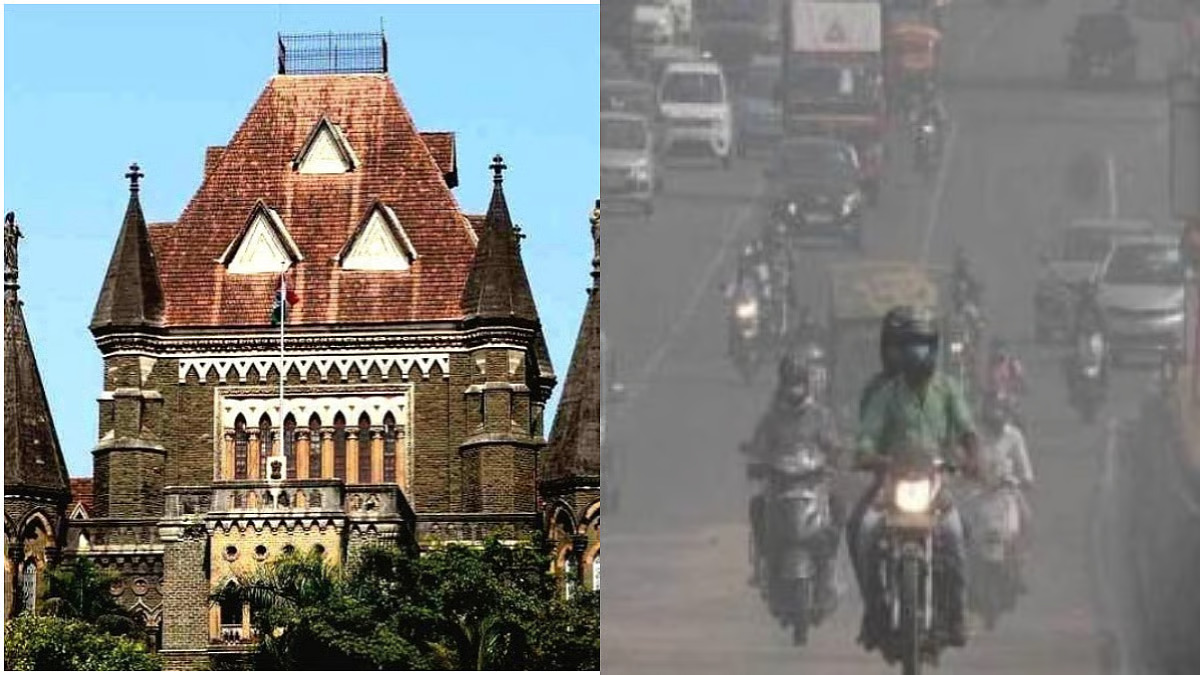
A judicial review of Mumbai air pollution has widened its scope beyond the city’s administrative boundaries, with the Bombay High Court indicating that deteriorating air quality in the financial capital cannot be addressed without examining emissions originating in neighbouring urban centres across the Mumbai Metropolitan Region.
During proceedings linked to an ongoing environmental public interest matter, the court emphasised that air quality management for large metropolitan regions must reflect the movement of pollutants across city limits. Judges hearing the case observed that airborne particulate matter and industrial emissions often travel across municipal borders, making city-only enforcement strategies insufficient in addressing regional pollution patterns. The court has therefore asked a monitoring panel tasked with evaluating Mumbai air pollution to also examine the contribution of surrounding urban areas when preparing its recommendations. The committee is expected to outline policy measures that address emissions from industrial clusters, construction zones, logistics corridors and transport activity located outside the city but within the broader metropolitan ecosystem.
Urban planners say the issue highlights a long-standing challenge in managing air quality in megacity regions such as Mumbai, where economic activity is spread across multiple municipal jurisdictions including Thane, Navi Mumbai, and industrial nodes further inland. With freight traffic, infrastructure construction and manufacturing facilities expanding across the region, pollution sources have increasingly become metropolitan rather than city-specific. Environmental researchers note that the atmospheric behaviour of pollutants means emissions generated in satellite cities can travel considerable distances depending on wind patterns, seasonal temperature variations and urban heat island effects. This phenomenon has been widely documented in other major urban clusters in India, where regional cooperation has become essential to designing effective pollution control frameworks.
The court’s direction also reflects growing concern over rising particulate matter levels across the Mumbai Metropolitan Region during winter months, when temperature inversions often trap pollutants closer to the ground. Air quality data from monitoring stations across the region has periodically indicated elevated pollution levels that cannot be traced solely to activities within Mumbai’s civic limits. Authorities have already constituted a specialised oversight body to track compliance with air pollution directives issued in previous hearings. The panel is reviewing data and progress reports submitted by multiple civic agencies responsible for waste management, road dust control, construction monitoring and industrial emissions across the metropolitan area.
Urban policy experts say such multi-agency oversight is becoming increasingly important as Indian cities attempt to transition toward climate-resilient urban governance. Coordinated regional strategies are often required to address environmental challenges that transcend municipal borders, particularly in densely populated economic corridors. For Mumbai, where rapid infrastructure expansion and urbanisation continue to reshape the metropolitan landscape, tackling air quality is likely to require integrated policy responses that include cleaner transport systems, stricter construction dust control, industrial emission monitoring and expanded green infrastructure.
The court is expected to review the committee’s next set of findings in the coming weeks. Its directions could potentially shape a more region-wide approach to air quality governance across the Mumbai Metropolitan Region, an area home to more than 20 million residents and one of India’s largest economic clusters.
Mumbai Air Pollution Panel Asked To Address Regional Sources