


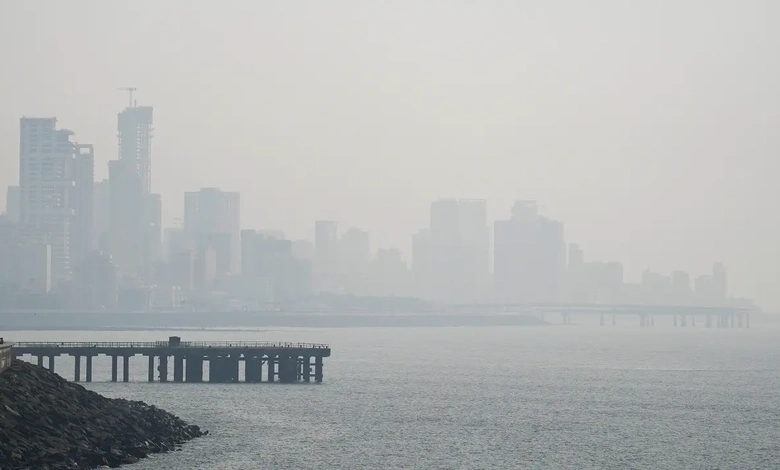
Mumbai has begun enforcing emergency pollution-control measures under the Graded Response Action Plan (GRAP-4) across some of its most polluted neighbourhoods, following a consistent decline in air quality through November. The move marks one of the municipal corporation’s most stringent interventions this season and underscores a growing public health and governance challenge in India’s financial capital.
Although Mumbai’s citywide Air Quality Index (AQI) registered a “moderate” level of 173 this week, several monitoring stations in Mazgaon, Malad, Deonar and Andheri East have remained in the “poor” and, at times, “very poor” category for days. Localised industrial emissions, dust from construction activity and air stagnation linked to cooler winter conditions have all contributed to the decline, according to civic officials. Under GRAP-4, the Brihanmumbai Municipal Corporation (BMC) has intensified on-ground monitoring and enforcement. A senior official confirmed that 95 inspection teams reviewed dozens of construction sites, issuing stop-work notices where dust-control norms were not being met. The city has a 28-point compliance checklist for construction activity, including mandatory green cover barriers, wet suppression systems and covered material transport.
In industrial clusters such as Deonar and Andheri East, ready-mix concrete units, small-scale manufacturing facilities and bakery operations have been instructed to adopt cleaner processes or face penalties. Road-washing, dust vacuuming and strict waste-management patrols will continue, with over 400 junior supervisors authorised to levy fines for open burning and debris dumping. Air-quality researchers say these actions are necessary but may not be sufficient without clearer long-term regulatory alignment. “Short-term emergency interventions reduce peak pollution, but unless Mumbai transitions to cleaner logistics, construction practices and waste systems, these episodes will become seasonal,” one environmental policy expert said. The health implications are significant. Exposure to particulate matter—particularly PM2.5 and PM10—has been linked to asthma, reduced lung function and cardiovascular disease.
In dense, low-income neighbourhoods near industrial zones, public health risks are amplified by overcrowding and limited access to healthcare. The crisis has also reignited debate on whether Indian cities require stronger systemic frameworks for cleaner construction, low-emission industry, and circular waste management. Mumbai’s experience mirrors challenges in other fast-growing cities where economic activity and infrastructure expansion often outpace environmental safeguards. For many residents, the immediate concern is clear air, not policy nuance. As interventions roll out, citizens and civil society groups have urged greater transparency in data, stronger compliance mechanisms and equitable enforcement—particularly in communities already facing environmental stress. While the BMC has not indicated how long GRAP-4 will stay in force, officials say the measures will continue until air quality shows consistent improvement.
In the long term, cleaner construction norms, renewable energy, electrified logistics and greener planning frameworks may determine whether Mumbai evolves into a healthier, climate-resilient urban model—or continues moving from one seasonal air-quality emergency to another.
Also Read: Mumbai Struggles Under Thick Haze Despite Sunshine Overall Air Quality Unhealthy
Mumbai air crisis triggers GRAP-4 enforcement
