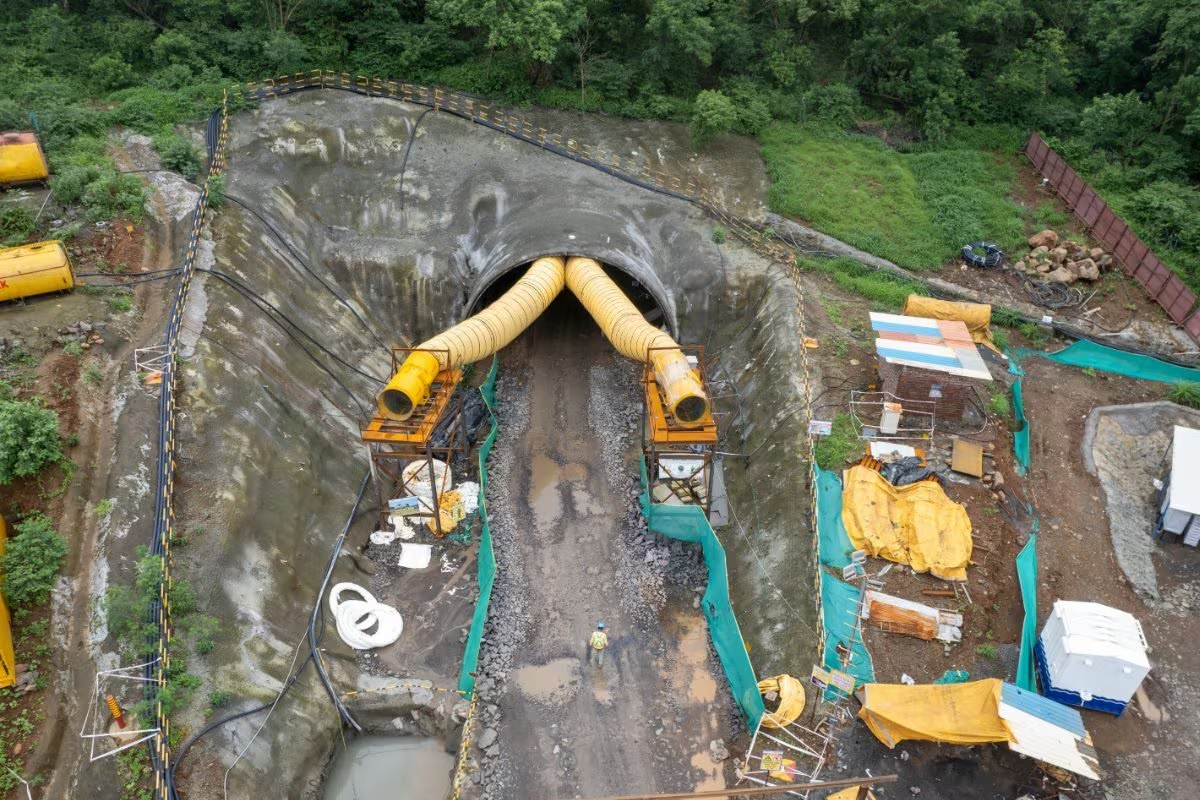
Construction of India’s first high-speed rail corridor reached a critical engineering milestone this week with the successful completion of a mountain tunnel section on the Mumbai–Ahmedabad bullet train route. The breakthrough, achieved in Palghar district of Maharashtra, signals steady progress on one of the country’s most complex transport infrastructure projects and highlights the growing role of advanced construction methods in dense and environmentally sensitive regions.
The newly completed tunnel forms part of the Maharashtra stretch of the corridor between Virar and Boisar, an area characterised by hilly terrain and mixed urban–rural development. Project engineers involved in the work said the tunnel was excavated simultaneously from both ends, allowing faster completion while minimising surface disruption. Such approaches are increasingly seen as essential for infrastructure projects passing through populated regions where land acquisition and environmental impact must be carefully managed.
This milestone follows the completion of a long underground tunnel beneath the Mumbai metropolitan region last year, reinforcing confidence in the project’s ability to navigate challenging geological conditions. In total, the high-speed rail corridor includes more than 27 kilometres of tunnelling, combining underground and surface sections designed to maintain speed while protecting surrounding ecosystems and settlements. Urban planners tracking the project note that tunnelling progress in Maharashtra is particularly significant because this segment connects the country’s financial capital with emerging industrial zones along the western coast. Improved connectivity is expected to reshape commuter and business travel patterns, reducing dependence on road and short-haul air travel while easing pressure on existing suburban rail networks.
The Mumbai–Ahmedabad bullet train project is also being closely watched for its economic implications. Construction activity across Maharashtra and Gujarat has generated demand for skilled labour, engineering services, and local supply chains. Industry analysts suggest that once operational, the corridor could accelerate the development of logistics hubs, business parks, and transit-oriented real estate around stations, provided planning controls remain balanced and inclusive. Environmental considerations remain central to the project’s long-term assessment. Rail-based high-speed transport is widely regarded as a lower-emission alternative to road and air travel on busy intercity corridors. Officials associated with the project indicate that energy-efficient systems and regenerative braking technologies are expected to significantly reduce per-passenger carbon output compared to conventional modes.
Stretching over 500 kilometres, the corridor links major urban and industrial centres across Gujarat, Maharashtra, and Dadra and Nagar Haveli. Beyond travel time savings, policy experts argue the project’s real test will lie in how well station areas are integrated with local transport, housing, and employment zones, particularly in fast-growing peri-urban regions. As tunnelling and viaduct construction continue, attention is likely to shift towards safety certification, urban integration, and affordability. The next phase will determine whether the Mumbai–Ahmedabad high-speed rail can deliver not just speed, but broader urban and economic resilience for the regions it connects.
Mumbai Ahmedabad Rail Project Clears Tunnel Milestone