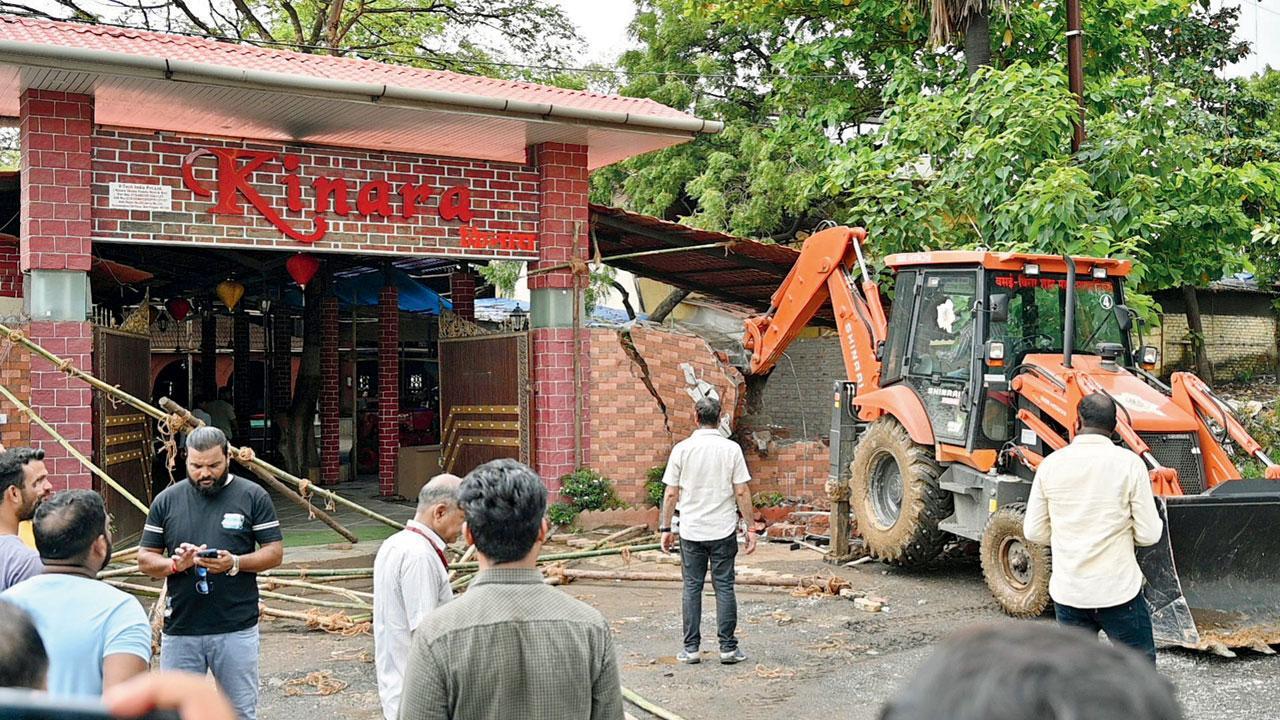
Mumbai’s busiest highway is facing a major clean-up drive after authorities served notices to nearly 400 roadside eateries for illegal encroachments and debris dumping that have worsened flooding along the Mumbai–Ahmedabad corridor. The National Highways Authority of India (NHAI) has warned that establishments failing to clear their encroachments could face penalties or eviction.
The move comes in the wake of severe monsoon flooding on NH48 earlier this week, which paralysed traffic at several points near Vasai and Kashigaon. Officials confirmed that unauthorised landfill and construction by roadside hotels and dhabas had blocked natural drainage channels, causing rainwater to flow directly onto the carriageway. Commuters reported hours-long traffic snarls as floodwater submerged both the Mumbai- and Gujarat-bound lanes.
According to NHAI representatives, repeated violations of the Right of Way (RoW) margins have not only disrupted rainwater flow but also undermined road safety. Instances of broken crash barriers, illegal parking bays and garages created by roadside businesses were cited as examples of how commercial activity has compromised public infrastructure. Notices issued on August 20 directed operators to respond within three days before further legal action is taken.
Highway activists and transport experts have long raised concerns over unchecked encroachment on NH48. They argue that dumping construction debris for profit and building unauthorised structures on drainage paths has worsened climate impacts, making the road more vulnerable to extreme rainfall. Calls have intensified for stronger enforcement measures, including criminal proceedings against persistent violators. The situation has also reignited debate over the ongoing white-topping project that began in late 2023, which was meant to improve ride quality and durability of the highway surface. Instead, motorists continue to encounter patchwork repairs, potholes and uneven surfaces. Critics say the poor integration of drainage planning with road construction has left the project ineffective in protecting commuters from waterlogging.
Experts believe the issue highlights a larger challenge in India’s infrastructure development: balancing economic activity along highways with sustainable, climate-resilient design. Roadside eateries provide affordable services to travellers and livelihood to thousands, but unchecked growth without environmental safeguards is proving costly. A sustainable model, they argue, would combine stricter zoning, planned service areas, and eco-friendly drainage systems that protect both mobility and livelihoods. While the immediate crackdown may offer temporary relief from flooding, long-term solutions will require more than penalties. Authorities will need to adopt resilient road-building practices, enforce strict no-build zones, and integrate community participation in managing roadside ecosystems. For Mumbai’s highway commuters, the hope is that this latest action paves the way for safer, smoother, and more climate-adaptive journeys.