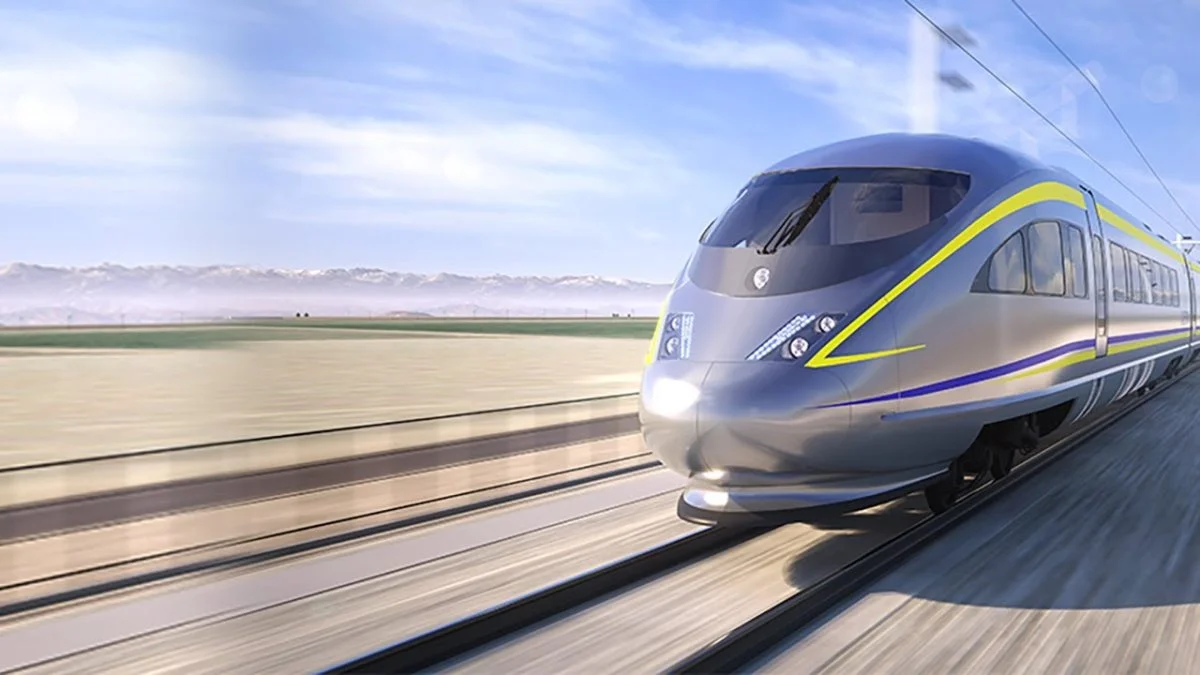
Mumbai and Ahmedabad are set to witness a transformative leap in transportation infrastructure with India’s first high-speed rail corridor, the Mumbai–Ahmedabad High-Speed Rail (MAHSR) project. Spanning over 508 km and linking Maharashtra’s commercial capital with Gujarat’s economic hub, the corridor aims to reduce travel time drastically, promote regional integration, and set a benchmark for modern, low-emission transport systems. Officials emphasise that the project is a strategic move towards building sustainable urban mobility and fostering equitable city development.
The MAHSR initiative builds on India’s long-standing railway legacy, evolving from steam and diesel networks to electrified and semi-high-speed systems exemplified by the Vande Bharat Express. An official from the National High-Speed Rail Corporation Limited (NHSRCL) noted that the Mumbai–Ahmedabad corridor represents India’s first application of world-class bullet train technology, combining Japanese Shinkansen expertise with domestic engineering capabilities. Twelve stations along the route, including Mumbai BKC, Thane, Surat, Vadodara, and Ahmedabad, have been planned to ensure connectivity across metropolitan and semi-urban areas.
Civil engineering progress on the corridor has been substantial. The project features India’s first undersea rail tunnel beneath Thane Creek and eight mountain tunnels across Maharashtra and Gujarat. Recent milestones include the completion of the 5 km NATM tunnel section between Ghansoli and Shilphata and multiple steel and river bridges along the route. Larsen & Toubro and several other contractors are handling major packages, covering elevated viaducts, underground stations, and track construction. The corridor will operate on standard gauge with maximum speeds of 350 kmph and is equipped with advanced safety systems including Urgent Earthquake Detection and Alarm System (UrEDAS).
Financially, the ₹1,08,000 crore project is primarily supported by Japan through the Japan International Cooperation Agency (JICA), contributing around 81% of the total cost. Tranches of loans disbursed since 2018 have funded various construction milestones, signalling strong bilateral collaboration and investment in India’s transport future. Industry analysts highlight that such high-speed rail projects are catalysts for economic growth, generating employment in construction, operations, and ancillary industries while stimulating real estate, logistics, and commercial development along the corridor.
Socially, the corridor enhances regional mobility by linking major urban centres with Tier-II cities, improving access to education, healthcare, and employment opportunities. Transit-oriented development (TOD) around stations is expected to foster structured urban expansion rather than unplanned sprawl. Environmental experts point out that the fully electrified system will significantly reduce greenhouse gas emissions and noise pollution compared to conventional road and air travel. The MAHSR project underscores India’s ambitions to modernise its transport network sustainably while building technical expertise and fostering Indo-Japanese cooperation. Once operational, it is expected to serve as a model for future high-speed rail corridors across the country, balancing economic growth, social inclusion, and environmental responsibility.
Mumbai Ahmedabad High Speed Rail Links Twelve Stations With Three Hundred Fifty Kilometres Per Hour