


A significant milestone is on the horizon for India’s first high-speed rail corridor as the Zaroli mountain tunnel in Gujarat’s Valsad district nears completion. This 350-metre tunnel, the only mountain tunnel on the Gujarat stretch of the 508-km Mumbai–Ahmedabad High-Speed Rail (MAHSR) corridor, is shaping up as a technical and strategic achievement in India’s infrastructure push.
According to updates shared by senior officials from the National High Speed Rail Corporation Limited (NHSRCL), the tunnel is now in its final stages of structural works, with the bulk of excavation and alignment tasks already completed. Located approximately one kilometre from Zaroli village in Umbergaon taluka, the tunnel is a crucial segment of the Gujarat leg of the bullet train route and sets the precedent for upcoming tunnelling efforts along the corridor. Designed with a horseshoe-shaped cross-section measuring 12.6 metres in diameter and 10.25 metres in height, the tunnel will facilitate the passage of twin Shinkansen-style high-speed tracks. These tracks are engineered to support train speeds up to 350 kmph, requiring exceptionally precise structural tolerances.
What makes the Zaroli tunnel especially notable is its method of construction. Engineers adopted the New Austrian Tunnelling Method (NATM)—an advanced approach suitable for complex geological conditions. This involved a combination of mechanical excavation, controlled blasting, and the application of support systems like steel ribs, lattice girders, rock bolts, and shotcrete. Despite challenges with local rock strata and unpredictable excavation conditions, the breakthrough was achieved in October 2023, just 10 months after initial excavation began. The tunnel is one of eight planned mountain tunnels on the entire MAHSR corridor. While Zaroli is the only one located in Gujarat, the remaining seven will be built in Maharashtra’s Palghar district. These include the ambitious 21-kilometre underground stretch passing beneath Thane Creek—India’s first undersea tunnel for a high-speed rail line.
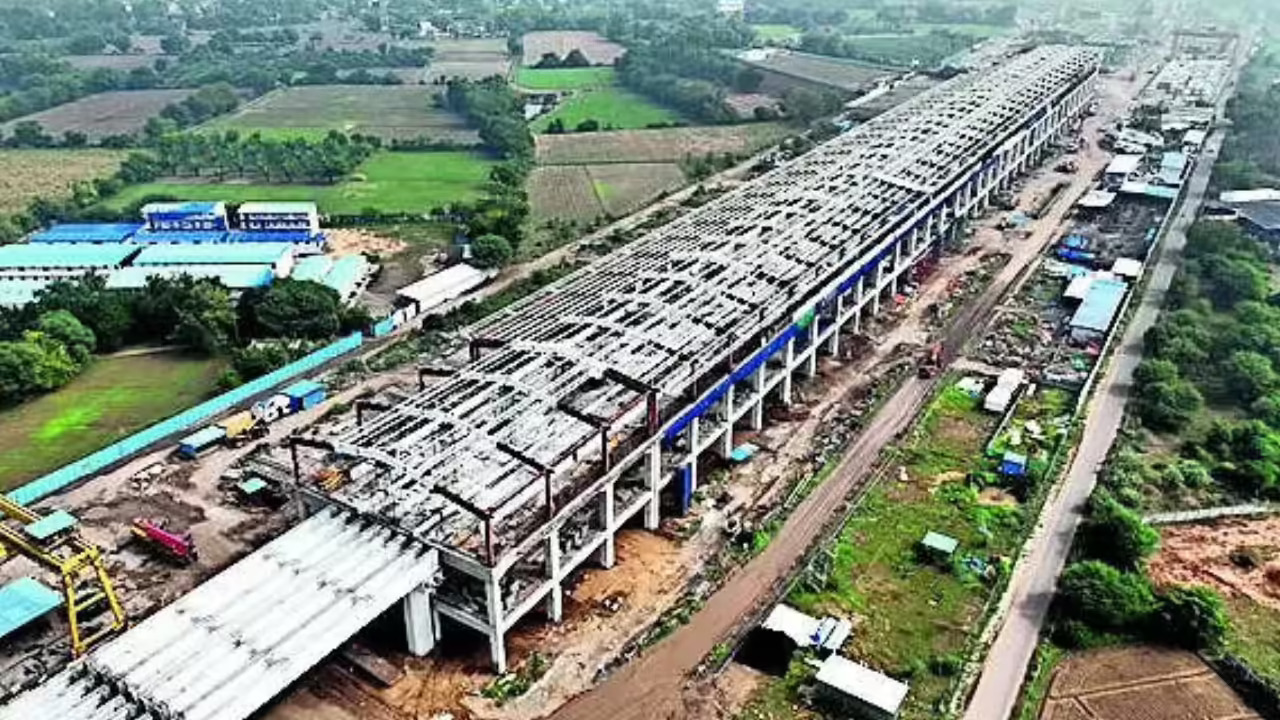
Beyond tunnels, the MAHSR project is also progressing steadily across viaducts, bridges, and station infrastructure. NHSRCL has confirmed the completion of over 304 km of viaduct work and 388 km of pier construction. In addition, 15 river bridges, eight major steel bridges, and five pre-stressed concrete (PSC) bridges have already been built. These numbers underscore the intensity and scale of civil works underway on what is India’s flagship transport infrastructure project. In a major achievement last month, NHSRCL successfully launched the first 40-metre Full Span Pre-Stressed Concrete Box Girder in the Maharashtra segment near Sakhare village in Dahanu. This modular engineering approach not only accelerates construction timelines but also helps maintain quality consistency across large sections of the route.
The bullet train corridor spans across Gujarat, Maharashtra, and the Union Territory of Dadra & Nagar Haveli. Twelve stations have been planned along the 508-km route: Mumbai, Thane, Virar, Boisar, Vapi, Bilimora, Surat, Bharuch, Vadodara, Anand, Ahmedabad, and Sabarmati. Once operational, the corridor is expected to cut travel time between Mumbai and Ahmedabad to under three hours, transforming regional connectivity and catalysing economic activity along its length. Senior infrastructure experts observe that the project exemplifies the shift in India’s transport development paradigm, from traditional rail upgrades to world-class greenfield infrastructure. In addition to speed and capacity, the MAHSR corridor brings with it a new benchmark in safety, comfort, and energy efficiency.
Backed by Japanese expertise and funding, the MAHSR project also serves as a template for future bullet train corridors planned under the National Rail Plan. It integrates modern signalling, cutting-edge tunnelling technologies, and seismic resilience—features that significantly raise the bar for public infrastructure in the country. The Zaroli tunnel, in particular, represents the successful adaptation of global tunnelling technologies to Indian terrain. It is a critical asset in the seamless alignment of high-speed trains and ensures safety and performance without deviation from global standards. The terrain around Valsad required thoughtful planning to avoid ecological disruptions while maintaining civil stability—a task the engineering teams appear to have handled with notable efficiency.
Officials from the NHSRCL emphasised that the tunnel’s design not only meets international bullet train standards but also incorporates sustainability parameters to minimise long-term environmental impact. While such large-scale infrastructure invariably carries ecological and social trade-offs, project proponents argue that the long-term benefits—reduced carbon footprint, shorter travel times, and decentralised development—more than justify the investment. As India inches closer to its first operational bullet train corridor, the completion of the Zaroli tunnel signals both technological competence and administrative momentum. With multiple components of the Mumbai–Ahmedabad project entering advanced stages, the country’s high-speed rail ambition is no longer a distant vision—it is materialising on the ground, track by track, tunnel by tunnel.
Also Read : Tamil Nadu Expands Water Bell System to Private Schools to Promote Student Hydration
