


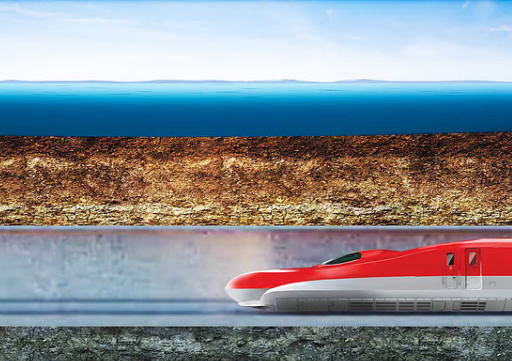
Mumbai, India – The much-anticipated and often debated Mumbai-Ahmedabad bullet train project has achieved a significant milestone with the completion of an undersea ADIT (additionally driven intermediary tunnel) tunnel.
Union Minister for Railways, Ashwini Vaishnav, announced the development, marking a crucial advancement in the project that began in 2020 amid the Covid-19 pandemic. The ADIT tunnel, measuring 394 metres in length, was completed within a span of six months. This tunnel is pivotal for the construction of the main tunnel, which is 21 kilometres long, including a 7-kilometre undersea section. The total length of the bullet train corridor is 508.18 kilometres, designed to connect India’s commercial capital, Mumbai, with Ahmedabad, the largest city in Gujarat.
This ambitious project, which promises to revolutionise travel between these two major cities, will feature 12 stations along its route. The network is set to commence from Mumbai’s Bandra-Kurla Complex (BKC), a prominent commercial district. Notably, the BKC station is planned to integrate seamlessly with the metro systems currently under construction, ensuring enhanced connectivity for commuters.
The undersea tunnel, a key component of this high-speed rail project, is expected to boost construction efficiency and expedite the overall timeline. This development underscores the government’s commitment to modernising India’s infrastructure and improving transportation networks.
The bullet train project, inspired by Japan’s Shinkansen technology, aims to reduce travel time between Mumbai and Ahmedabad to just over two hours, significantly shorter than the current travel time by conventional trains. This reduction in travel time is expected to have a substantial impact on the economic and social connectivity between Maharashtra and Gujarat.
In addition to the undersea tunnel, the project involves extensive engineering feats, including elevated tracks, bridges, and other supporting infrastructure. The government plans to ensure that the construction adheres to the highest standards of safety and efficiency, leveraging cutting-edge technology and expertise.
The Mumbai-Ahmedabad bullet train is also anticipated to stimulate local economies, create job opportunities, and foster technological advancements in the Indian rail sector. The project represents a significant investment in the country’s future, aiming to set a precedent for similar high-speed rail initiatives across India.
With the completion of the ADIT tunnel, the bullet train project has taken a decisive step forward, bringing the vision of a faster, more efficient rail network closer to reality. As the construction progresses, the focus remains on meeting deadlines, maintaining quality, and ensuring the seamless integration of this high-speed rail corridor with existing and upcoming transport systems.
The government’s ambitious plan to award 10,000-12,000 kilometres of highways in fiscal year 2025, along with the bullet train project, signals a robust push towards infrastructural development, aimed at positioning India as a leader in modern transportation solutions.
