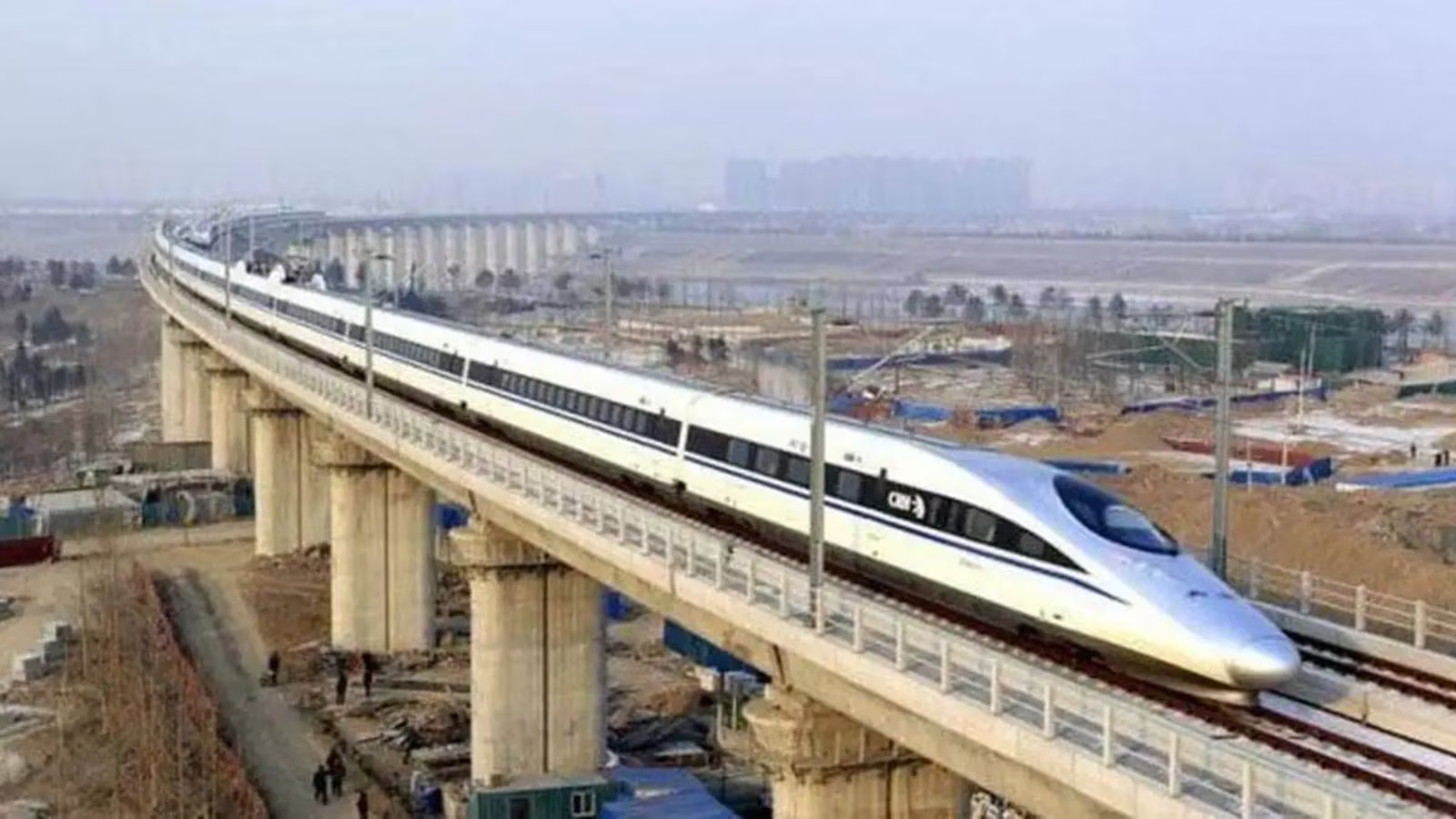
India’s first dedicated high‑speed rail corridor between Mumbai and Ahmedabad has crossed a pivotal construction threshold, with physical progress now exceeding 56 per cent and public expenditure topping ₹85,300 crore on the 508‑kilometre project. This momentum underscores a rare period of sustained infrastructure delivery for a flagship transport artery linking two of the western region’s largest economic zones, with significant implications for urban mobility, regional development and low‑carbon intercity travel.
The high‑speed rail corridor, built by the National High Speed Rail Corporation Ltd (NHSRCL), has been under construction for several years. The alignment will connect Mumbai, Thane, Virar and other urban centres in Maharashtra with major cities in Gujarat, including Surat and Ahmedabad, via 12 planned stations and modern civil structures. Designed to support trains at speeds of up to 320 km/h, the corridor is intended to cut travel times dramatically while offering a more sustainable alternative to air and road traffic between the two metropolises.Urban infrastructure analysts note that surpassing the halfway mark in construction is both symbolic and operationally significant. It reflects not only the scale of civil works completed — including viaducts, bridge spans, station foundations and depots — but also the consolidation of land acquisition, regulatory clearances and engineering pipeline readiness that once posed major bottlenecks. Observers emphasise that continuity of funding and project management is central to maintaining this pace as works transition into advanced track laying, signalling and systems installation.
The financial scale of the project also highlights its economic relevance. With more than ₹85,000 crore already committed, the investment represents one of India’s largest single infrastructure outlays in recent years. Industry economists argue this level of capital mobilisation — amid broader public sector capex efforts — forms part of a larger strategy to reduce regional economic disparities and elevate connectivity among urban and peri‑urban markets. Efficient intercity rail can help disperse growth beyond core megacities, supporting employment hubs in mid‑sized towns and boosting property markets through enhanced accessibility.Integration with local and regional transport networks will be crucial as the corridor nears its operational phase. Urban planners emphasise the need for effective first‑mile/last‑mile connections, especially via suburban rail, metro systems and bus rapid transit, to maximise ridership and reduce dependence on private vehicles. Without such integration, high‑speed rail could risk reinforcing inequitable mobility patterns by benefiting only well‑served city centres, rather than fostering inclusive regional access.
Sustainability and climate impact also remain focal points. High‑speed rail inherently offers lower carbon emissions per passenger kilometre compared with air or road alternatives, but its net environmental benefit depends on grid decarbonisation, energy‑efficient operations and resilience planning for climate stressors — particularly along coastal and flood‑prone corridors.
Phased commissioning is expected over the coming years, with partial operations likely ahead of full corridor completion. As construction advances toward its final stages, attention is now shifting to systems testing, workforce training and seamless integration with existing mobility ecosystems. The success of this transformative transport link will ultimately be judged on its ability to deliver rapid, resilient and equitable connectivity across western India.