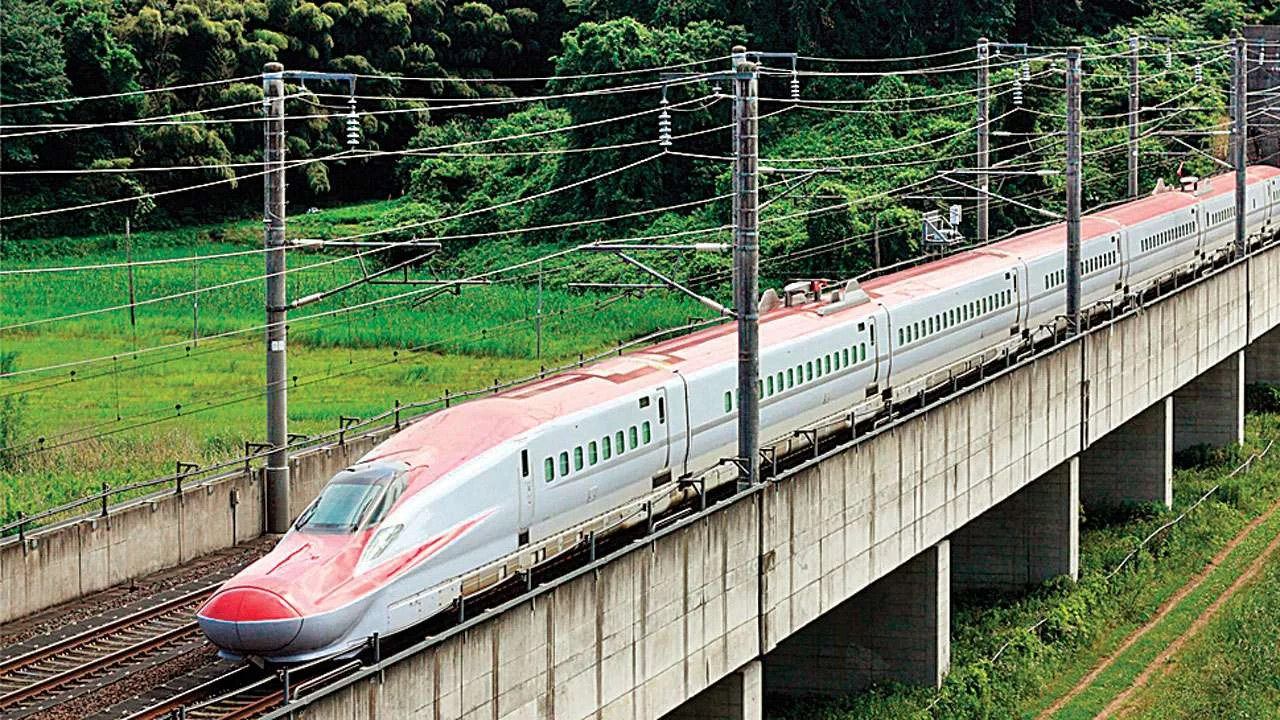
The Mumbai–Ahmedabad high-speed rail project, India’s flagship bullet train initiative, has seen its estimated cost nearly double due to construction delays and associated factors. Latest assessments suggest the project will now require approximately ₹1.98 lakh crore, up from the original estimate of ₹1.08 lakh crore, raising concerns over financing and project management timelines.
Industry experts note that such cost escalations are not uncommon in large-scale infrastructure projects, particularly those involving complex engineering, urban connectivity, and adherence to international safety standards. The Japan International Cooperation Agency (JICA), which is funding ₹88,000 crore of the project at concessional rates, will not extend additional financing for overruns, leaving the Indian government responsible for bridging any financial gaps. The bullet train corridor, spanning 508 kilometres and connecting Mumbai and Ahmedabad, is intended to cut travel time between the two cities from eight hours to around three. The project’s construction involves advanced civil, mechanical, and signalling systems, including viaducts, tunnels, and high-speed track installations, demanding rigorous precision. Analysts emphasise that any delay in completion has a cascading impact on operational readiness, urban integration, and cost efficiency.
A senior official involved in the project stated that the revised estimate is undergoing final scrutiny and awaits Cabinet approval. The final sanction is expected within the next one to two months, after which detailed implementation and financial management plans will be adjusted to reflect the updated budget. Public and private sector stakeholders are closely monitoring this process, given the project’s strategic significance in India’s urban mobility and economic corridors. Beyond the financial implications, the escalation underscores the challenges of implementing large-scale, high-tech infrastructure in densely populated regions. Urban planners highlight that cost control must be paired with safety and technological reliability, particularly for high-speed rail systems where international best practices are benchmarks. The project’s success could influence future high-speed rail corridors in India, determining public acceptance, investor confidence, and policy direction for sustainable transit solutions.
With the bullet train representing both a technological leap and a symbol of India’s urban mobility ambitions, authorities are balancing budgetary pressures with operational safety and commuter experience. Moving forward, monitoring delays, ensuring rigorous project audits, and implementing phased completion strategies will be critical to maintain public trust and achieve the corridor’s long-term economic and connectivity benefits.
Mumbai Ahmedabad Bullet Train Project Cost Escalates