


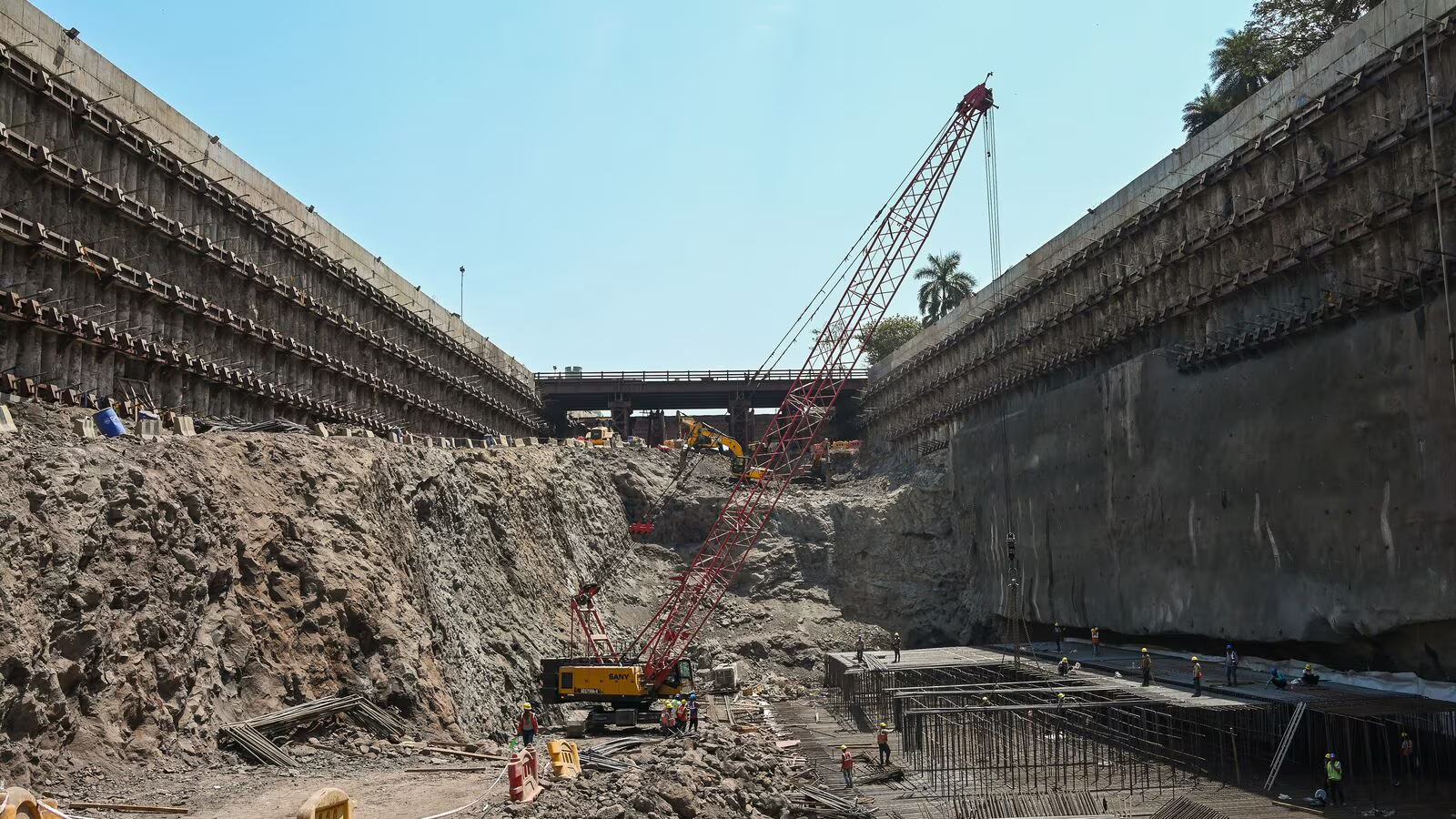
The Mumbai-Ahmedabad High-Speed Rail corridor has achieved a significant engineering feat with the opening of the first section of its 21-kilometre undersea tunnel between Bandra Kurla Complex (BKC) and Thane. This milestone underscores the rapid advancement of India’s inaugural bullet train project, promising to redefine inter-city connectivity and lay a crucial foundation for future high-speed networks, vital for the nation’s burgeoning urban centres and their sustainable development.
This critical infrastructure development is a testament to the strategic partnership between India and Japan, with the entire 508-kilometre corridor being developed using state-of-the-art Japanese Shinkansen technology. The Ministry of Railways confirmed that the project is progressing at an accelerated pace, with 310 kilometres of viaduct construction already completed. This includes the advanced stages of work on 15 river bridges and the nearing completion of eight stations, showcasing a remarkable capacity for executing world-class engineering projects.
The undersea tunnel section, a complex engineering marvel, represents a significant leap in India’s infrastructure capabilities. Such advanced projects are fundamental to creating eco-friendly and sustainable cities by offering a high-capacity, low-carbon alternative to air and road travel. By facilitating rapid and efficient movement of people, high-speed rail can alleviate congestion, reduce carbon emissions from traditional transport, and promote a more organised and environmentally conscious urban footprint.
Furthermore, the project’s emphasis on seamless connectivity holds profound implications for fostering gender-neutral and equitable cities. Enhanced accessibility to economic hubs, educational institutions, and healthcare facilities through efficient public transport empowers all citizens, including women and vulnerable populations, by reducing travel barriers and increasing opportunities. The integration of such advanced transit systems is key to building inclusive urban environments where mobility is a right, not a privilege.
The ambitious BKC station, designed to be 32.5 metres below ground and support a 95-metre building above, exemplifies the project’s innovative approach to urban integration. This forward-thinking design maximises land use in densely populated areas, a critical consideration for sustainable urban planning. The successful execution of this and other complex elements of the Mumbai-Ahmedabad corridor is not merely about speed; it is about setting new benchmarks for safety, reliability, and ultimately, laying the groundwork for future bullet train networks that will connect and transform India’s cities.
Also Read: India achieves 50% non‑fossil installed capacity five years ahead of targets
