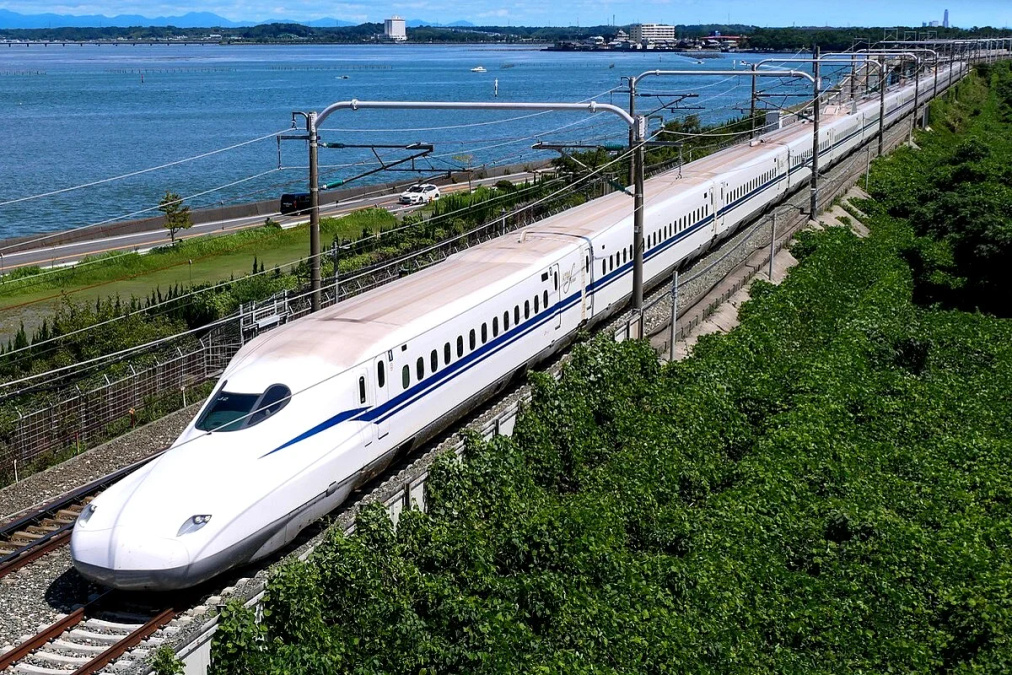
India’s first high-speed rail corridor has taken a key step forward as the implementing authority for the Mumbai–Ahmedabad Bullet Train received bids for a major systems consultancy contract covering signalling, communications, and passenger interface technologies. The development marks a transition from heavy civil construction to the operational backbone required to run a safe, efficient, and digitally integrated high-speed rail service, with long-term implications for intercity mobility and low-carbon transport in western India.
The consultancy package relates to project management services for the design, integration, and supervision of advanced signalling and telecommunication systems, supervisory control and data acquisition (SCADA), and ticketing infrastructure across the 508-kilometre corridor. Officials involved in the tendering process confirmed that two international engineering and transport consulting firms have submitted financial proposals, with quoted values exceeding ₹600 crore and a contract duration extending close to seven years. Rail systems experts say these technologies are central to the viability of high-speed rail, often accounting for a significant share of operational safety, energy efficiency, and passenger experience. Unlike conventional railways, bullet train operations depend on continuous train control systems, real-time monitoring of power and traction assets, and tightly integrated ticketing platforms that can handle high passenger volumes with minimal station dwell time.
The Mumbai–Ahmedabad corridor, which will serve 12 stations across Maharashtra and Gujarat, is expected to become a reference project for future high-speed rail lines in India. While civil works such as viaducts, tunnels, and stations form the visible face of the project, industry analysts note that systems contracts determine how reliably and sustainably the network performs over its lifecycle. Poor integration at this stage can lead to cost overruns, maintenance challenges, and service disruptions decades later. From an urban and environmental perspective, the signalling and SCADA systems play a role in optimising energy use by regulating train speeds, managing power loads, and reducing unnecessary braking and acceleration. This is particularly relevant as policymakers increasingly position high-speed rail as a lower-emission alternative to short-haul aviation along dense economic corridors.
The ticketing component is also viewed as more than a transactional tool. Transport planners expect it to be designed for interoperability with future urban and regional transit systems, supporting seamless passenger movement across cities while improving accessibility and crowd management. Digital-first ticketing could reduce paper use, streamline station operations, and improve data-driven planning for ridership patterns. Strategically, the tender reflects the project authority’s push to lock in specialised expertise before the corridor enters testing and commissioning stages later in the decade. Officials familiar with the process indicated that technical evaluations will now assess not just cost, but also experience with high-speed rail environments, system integration capabilities, and long-term maintenance planning.
As India continues to invest in rail-led growth corridors, the outcome of this consultancy contract will influence not only the Mumbai–Ahmedabad line, but also how future high-speed projects are structured, governed, and delivered—shaping the country’s approach to sustainable, high-capacity intercity transport.
Mumbai Ahmedabad Bullet Train Attracts Two Bidders For Core Rail Systems