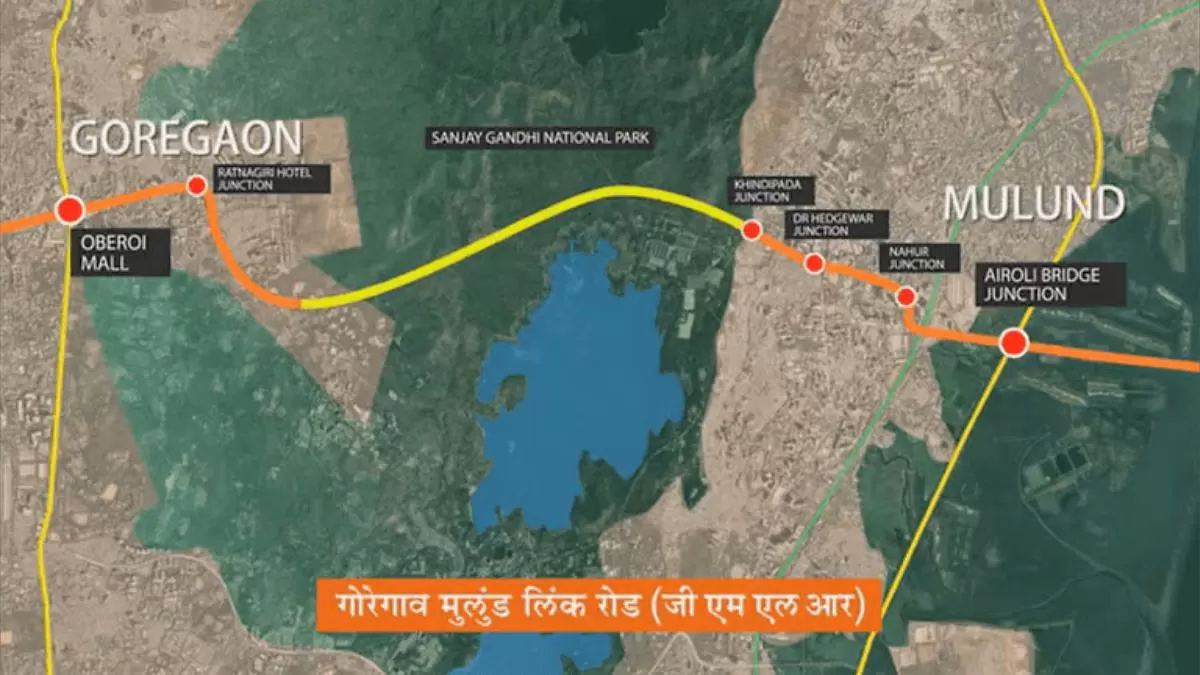
Mumbai’s long-awaited east–west road connectivity push has entered a decisive construction phase, with major structures advancing on the Goregaon–Mulund Link Road corridor. The project, designed to connect the Western and Eastern Express Highways, is now seeing accelerated progress on flyovers, elevated junctions, and underground tunnels—elements considered critical to easing chronic congestion across the city’s northern suburbs.
Civic officials overseeing the project confirmed that several high-impact components in Mulund are moving steadily towards completion. Among the immediate priorities is a northbound flyover over a key water pipeline, targeted for opening by the end of May 2026. Authorities view this structure as essential to easing traffic bottlenecks caused by temporary diversions, particularly ahead of the monsoon season when road capacity constraints intensify. The Mulund package includes a nearly two-kilometre elevated corridor stretching from a major utility corridor to the suburban rail crossing at Nahur. This segment incorporates an elevated rotary at a key arterial junction and a cable-supported span beneath an under-construction metro line, reflecting the increasing complexity of layered urban infrastructure in Mumbai. More than three-quarters of the planned support piers are already in place, along with a significant portion of deck spans, indicating steady construction momentum.
Urban planners say the integration of road, rail, metro, and utility infrastructure within limited right-of-way highlights the challenges of retrofitting mobility solutions into dense, fully built-up neighbourhoods. While short-term traffic diversions have caused commuter frustration, officials argue that phased openings of minor flyovers will gradually stabilise traffic flow during the construction period. On the western side, work is progressing on one of the project’s most technically demanding elements: twin underground tunnels passing beneath protected green zones and film city precincts. These tunnels form a critical part of the Goregaon section, enabling uninterrupted east–west travel without disturbing sensitive surface ecosystems. Preparatory works at the tunnel launch site are nearing completion, with tunnel boring operations expected to begin in early 2026 using heavy-capacity machinery.
In parallel, a separate elevated road in Goregaon East is being built to connect key junctions to the tunnel approaches. This flyover is expected to become operational by mid-2026, creating early benefits even before the full corridor is completed. Once operational, the 12.2-kilometre Goregaon–Mulund Link Road is expected to reduce cross-city travel time from over an hour to under half an hour. Infrastructure economists note that such time savings have wider economic implications, including improved labour mobility, reduced fuel consumption, and lower transport emissions—key considerations as Mumbai seeks more climate-resilient mobility solutions.
With the full corridor scheduled for phased completion by 2027, the focus for civic agencies will remain on managing construction impacts while ensuring engineering quality and environmental safeguards. If executed as planned, the link road could redefine daily travel patterns across Mumbai’s northern belt, offering a rare example of large-scale east–west connectivity in a city historically constrained by its north–south transport spine.
Mumbai Advances Goregaon Mulund Link Road Works