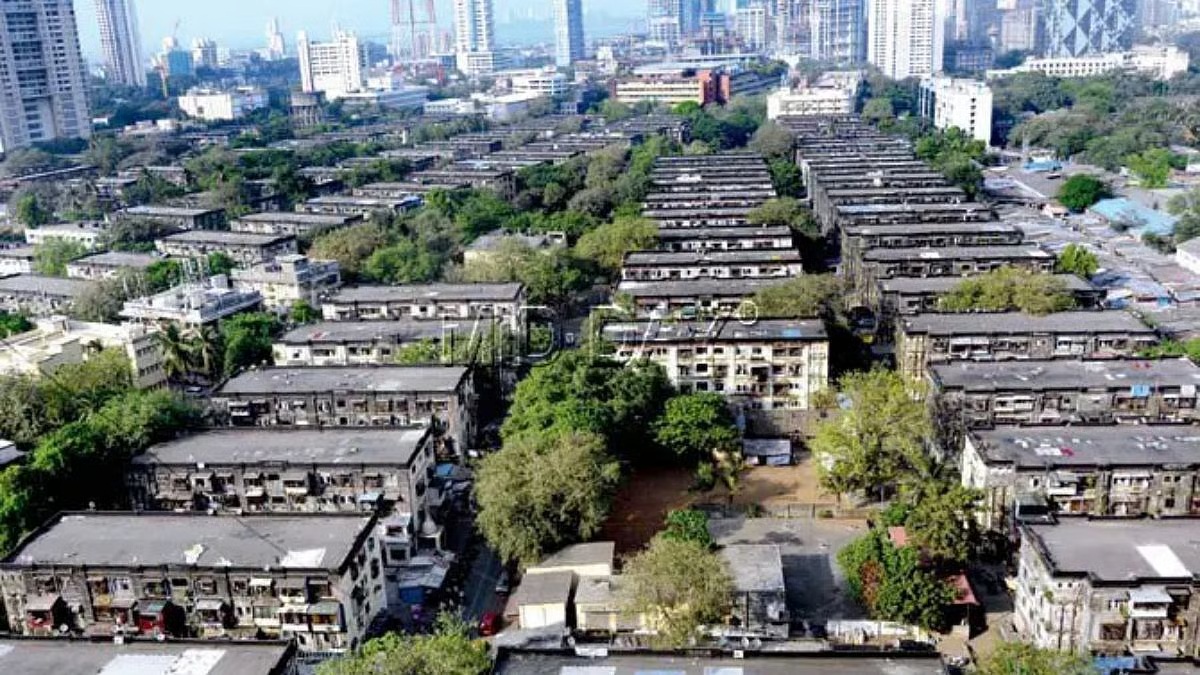
Mumbai has taken another step in reshaping some of its oldest worker housing districts, with hundreds of newly built apartments handed over to families relocated from ageing tenements in the city’s historic mill neighbourhoods. The move marks the latest milestone in the BDD Chawl Redevelopment programme, one of the country’s largest public housing renewal efforts aimed at replacing century-old low-rise chawls with modern residential towers while preserving community ties.
The latest homes were distributed to residents from the Naigaon cluster, where families that once lived in cramped one- or two-room units are now moving into newly constructed high-rise buildings designed with improved sanitation, ventilation and basic urban infrastructure. Officials involved in the programme say the handover represents the second major housing phase of the BDD Chawl Redevelopment, following an earlier allotment of apartments to residents in another central Mumbai neighbourhood.
The redevelopment initiative addresses a long-standing housing challenge in the city. The BDD chawls, originally constructed during the colonial era to house industrial workers, have for decades been characterised by ageing structures, shared sanitation facilities and limited open space. Urban planners say that transforming these neighbourhoods requires balancing higher residential density with better living standards and social infrastructure. Rather than relying entirely on private real estate developers, the state housing authority has played a central role in executing the redevelopment. A senior government official involved in the project said the public-led approach was intended to ensure predictable timelines and safeguard rehabilitation commitments for existing residents.
The broader redevelopment covers multiple chawl clusters across central Mumbai and is expected to reshape large sections of the city’s inner core. When completed, the programme will replace hundreds of ageing blocks with modern towers, alongside roads, public amenities, and open spaces. Urban development experts note that such large-scale public housing projects are critical in a city where land scarcity and high property values often make rehabilitation-led redevelopment financially complex. Beyond improving housing conditions, the project also reflects a wider push by the city to renew ageing urban districts while maintaining social continuity. Residents are being relocated within the same neighbourhoods, an approach planners say helps sustain local economies, schools, and community networks that have evolved over generations.
Authorities say the full BDD Chawl Redevelopment programme will unfold in stages over the coming years as construction progresses across different sites. The long-term plan includes completing rehabilitation housing for thousands of families while integrating mobility infrastructure, parking solutions and neighbourhood services to support higher-density living. For Mumbai, where informal housing and ageing tenements continue to house large sections of the workforce, the redevelopment programme is being closely watched as a test case for inclusive urban renewal one that seeks to modernise the built environment without displacing the communities that shaped the city’s industrial past.