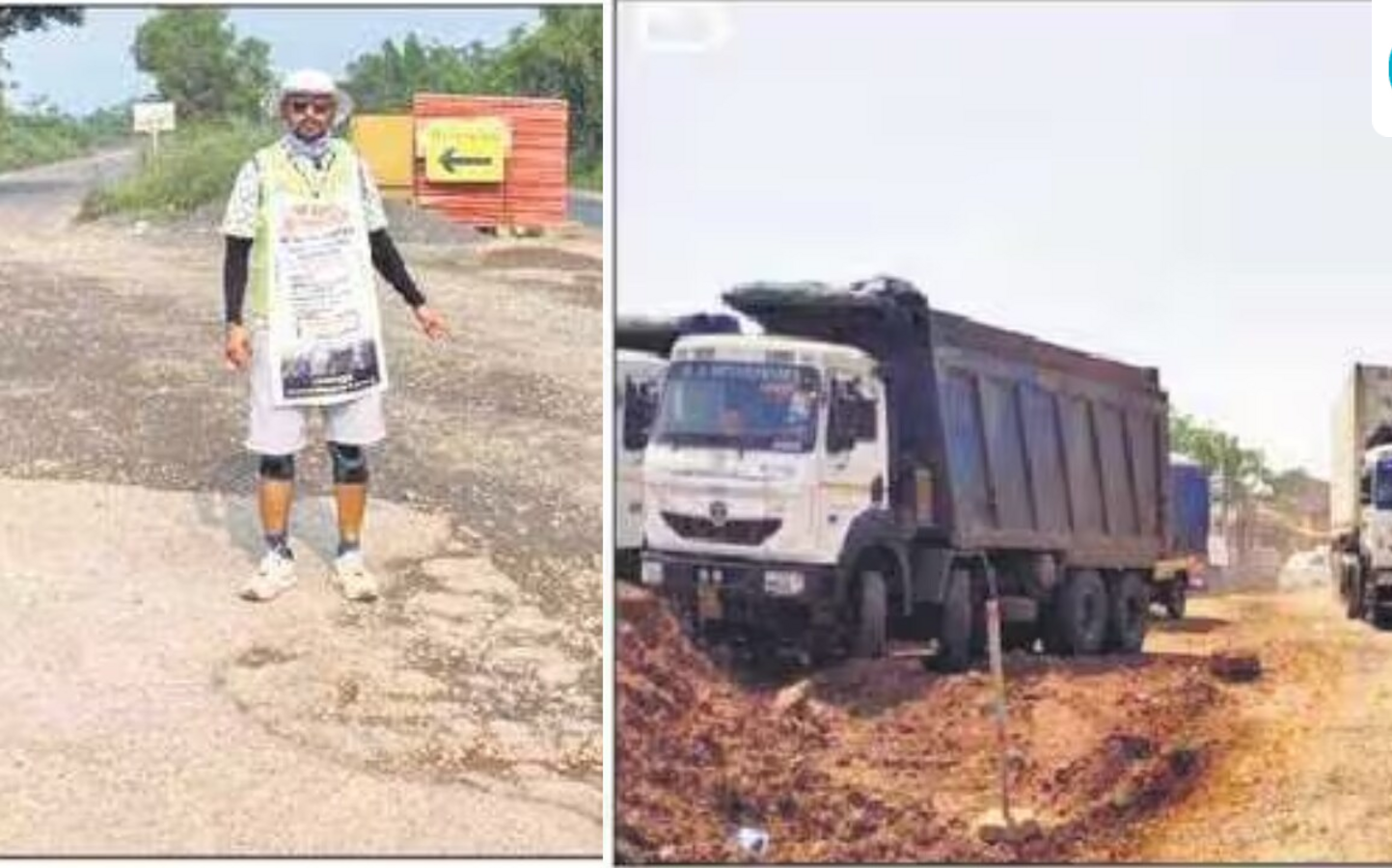
A 28-year-old activist from Raigad, Maharashtra, has undertaken a landmark initiative to enhance road safety along the Mumbai–Goa National Highway (NH-66), completing a 490-kilometre journey to document critical hazards for commuters. The campaign, spanning 29 days, has culminated in a comprehensive report highlighting 59 high-risk points, which has been formally submitted to the Union Road Transport Ministry.
Beginning on August 9 from Palaspe in Raigad, the activist traversed the full highway route, enduring heavy rains and intermittent health challenges. This initiative, described as a “Rasta Satyagraha”, systematically catalogued potholes, incomplete bridges, missing road signage, accident-prone stretches, and other structural gaps that could jeopardise commuter safety. An official noted that such citizen-led monitoring complements governmental oversight by providing granular, on-ground insights. The activist also collected debris such as iron shards, broken glass, and displaced hoardings along the highway, demonstrating direct hazards to motorists. Each of the 59 identified risk points was geo-tagged with photographs and incorporated into a digitally structured report using QR codes for easy reference by authorities. The data has been routed to the Union Minister through a parliamentary representative, with copies shared with relevant district and state authorities, reflecting a proactive approach to participatory urban governance.
Previous engagements by the activist indicate a sustained commitment to road safety. GPS-based photographic surveys of the Palaspe–Mangaon stretch shared with the state government and the National Highways Authority of India (NHAI) led to partial remedial measures in the past. Industry experts observe that citizen-driven audits, when combined with government response, can accelerate compliance and infrastructure upgrades, especially for highways under continuous development. The activist’s campaign also underscores broader urban infrastructure challenges. NH-66, connecting key economic and tourist regions in Maharashtra, has witnessed ongoing construction that has, at times, slowed due to incomplete service roads and pending bridge work. The report estimates 75–85 km of unfinished road sections remain, emphasising the need for timely project execution to enhance safety and efficiency.
By directly engaging with local leaders and officials, the initiative demonstrates how civic participation can identify structural inefficiencies and mitigate commuter risks. The campaign reinforces the necessity for sustainable, inclusive, and resilient transport infrastructure that prioritises safety while supporting regional economic connectivity. This intervention, blending citizen activism with digital reporting tools, exemplifies a solution-oriented approach to urban mobility and infrastructure oversight, setting a precedent for participatory monitoring of critical national highways.
Mumbai Activist Walks 490 Km Along Highway, Submits 59 Point Report