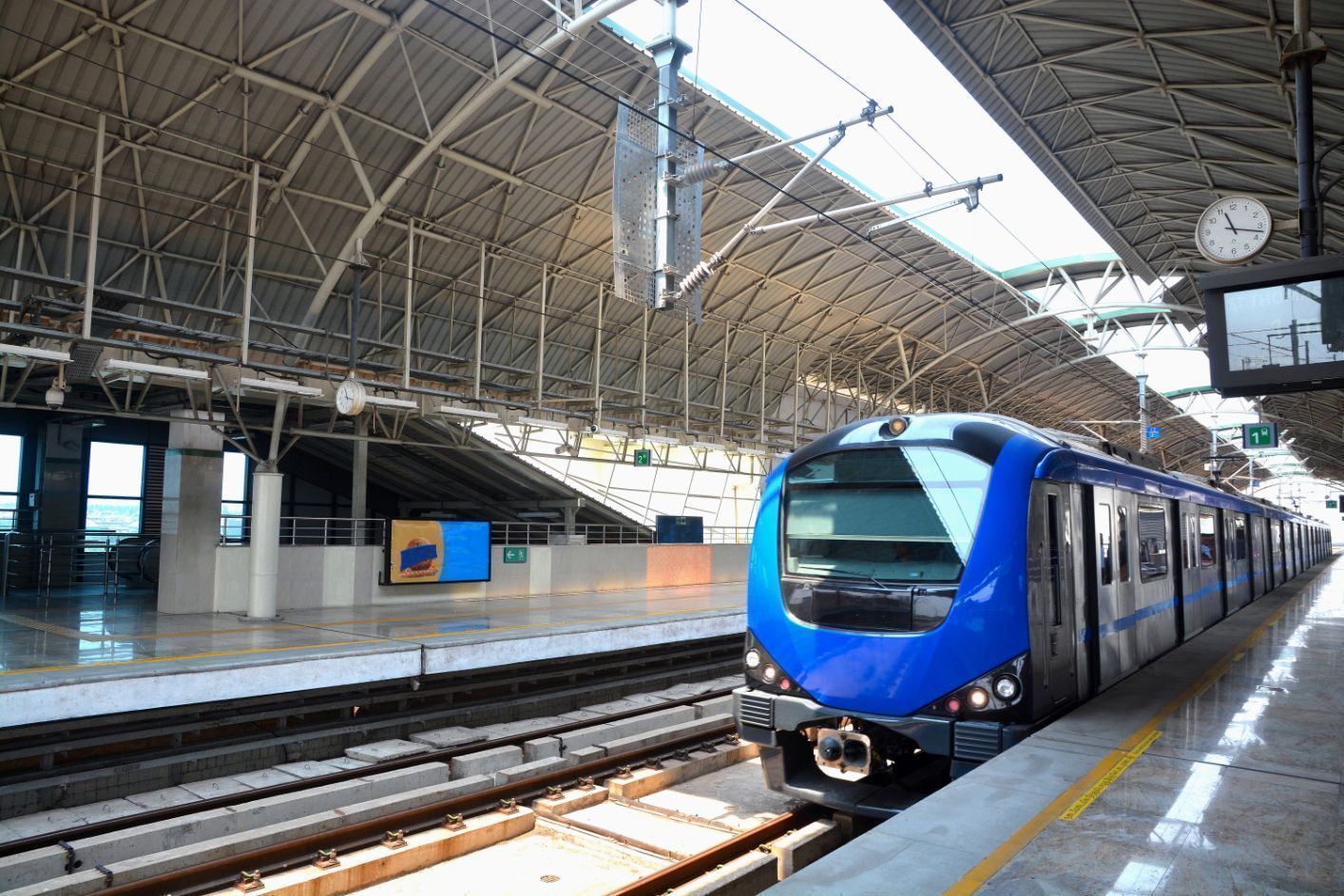
Mumbai’s metro expansion programme has gained renewed momentum after the Maharashtra Government released over ₹530 crore in fresh interest-free support for nine corridors across the metropolitan region. The instalments, issued through a series of government resolutions this week, are designed to help the Mumbai Metropolitan Region Development Authority meet tax-related liabilities and land acquisition costs—two of the most significant financial hurdles for large urban transport projects.
According to officials, the latest allocation reflects the state’s attempt to keep long-pending routes on track while reinforcing Mumbai’s shift towards cleaner and more accessible mass transit. With the city targeting a future that prioritises lower emissions, equitable mobility, and reduced car dependence, the infusion of interest-free loans is being viewed as a necessary intervention to maintain construction continuity across multiple corridors. The largest share of the new support has gone to Metro Line 2B, running between DN Nagar and Mandale. This corridor has received ₹112.80 crore, raising its cumulative support to ₹726.80 crore out of the sanctioned ₹1,290 crore. The state has clarified that repayments will begin only after external loans—from organisations such as the Asian Development Bank—are cleared, a milestone currently expected in 2044. Officials noted that the decision helps prevent short-term financial stress on a line that is crucial for east–west connectivity.
Metro Line 5, connecting Thane, Bhiwandi and Kalyan, has also secured a significant ₹52.38 crore for the ongoing financial year. Its cumulative interest-free assistance now stands at ₹277.38 crore. The state has repeated that this support is targeted primarily at tax components and land procurement, which often lead to delays in high-density suburban belts. Other corridors have been given proportionate support to keep progress steady. Line 6, linking Swami Samarth Nagar to Vikhroli, has received ₹32.95 crore, taking its total to nearly ₹368 crore. Line 2A, connecting Dahisar and DN Nagar, has secured ₹28.79 crore, lifting cumulative disbursements to over ₹523 crore. Corridors such as the Wadala–Kasarvadavali Line 4 and its Gaimukh extension have collectively received more than ₹91 crore, while additional tranches have been released for Lines 7, 9, 7A, 10, and 12.
Across all projects, the government has reiterated uniform conditions: no interest will be charged, repayments must begin only after external borrowings are settled, and penalties will not be levied on delayed reimbursement. MMRDA has been instructed to maintain separate accounts for categories of expenditure and furnish detailed utilisation reports, ensuring financial transparency in a sector often burdened by cost escalations. Urban mobility experts say sustained public investment is essential if Mumbai is to achieve a more sustainable, inclusive and low-carbon transport ecosystem. As the region expands, metro corridors are expected to play a central role in improving accessibility, especially for neighbourhoods that rely heavily on road-based options today.
Mumbai Achieves Rs 530 Crore Interest Free Push To Speed Up Metro Lines