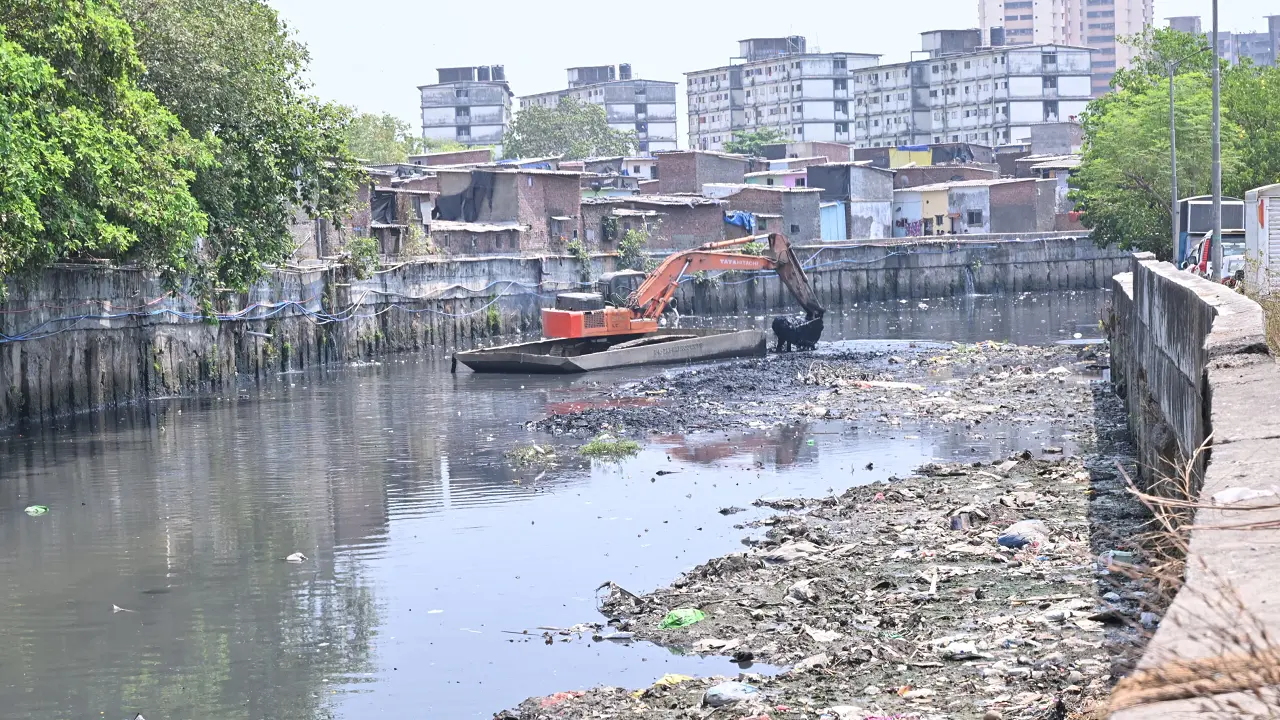
Mumbai has intensified its annual flood preparedness efforts with a citywide push to accelerate Mithi River desilting and drain clearance, as authorities race to complete critical works ahead of the monsoon. The initiative, spanning multiple locations along the river and across stormwater networks, is central to reducing flood risk in some of the city’s most vulnerable low-lying neighbourhoods.
Civic officials have initiated simultaneous operations at several stretches of the Mithi River, supported by parallel desilting of major and minor drains across the metropolitan area. The effort is being executed under a time-bound framework, with a late-May deadline aimed at ensuring that stormwater channels remain unobstructed during peak rainfall. The Mithi River desilting programme is particularly significant given the river’s role as a primary drainage artery. Flowing through dense residential and commercial zones—including critical economic districts—the river carries stormwater into the Arabian Sea. However, years of silt accumulation, waste dumping, and encroachments have reduced its carrying capacity, increasing the likelihood of flooding during intense rain events.
Urban planners highlight that improving river flow is essential not only for flood mitigation but also for restoring ecological balance. “Desilting is not just a seasonal activity; it is a structural intervention that determines how effectively a city can absorb extreme rainfall,” said an infrastructure expert tracking urban resilience projects. The current phase targets the removal of a substantial volume of accumulated silt, which, if left unaddressed, can obstruct water flow and lead to overflow into adjacent settlements. Areas along the river corridor, particularly in central and suburban Mumbai, have historically experienced severe waterlogging, disrupting transport, economic activity, and daily life.
In addition to manual and mechanical desilting, authorities have introduced measures to improve waste management within the drainage system. Floating barriers, known as trash booms, have been installed across key nullahs to intercept solid waste before it enters the river. This intervention is expected to reduce the re-accumulation of debris and improve the longevity of desilting efforts. A notable shift this year is the integration of technology to enhance monitoring and accountability. An artificial intelligence-based system is being deployed to verify on-ground progress through image and video analysis, reducing the scope for manual discrepancies in reporting. Officials suggest that this could significantly improve transparency in project execution, a longstanding concern in civic infrastructure works.
From a climate resilience perspective, the focus on Mithi River desilting reflects a broader recognition of the need to strengthen urban drainage systems amid changing rainfall patterns. Experts argue that such interventions must be complemented by long-term strategies, including river restoration, catchment management, and stricter controls on waste disposal. As the monsoon approaches, the effectiveness of these efforts will be closely tested. For a city that has repeatedly faced the economic and human costs of flooding, timely completion and sustained maintenance of drainage infrastructure remain critical to ensuring safer, more resilient urban living conditions.
Mumbai Accelerates Mithi River Desilting Before Monsoon