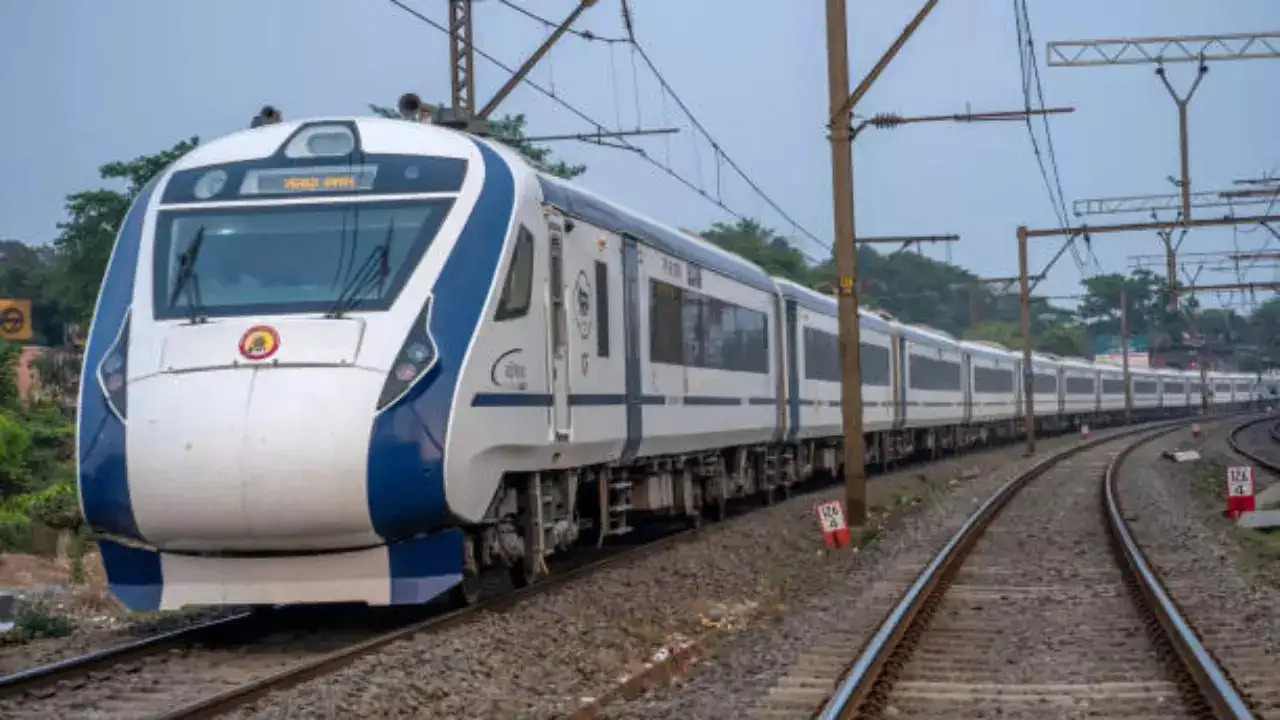
To manage the unprecedented travel demand of the upcoming Ganeshotsav festival, railway officials have announced the temporary augmentation of the Mumbai-Goa Vande Bharat Express. The semi-high-speed train, which typically operates with an eight-coach configuration, will be doubled to a 16-coach service for a brief period. This proactive capacity expansion, scheduled to commence from Mumbai on August 25 and from Madgaon on August 26, is a significant operational decision designed to cater to the surge of commuters heading to the Konkan region for the annual festivities.
The decision reflects a sophisticated approach to agile urban and regional mobility planning. Rather than deploying additional, conventional trains, officials are leveraging the efficiency of the existing high-speed fleet. This temporary service enhancement demonstrates a data-driven model for responding to peak seasonal demand without the long-term capital expenditure required for new permanent train sets. By maximising the utilisation of an already advanced, low-carbon transport solution, the railways are taking a significant step towards their ambitious zero-net carbon objectives, proving that sustainability and operational flexibility can be integrated for a more responsive public transport system.
This scaling of services also serves the larger societal goal of creating more equitable cities and travel networks. Ganeshotsav is a culturally and emotionally significant event, drawing thousands of people to their ancestral homes. The increase in seating capacity makes this journey more accessible for a wider demographic, particularly those who might find it challenging to secure last-minute reservations on regular services. By ensuring that families and individuals have more opportunities to participate in this important celebration, the railway network is not just a mode of transport but an enabler of social cohesion and cultural preservation. The move helps alleviate the perennial problem of overcrowding on popular routes during festivals, leading to a safer and more comfortable experience for all passengers, and subtly promoting a more gender-neutral environment on board.
Ultimately, the temporary doubling of the Vande Bharat Express offers a blueprint for how a modern, technologically forward-looking railway system can serve the dual purpose of commercial efficiency and social responsibility. It is a scalable solution that prioritises passenger experience and accessibility while adhering to long-term sustainable development goals. This adaptive strategy, in line with expert recommendations for dynamic public service provision, serves the collective interest of a society that values both progress and tradition.