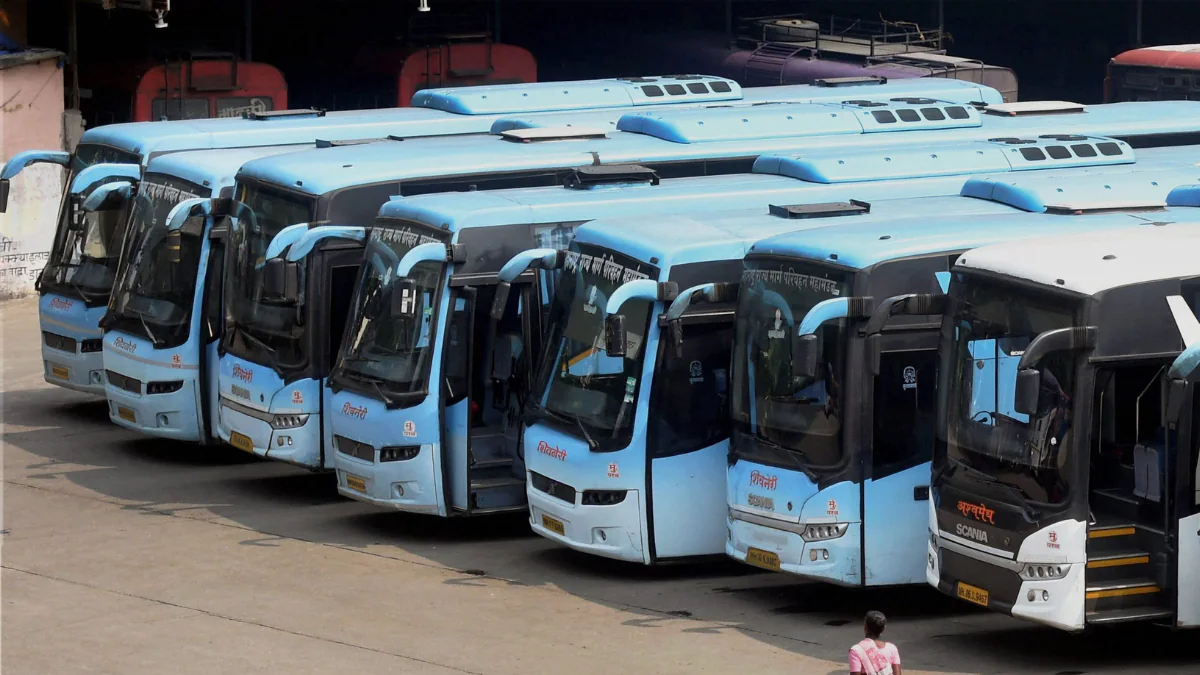
The Maharashtra State Road Transport Corporation (MSRTC) is preparing to introduce a new category of higher-capacity buses across the state from March, marking a targeted intervention to ease congestion on some of Maharashtra’s busiest intercity corridors. The rollout is aimed at improving passenger comfort, operational efficiency, and reliability within the state-run bus network, which remains the primary mobility backbone for millions of daily commuters.
The new fleet consists of 55-seater buses configured with a 3×2 seating layout, a notable shift from the standard capacity of existing services that typically seat around 40 passengers. Transport officials said the additional seating is intended to reduce overcrowding on high-demand routes, particularly those connecting regional hubs, industrial towns, and expanding urban centres where passenger volumes routinely exceed capacity during peak hours. Branded as the MSRTC Rajmata Jijau buses, the vehicles are expected to be introduced in phases and deployed strategically on routes identified through passenger load data. Officials overseeing operations indicated that the larger seating capacity allows more commuters to travel seated, improving journey comfort while also helping streamline boarding times and schedule adherence — a persistent challenge for long-distance and semi-urban bus services.
Urban mobility planners note that incremental upgrades such as higher-capacity buses can deliver immediate benefits without requiring new infrastructure. “When public transport systems optimise existing road networks more efficiently, it reduces pressure on private vehicle use,” said a transport policy expert. In a state grappling with rising fuel consumption and traffic congestion, strengthening bus services is viewed as a cost-effective step towards more sustainable mobility. Beyond capacity, the new buses are positioned as part of MSRTC’s broader fleet modernisation strategy. Industry observers say that improving ride quality and seating comfort is crucial for retaining ridership, especially as private operators and app-based mobility services expand into intercity markets. Public confidence in state transport systems often depends as much on daily experience as on fare affordability.
The launch also carries economic implications for regional connectivity. Reliable intercity bus services support labour mobility, access to education, and small business activity across districts where rail connectivity may be limited. For peri-urban and rural communities, MSRTC buses continue to play a vital role in linking residents to employment centres, healthcare facilities, and markets. Transport officials emphasised that the initiative is aligned with long-term goals of improving service standards while maintaining affordability. While the buses are not positioned as premium offerings, the enhanced capacity and layout are expected to deliver tangible improvements in comfort without increasing operational complexity.
As Maharashtra’s cities expand and travel demand grows, the success of the MSRTC Rajmata Jijau buses will likely be measured by their ability to absorb passenger pressure on crowded routes. If effective, the model could shape future procurement decisions as the state looks to balance mobility needs with environmental and economic sustainability.
MSRTC Expands Capacity With New Intercity Buses