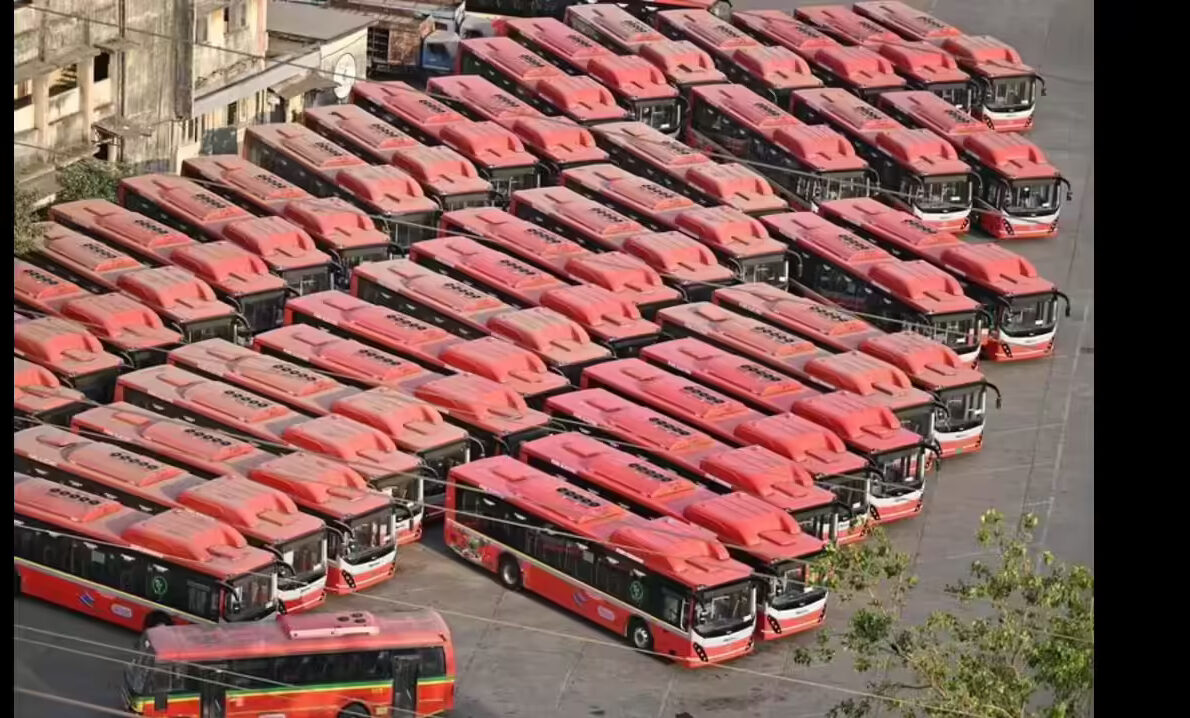
Mumbai’s public transport capacity is set to undergo a decisive test of governance and execution as the state transport department directs the Maharashtra State Road Transport Corporation (MSRTC) to fast-track procurement processes for 8,000 new buses by the end of 2026. The directive follows a high-level internal review of budget utilisation and raises broader questions about delivery timelines, institutional efficiency, and the future of affordable mass mobility across Maharashtra.
At the centre of the review was concern over delayed tendering and slow administrative clearances that have held back capital expenditure during the current financial year. Senior transport officials indicated that while substantial funds were earmarked for fleet expansion and passenger infrastructure in the 2025–26 budget, a significant portion risks remaining unutilised unless procurement pipelines move rapidly in the coming months. The push for faster induction of MSRTC new buses is not just an accounting issue. For millions of daily commuters in Mumbai’s extended metropolitan region and intercity corridors, state buses remain the backbone of affordable travel, especially for low-income households, women commuters, and workers dependent on last-mile connectivity. Urban transport planners note that stagnation in fleet renewal directly affects service reliability, safety, and passenger comfort, undermining the credibility of public transport at a time when cities are trying to curb private vehicle growth.
Officials present at the review meeting acknowledged that tender processes for buses and bus station upgrades have been stuck for months, limiting the corporation’s ability to modernise depots, improve restrooms, and expand services. Industry experts say such delays also have economic spillovers, as bus procurement supports domestic manufacturing, component suppliers, and green mobility transitions when aligned with cleaner fuel or electric models. From a sustainability standpoint, the scale and timing of MSRTC new buses acquisition will shape Maharashtra’s transport emissions profile over the next decade. Public buses, when efficiently deployed, reduce per-capita carbon output, ease congestion, and improve air quality in dense urban regions such as Mumbai. Transport economists argue that delayed public fleet expansion often leads to higher dependence on informal or private transport, which is costlier and more polluting.
The internal review also highlighted accountability concerns, with transport authorities signalling that administrative inertia would not be tolerated going forward. Officials were instructed to prioritise passenger-facing infrastructure, accelerate tender approvals, and ensure that budgeted funds translate into tangible improvements on the ground before the financial year closes. Looking ahead, the challenge for MSRTC lies in converting urgency into execution. The success of the bus induction plan will depend on streamlined procurement, transparent oversight, and alignment with long-term mobility goals. For Mumbai and the wider state, timely delivery of MSRTC new buses could mark a meaningful step toward more inclusive, climate-resilient, and dependable public transport systems.
MSRTC Directed To Fast Track 8000 Bus Induction By 2026