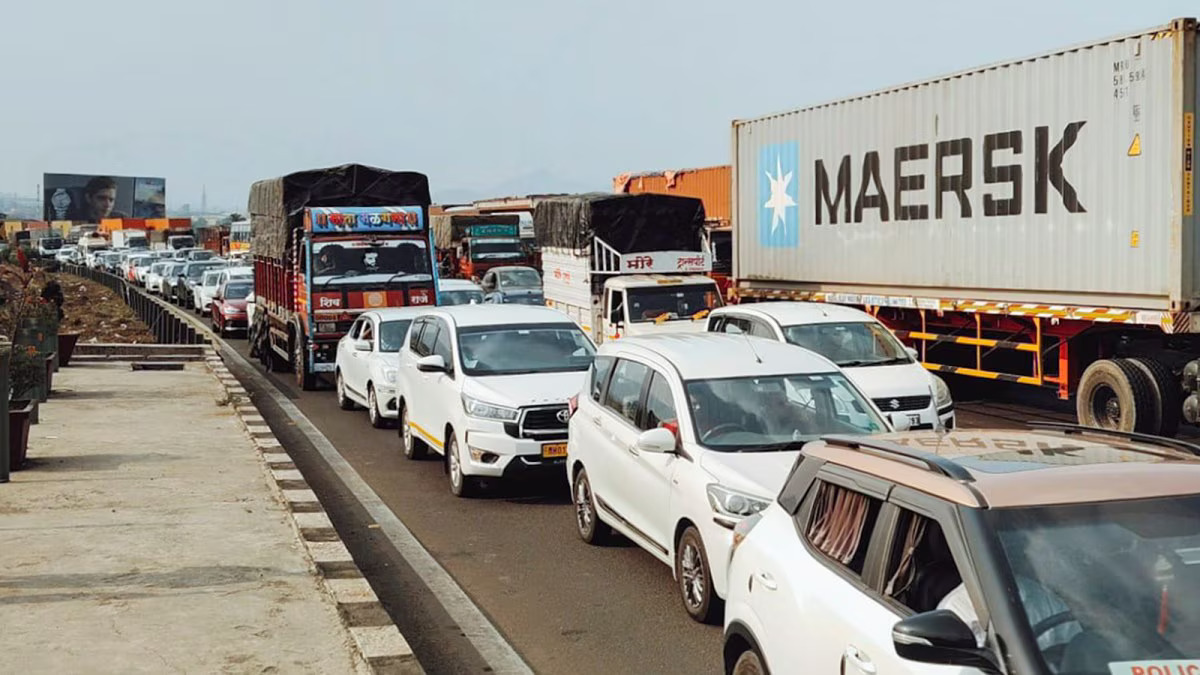
Authorities responsible for one of India’s busiest high-speed corridors are reassessing emergency preparedness after a hazardous material accident brought the Mumbai–Pune expressway to a standstill for more than a day. Following the overturning of a gas tanker near the Adoshi tunnel earlier this month, infrastructure and energy agencies have begun parallel efforts to strengthen both immediate response mechanisms and long-term safety systems along the route.
The incident exposed how vulnerable critical mobility corridors can be to disruptions involving hazardous cargo. A prolonged traffic shutdown not only stranded thousands of commuters and freight vehicles but also highlighted wider economic and environmental risks when emergency protocols fail to activate quickly on infrastructure that underpins regional growth. Officials from the Maharashtra State Road Development Corporation (MSRDC) confirmed that all agencies operating on the expressway have been instructed to strictly adhere to existing standard operating procedures. These protocols govern hazardous goods movement, traffic diversion, and coordination between highway patrols, disaster response teams, and private operators. In the absence of new infrastructure in the short term, enforcement of these rules has been identified as the most immediate safeguard.
At the policy level, the state government has already constituted a high-level technical committee to study the incident and recommend systemic reforms. The panel includes road engineering specialists, traffic enforcement experts, transport officials, legal advisors, and civil society representatives. Its mandate extends beyond the Mumbai–Pune expressway to include other access-controlled corridors such as the Samruddhi Expressway, signalling a broader review of hazardous transport management across the state’s expressway network. Parallel corrective measures are being initiated by Bharat Petroleum Corporation Limited, which owns the tanker involved. Energy sector officials said internal audits have focused on driver training, route preparedness, and coordination failures that delayed containment of the leak. One key gap identified was the availability of specialised recovery and containment equipment, which was not positioned close enough to the accident site.
To address this, oil marketing companies are now working on expanding quick response teams along major hazardous cargo routes. These teams, already operational for LPG transport, are expected to be upgraded to handle other industrial gases, with defined response radii to reduce reaction times. Coordination with other public sector fuel suppliers, including Indian Oil Corporation, is also being formalised under a mutual aid framework. From an infrastructure standpoint, highway police and planners are examining low-cost design interventions that could significantly improve incident management. Proposals under discussion include more frequent median openings in ghat sections to enable faster traffic diversion, as well as dedicated emergency assistance centres along vulnerable stretches.
Urban mobility experts note that as expressways increasingly carry hazardous industrial cargo alongside passenger traffic, safety planning must evolve beyond enforcement to include infrastructure design, decentralised response capacity, and transparent coordination protocols. The committee’s recommendations, expected within weeks, are likely to influence how India’s high-speed road networks balance economic efficiency with public safety and climate resilience in the years ahead.
MSRDC Reviews Hazardous Transport On Expressway