


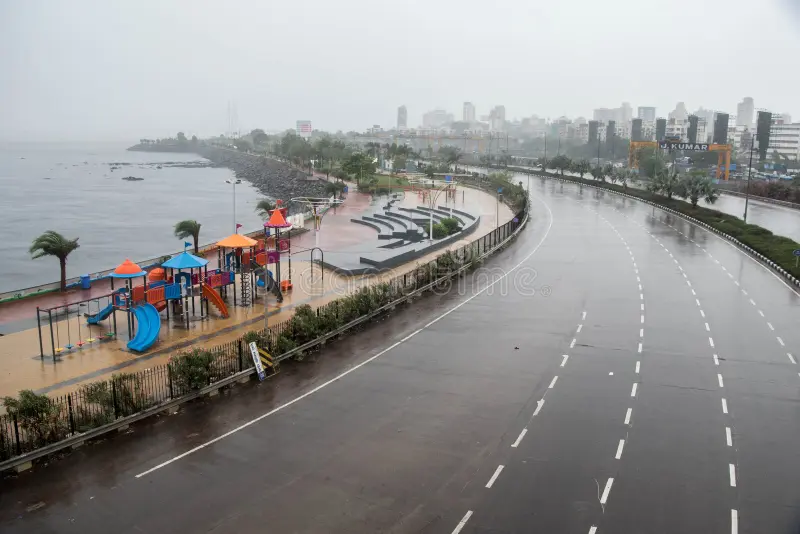
Environmental activist Zoru Bhathena has filed a Public Interest Litigation (PIL) against the Maharashtra State Road Development Corporation (MSRDC), Maharashtra Coastal Zone Management Authority (MCZMA), and the State of Maharashtra. The PIL contests MSRDC’s intention to facilitate commercial development on a plot situated on the Bandra reclamation, which is explicitly prohibited for commercial use under current regulations.
The Bombay High Court has adjourned the matter for two weeks and directed MSRDC to submit a detailed response. This legal action stems from concerns raised in the PIL regarding the Bandra Worli sea link project’s environmental clearances and subsequent land usage permissions.
According to the petition, the Bandra Worli sea link project, conceptualized in the 1990s, involved reclaiming 27 hectares of land at the Bandra end, incorporating unallocated areas from the Bandra-Kurla Complex (BKC) development plan. Environmental clearances for the project were contingent upon stringent conditions, notably barring any residential or commercial utilization of the reclaimed land.
“The Ministry of Environment, Forest and Climate Change (MoEFCC) stipulated in its environmental clearance that no portion of the reclaimed land should be earmarked for residential or commercial purposes,” the petition highlights, underscoring the regulatory framework governing the Bandra Worli sea link project.
In 2016, the Maharashtra Revenue and Forest Department transferred the reclaimed land to MSRDC with explicit conditions requiring prior approval from MCZMA or MoEF for any developmental proposals. Despite these restrictions, MSRDC recently initiated a tender process in January 2024 to select a developer for the construction and development of the Bandra MSRDC land parcel.
Upon learning of this development, Bhathena approached MCZMA, drawing attention to the regulatory non-compliance and urging preventive measures against illegal developmental activities on the reclaimed plot.
The PIL contends that any commercial exploitation of the reclaimed land violates Coastal Regulation Zone (CRZ) norms, posing environmental risks and contravening the original project’s environmental clearances and subsequent governmental directives.
This legal challenge underscores the delicate balance between infrastructural development and environmental sustainability, crucial for Mumbai’s urban planning. It reflects broader concerns over adherence to regulatory frameworks governing land use and conservation in India’s metropolitan cities.
As the legal proceedings unfold, stakeholders await the Bombay High Court’s deliberation on the PIL, anticipating significant implications for urban development policies and environmental conservation efforts in Maharashtra.
