


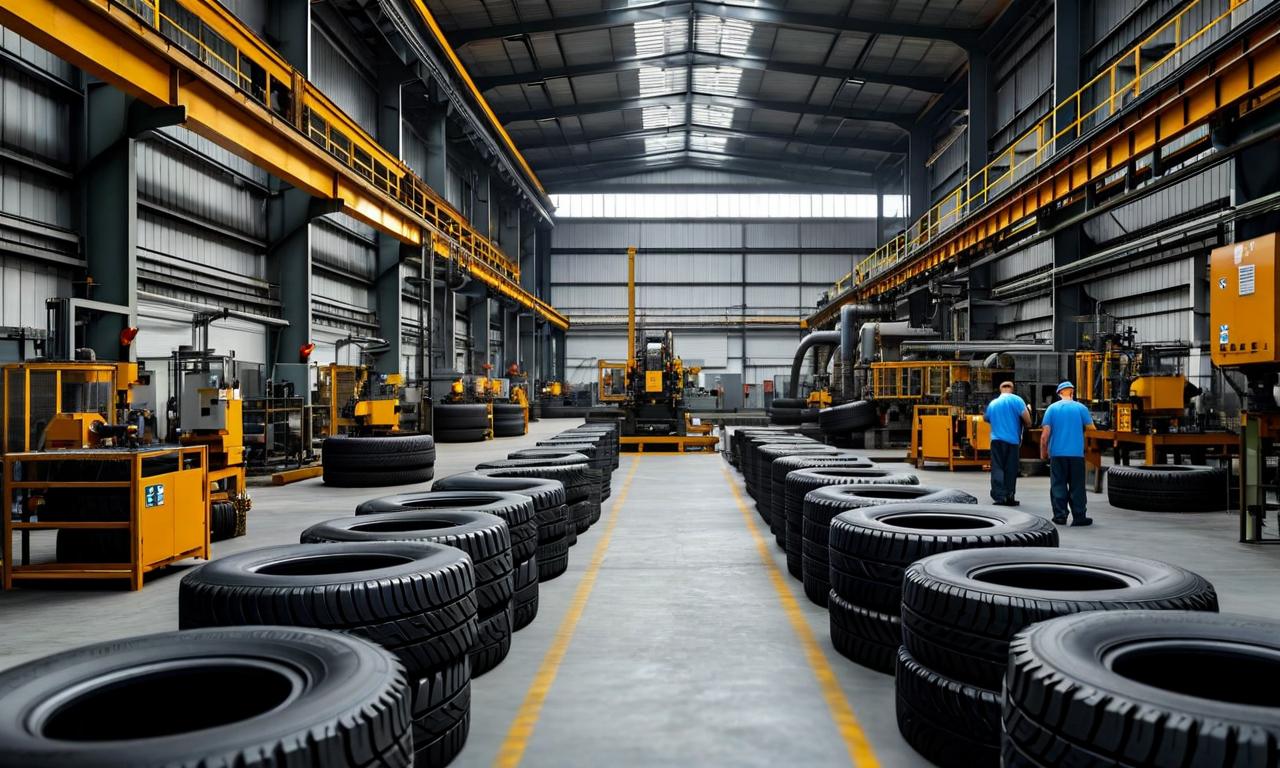
Tyre major MRF has announced plans to invest ₹5,300 crore in a greenfield manufacturing facility at the SIPCOT Industrial Park in Sivaganga district, Tamil Nadu, marking one of its largest capacity expansion commitments in recent years.The investment, proposed over a 12-year period, will focus on producing automotive tyres and allied products and is expected to create more than 1,000 direct jobs. The company signed a non-binding memorandum of understanding with the Tamil Nadu government through its investment promotion agency, Guidance Tamil Nadu, to facilitate the project.
In a regulatory filing, MRF stated that the agreement is contingent upon the sanction of a customised incentive package, land allocation, infrastructure support and statutory approvals from the state authorities. The phased investment structure suggests a calibrated approach aligned with market demand and industry cycles.Industry analysts view the proposed plant as a strategic expansion aimed at strengthening MRF’s domestic manufacturing footprint amid rising vehicle demand and increasing localisation requirements. Tamil Nadu already serves as a major automotive and auto-component hub, offering proximity to original equipment manufacturers (OEMs), port connectivity and a skilled industrial workforce.As of March 2025, MRF had an installed tyre manufacturing capacity of 95.85 million units and tube capacity of 47.90 million units across nine plants, including its long-standing facility at Tiruvottiyur near Chennai, as well as units in Kerala, Goa and Puducherry. The addition of a new greenfield plant would enhance production flexibility and potentially support export growth.
The tyre sector has been witnessing structural shifts driven by premiumisation, radialisation across commercial vehicle segments and electric vehicle adoption. A new plant built with modern automation and energy-efficient systems could help MRF optimise production costs and improve margins over the long term.Tamil Nadu, for its part, has been actively courting large-scale manufacturing investments through sector-specific policies and tailored incentive frameworks. The SIPCOT industrial ecosystem provides ready access to utilities and logistics infrastructure, reducing project gestation timelines.However, analysts caution that the 12-year investment horizon reflects both opportunity and risk. Raw material price volatility—particularly natural rubber and crude-linked inputs—along with cyclical fluctuations in the automotive industry, could influence the pace of capital deployment.If executed as planned, the Sivaganga facility will reinforce MRF’s leadership position in India’s tyre market while contributing to regional industrial development. The project also underscores the continued attractiveness of Tamil Nadu as a destination for large-scale manufacturing investments anchored in the automotive value chain.
MRF plans ₹5,300 crore Tamil Nadu plant
