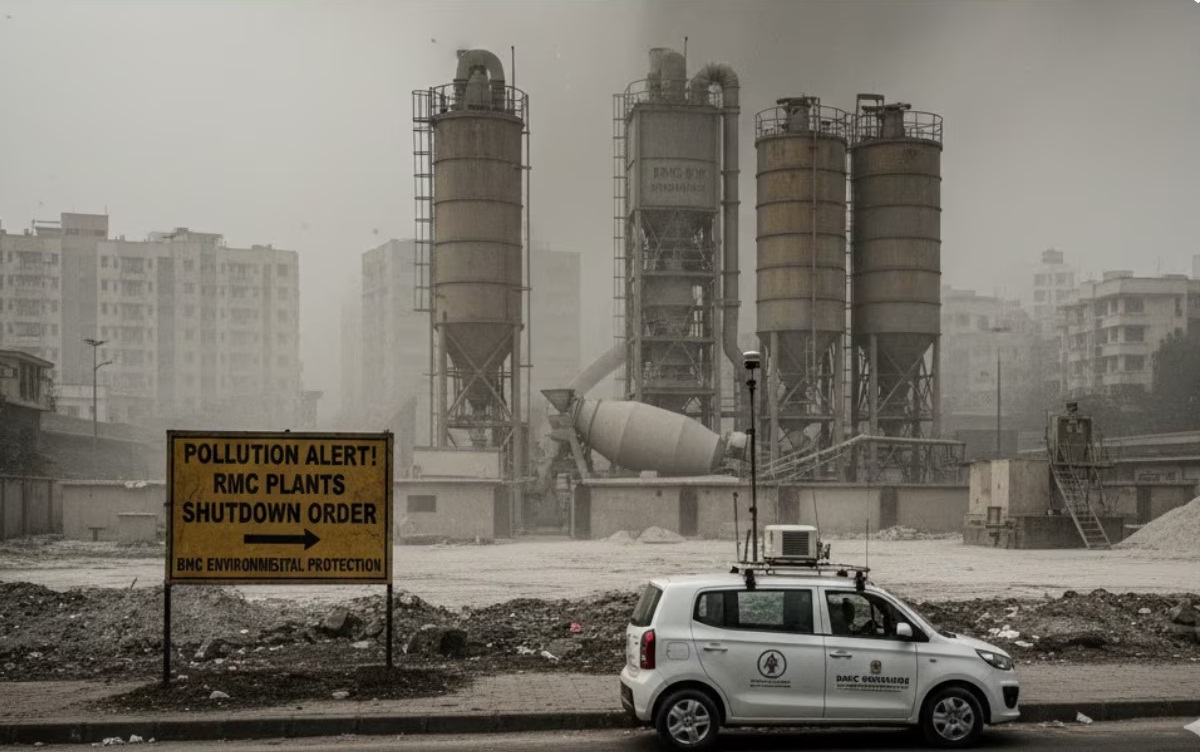
Environmental enforcement across the Mumbai Metropolitan Region has intensified after the state pollution regulator ordered the closure of multiple ready-mix concrete facilities for failing to meet air quality standards. The action follows a series of inspections aimed at addressing construction-linked pollution at a time when Mumbai continues to experience hazardous air conditions during the winter months.
Over the past week, inspection teams reviewed operations at more than 150 ready-mix concrete units spread across Mumbai, Navi Mumbai and parts of Thane district. Four facilities were directed to cease operations after regulators found persistent non-compliance with mandated pollution control measures. Several others were issued warnings and corrective notices, signalling a broader compliance reset for one of the region’s most emissions-intensive industries. The enforcement drive is part of a court-monitored effort to curb particulate pollution from construction and material processing activities, which urban planners identify as a major contributor to declining air quality in dense metropolitan regions. Concrete batching plants generate significant dust emissions if enclosure, misting and material handling norms are not strictly followed, particularly during dry winter conditions when dispersion is limited.
In addition to shutdown orders, financial penalties exceeding ₹1.8 crore were recovered from dozens of facilities through bank guarantees, reflecting repeated or serious violations. Officials also inspected more than a hundred large construction sites across the region, levying penalties where dust suppression, debris management and on-site monitoring norms were found lacking. Environmental experts note that such enforcement marks a shift from episodic inspections to sustained regulatory oversight. Mumbai’s rapid infrastructure build-out—spanning metro corridors, road expansions and real estate redevelopment—has increased pressure on regulators to ensure growth does not come at the cost of public health. Poor air quality disproportionately affects outdoor workers, commuters and residents of high-density neighbourhoods located near construction clusters.
Regulators have indicated that enforcement will be paired with technical guidance for operators willing to upgrade pollution control systems. This includes covered conveyors, automated sprinkling, wheel-washing mechanisms and real-time emissions monitoring. The approach aims to balance economic continuity with environmental accountability, particularly as the construction sector remains critical to urban housing supply and infrastructure delivery. The crackdown also aligns with parallel actions by municipal authorities, who have recently halted work at major infrastructure sites over air pollution breaches. Together, these measures underline a growing consensus among civic agencies that air quality management must be embedded into project execution rather than treated as a post-facto compliance issue.
Mumbai currently operates a network of fixed and mobile air quality monitoring stations across the metropolitan region, enabling rapid identification of pollution spikes. Officials say this data-driven approach will guide future inspections, with additional enforcement teams likely if conditions fail to improve. As Mumbai grapples with the twin challenges of urban expansion and climate resilience, sustained regulatory vigilance over high-emission activities such as concrete production may prove central to safeguarding liveability while keeping the city’s development engine running.
MPCB Steps Up Enforcement On Construction Linked Air Pollution