


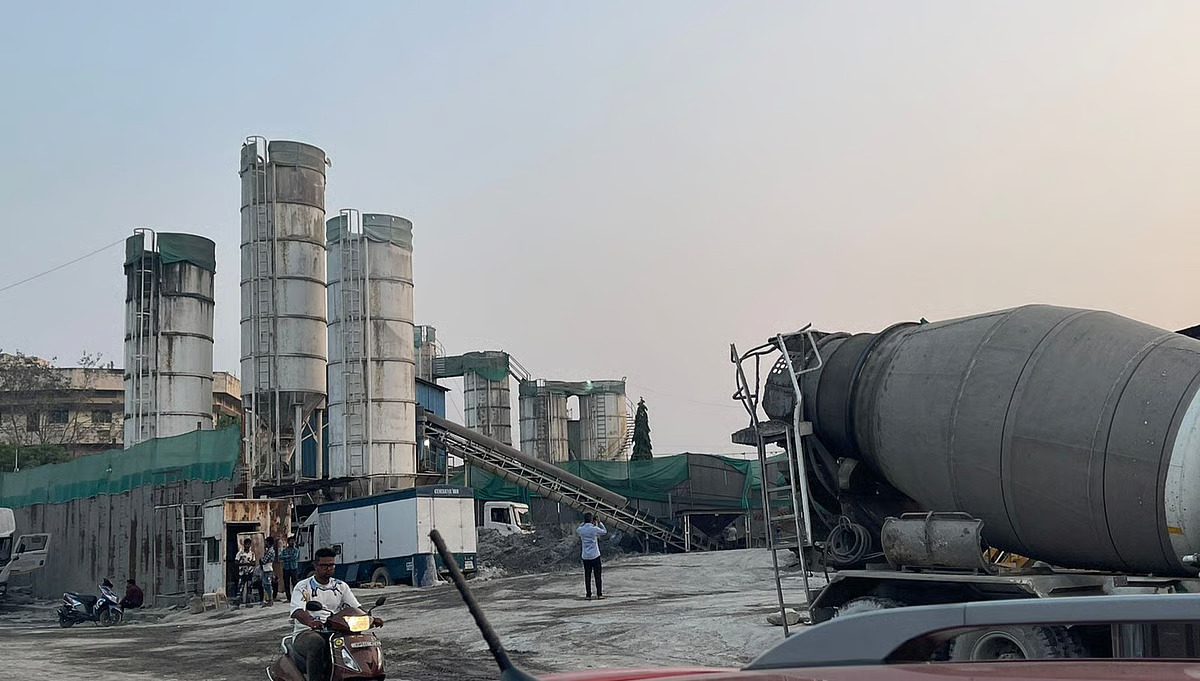
Maharashtra Pollution Control Board (MPCB) and the Brihanmumbai Municipal Corporation (BMC) have launched a strict enforcement drive against Ready-Mix Concrete (RMC) plants that are breaching pollution control norms. Developers operating such plants within crowded construction sites are being directed to relocate them if they occupy more than 70 per cent of a project area, as per new regulatory directives.
The decision followed a joint review meeting between senior officials from MPCB and BMC, convened to assess the city’s air quality management strategies. Authorities observed that several RMC units operating in congested urban pockets were emitting high levels of dust and particulate matter, posing serious health hazards to nearby residents and workers. Officials stressed that while RMC plants are critical to Mumbai’s ongoing construction boom, their operation in restricted spaces without adequate dust control measures significantly contributes to air pollution. “When RMC plants operate in limited spaces, cement dust, vehicular movement, and poor containment lead to severe localised pollution. These facilities must now follow strict siting norms and relocate where necessary,” an official from the pollution control board stated.
The MPCB and BMC have further mandated that all large construction and demolition sites implement dust mitigation practices such as green netting, regular water sprinkling, and wheel-washing systems at exit points to curb dust dispersion onto public roads. These steps form part of the civic body’s broader 28-point winter pollution action plan, designed to reduce particulate matter concentration across the city between November and February, when air quality typically declines. Officials have also reiterated the ban on burning wood and waste materials at construction sites during winter months. Civic authorities have pledged to continue inspections and issue stop-work notices against non-compliant projects. Between January and September 2025 alone, the BMC conducted over 8,300 site inspections, issuing show-cause notices to violators and halting work at more than 3,400 sites until compliance was achieved.
Experts in environmental policy have welcomed the move, calling it a step towards accountable urban construction practices. They note that stricter regulation of RMC plants, combined with technological upgrades such as dust collectors, closed mixers, and green fencing, can help reduce Mumbai’s carbon footprint while improving public health. With urban air pollution emerging as a serious concern in Mumbai, the latest enforcement drive underscores a shift towards sustainable construction and stricter environmental governance. By ensuring cleaner building practices and relocation of polluting units, the city’s civic and environmental agencies are working to protect residents’ health while steering Mumbai toward a cleaner, more liveable urban future.
Also Read: Thane To Face 24 Hour Water Cut On November 1 And 2
