


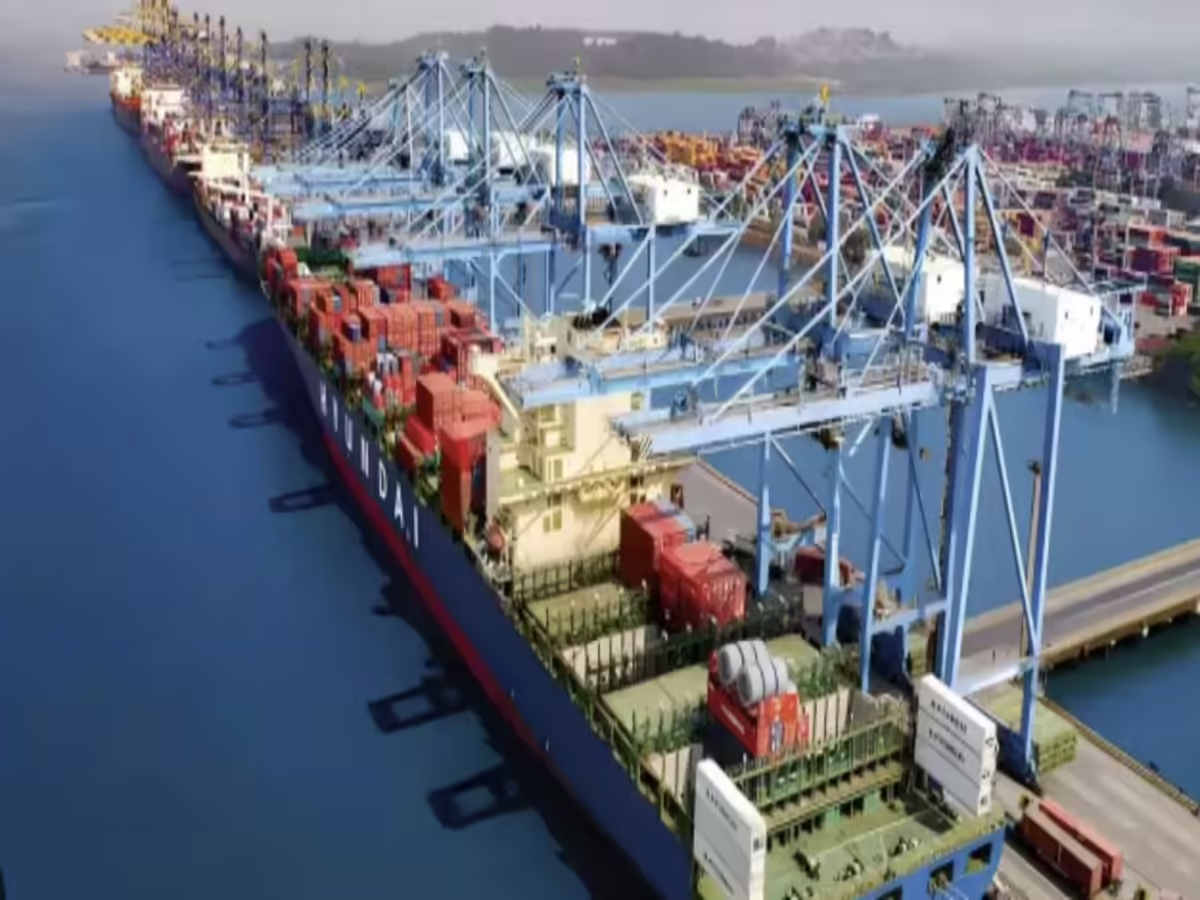
The Mormugao Port Authority has approached the Union government seeking approval for a ₹1,300-crore investment to comprehensively redevelop one of its key cargo berths, signalling a renewed push to modernise ageing port infrastructure along India’s western coast. The proposal, centred on upgrading an existing berth to handle contemporary cargo requirements, carries wider implications for coastal urban economies, logistics efficiency, and climate-resilient infrastructure planning in Goa.
According to officials familiar with the proposal, the redevelopment aims to extend the operational life of the berth while improving its ability to handle higher cargo volumes with greater safety and efficiency. Much of the port’s core infrastructure was built decades ago and now faces limitations in accommodating modern vessels, mechanised handling systems, and stricter environmental norms. Industry experts say such constraints can erode a port’s competitiveness, particularly as shippers increasingly prioritise turnaround time and reliability. For Mormugao, the redevelopment is also tied to broader economic considerations. The port plays a critical role in supporting regional industries, mineral movement, and coastal trade. Strengthening berth capacity can stabilise cargo flows and sustain employment across logistics, warehousing, and allied services in port-adjacent urban areas. Urban economists note that port investment often has multiplier effects, influencing land use, real estate demand, and infrastructure planning in surrounding cities. The ₹1,300-crore proposal includes structural strengthening, modern cargo-handling systems, and safety upgrades designed to meet current operational standards. Infrastructure planners emphasise that rebuilding existing assets, rather than expanding footprint indiscriminately, aligns with responsible development principles, especially in ecologically sensitive coastal zones. Retrofitting infrastructure can reduce environmental disruption while improving resilience to extreme weather events that are becoming more frequent along India’s coastline.
From a climate perspective, port authorities are under growing pressure to ensure that redevelopment projects integrate energy efficiency and emission reduction measures. Maritime analysts suggest that newer berth designs can support cleaner cargo operations, reduced vessel idling, and future adoption of shore power, all of which contribute to lowering the carbon intensity of port activities. Such measures are increasingly relevant as cities linked to ports face air quality and public health challenges. However, funding approvals remain a critical hurdle. A senior port sector official notes that large capital projects must demonstrate not only financial viability but also alignment with national logistics and sustainability priorities. In an environment of competing infrastructure demands, ports are expected to justify investments through improved performance metrics and long-term public value.
If cleared, the redevelopment could mark an important step in repositioning the port within India’s evolving maritime network. As coastal cities adapt to changing trade patterns and climate risks, targeted upgrades like this may determine whether legacy ports remain relevant contributors to inclusive economic growth. The next phase will depend on regulatory clearances, funding timelines, and how effectively the project integrates modern infrastructure with the needs of the surrounding urban and ecological landscape.
Also Read: India Maritime Strategy Reshapes Container Shipping Capacity
Mormugao Port Plans Berth Redevelopment Funding
