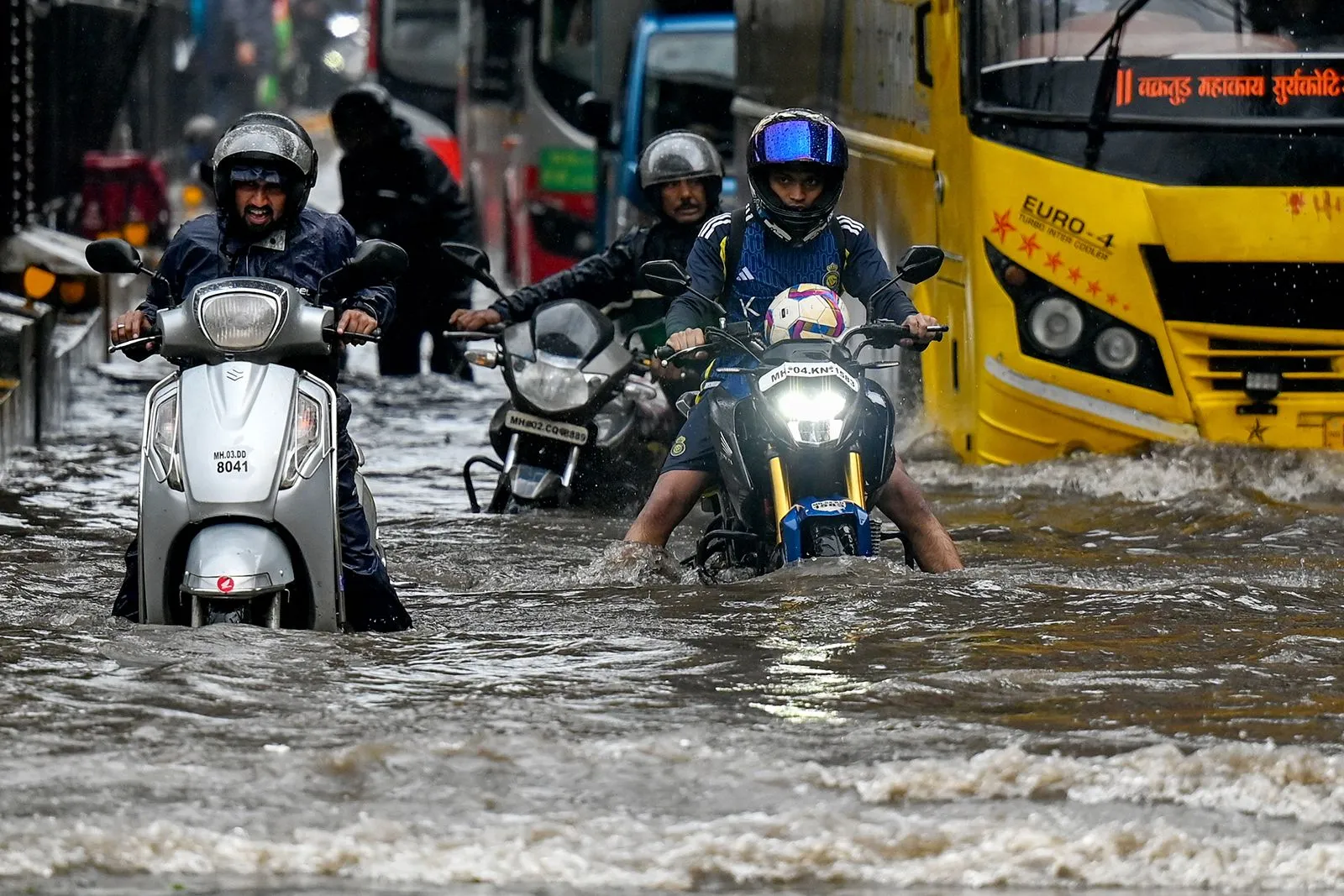
Torrential monsoon rains wreaked havoc across parts of Gujarat and Uttar Pradesh, turning roads into rivers and paralysing daily life. With waterlogged streets, stranded vehicles, and overflowing drains, the deluge disrupted transport, business, and emergency services. Residents and commuters were left scrambling for safety, as city infrastructure struggled to cope with the intensity of rainfall across both urban and rural areas.
Urban areas in Gujarat witnessed severe flooding, with major roads in cities like Ahmedabad and Vadodara submerged under several feet of water. Commuters were forced to abandon their vehicles, and low-lying areas saw water rushing into homes and commercial establishments. Experts warned that the city’s drainage systems were overwhelmed, and the monsoon’s intensity had outpaced the state’s preparedness for such downpours.
In Uttar Pradesh, heavy rains led to widespread flooding across multiple districts. Towns and cities like Lucknow and Kanpur reported prolonged traffic standstills, submerged markets, and stalled trains. Residents voiced frustration over recurring urban flooding every monsoon, citing poor infrastructure and drainage mismanagement. Officials have deployed emergency services, but access to several neighbourhoods remains difficult due to continuous rain and rising water levels.
As visuals emerged of vehicles floating on roads and residents wading through waist-deep water, the scale of monsoon disruption became evident. Schools in some areas were closed as a precaution, and business activity took a hit. While temporary relief teams were activated, experts cautioned that more rainfall was expected in the coming days, urging authorities to act swiftly to prevent further damage.
Environmentalists pointed out that unplanned urban expansion, clogged drains, and concretisation had contributed significantly to the scale of the crisis. They stressed the urgent need for long-term planning, improved stormwater management, and climate-resilient infrastructure. Citizens, meanwhile, called for stronger disaster readiness, as climate-driven weather extremes are becoming the new norm in India’s monsoon calendar.
The ongoing monsoon chaos in Gujarat and Uttar Pradesh underscores deep infrastructural vulnerabilities in the face of climate extremes. As floodwaters continue to disrupt life, residents and experts alike are urging sustainable reforms. With more rain forecasted, proactive disaster management and immediate mitigation efforts are critical. The unfolding scenes of submerged cities serve as a stark reminder of the urgent need for climate-resilient urban planning.