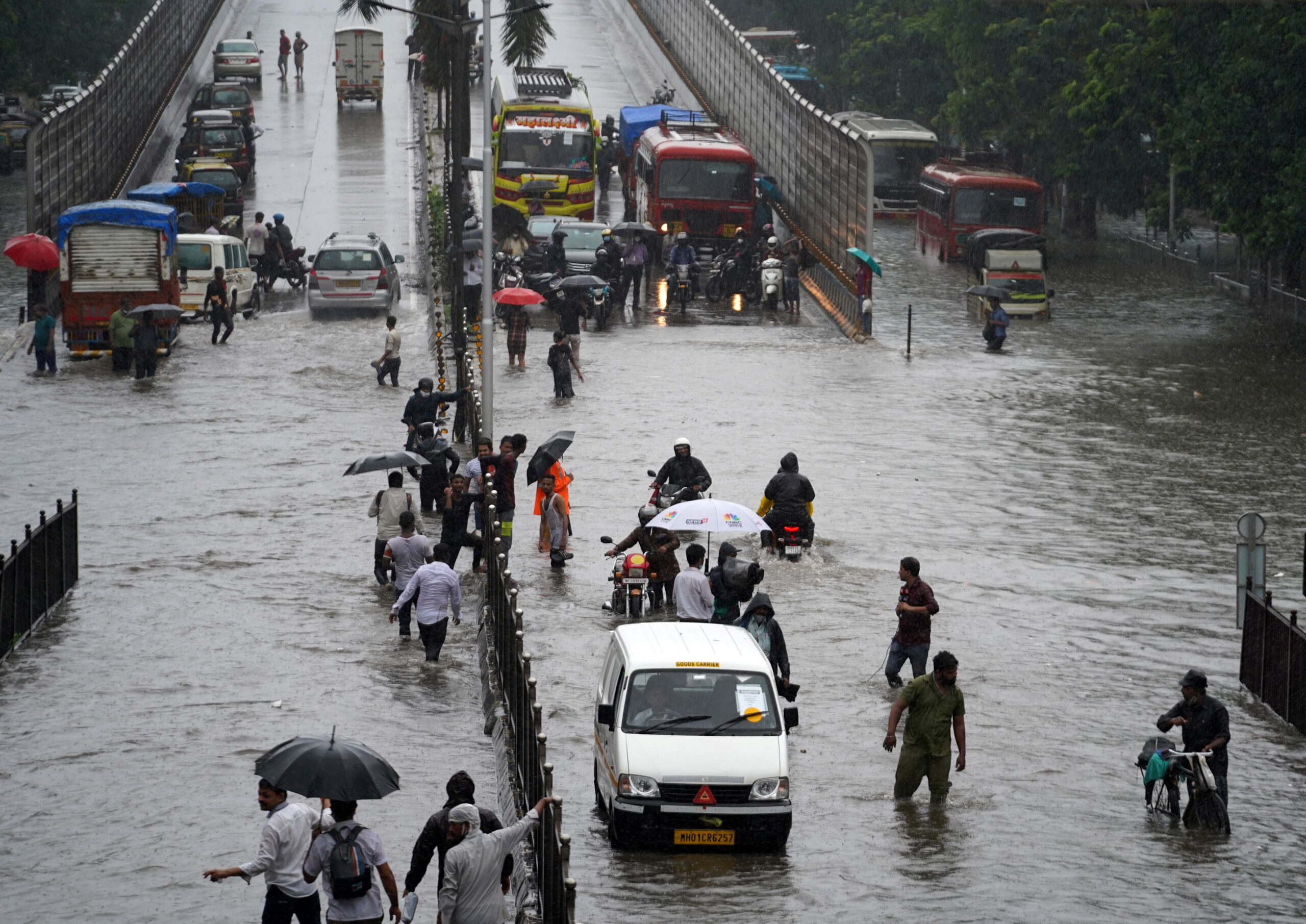
In an unusually swift advance, the southwest monsoon has covered nearly all of Gujarat within just two days, well ahead of its typical pace. The India Meteorological Department (IMD) confirmed the widespread arrival of monsoon rains across the state, with southern and coastal areas receiving showers by June 16—only a day after the average onset date of June 15.
On Tuesday, the monsoon extended to nearly the entire state, barring the northernmost parts of Banaskantha. Typically, full monsoon coverage over Gujarat is expected around June 30. This early arrival is attributed to an active monsoon trough and a low-pressure system developing over the North Arabian Sea and surrounding regions. Meteorologists and climate experts suggest that the accelerated monsoon spread may be linked to broader climate variability and shifting rainfall patterns.
According to the IMD’s latest bulletin, the southwest monsoon also advanced across parts of Vidarbha, Madhya Pradesh, Chhattisgarh, Odisha, Jharkhand, West Bengal, and parts of Bihar. The northern limit of the monsoon currently passes through Deesa, Indore, Panchmarhi, Mandla, Ambikapur, Hazaribagh, and Supaul. While the early rains are expected to benefit agriculture and water storage, they also bring increased flood risks in low-lying areas.
On Tuesday alone, 208 out of 252 talukas in Gujarat recorded rainfall of at least 1mm, according to data from the State Emergency Operations Centre (SEOC). Barwala in Botad reported the highest rainfall at 191mm, followed by 160mm in Sayla (Surendranagar), 138mm in Botad, 135mm in Muli (Surendranagar), and 128mm in Jodiya (Jamnagar). In total, eight talukas received more than 100mm of rainfall, and 22 others received over 50mm.
This widespread and intense rainfall significantly cooled the state. Ahmedabad recorded a maximum temperature of 27.6°C on Tuesday—an unusual dip of 10.6°C below the seasonal norm. The city’s minimum temperature stood at 25.5°C, which is 1.9°C lower than average. IMD forecasts predict a rise in maximum temperature to around 32°C on Wednesday.
Disaster management teams and civic bodies have been placed on alert, especially in districts forecast to receive very heavy rainfall. Urban planners are urging municipal bodies to prepare for the dual challenges of waterlogging and potential health concerns, as seen in the disrupted crash site recovery operations in Ahmedabad following recent downpours.