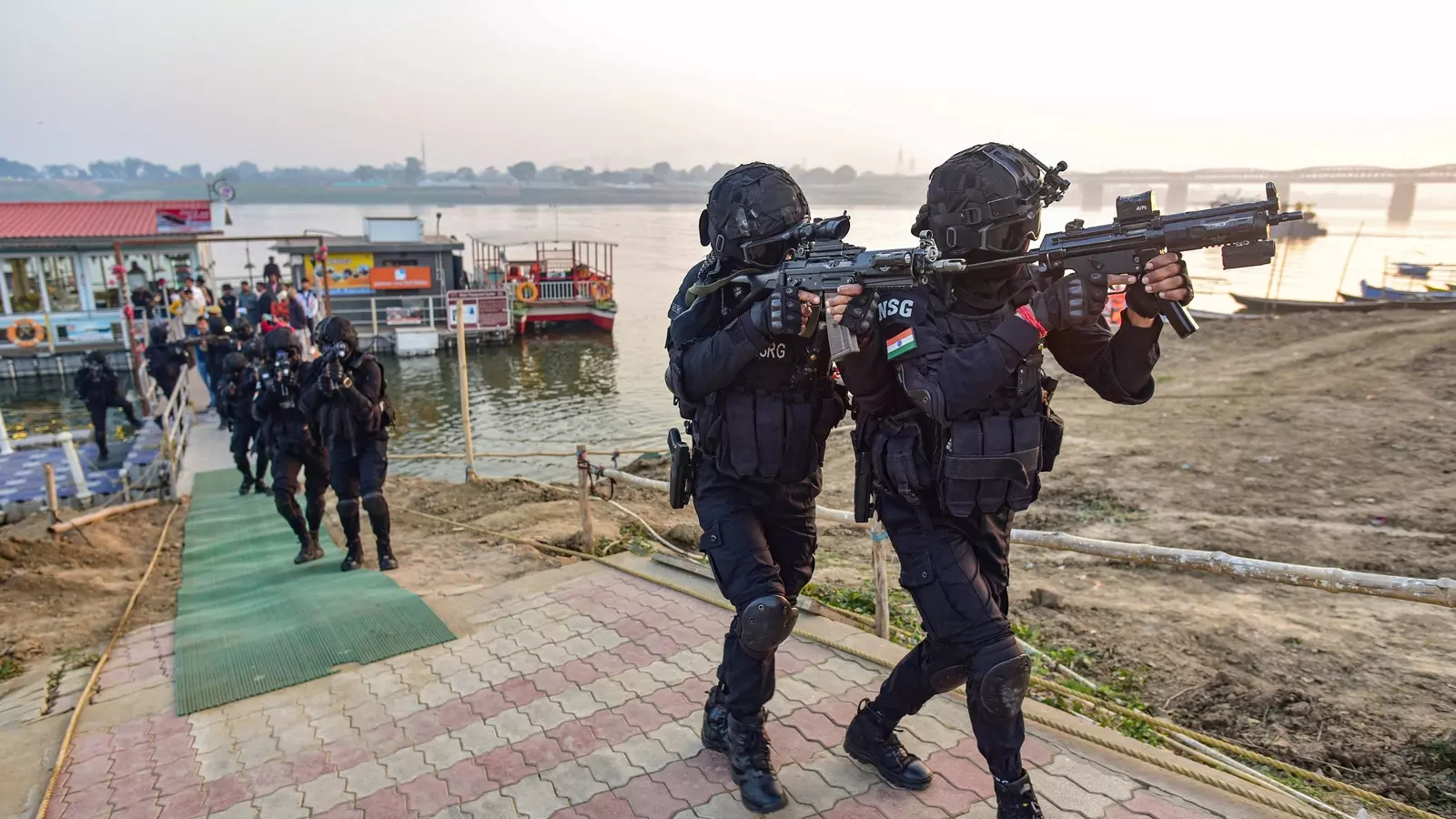
The Maharashtra government will carry out synchronised mock drills across eight key districts, including Mumbai, this week.
The large-scale exercise, scheduled for Wednesday at 4 pm, aims to simulate emergency scenarios and improve civilian responses to war-like or disaster situations. The drills—organised in close coordination with the Union Ministry of Home Affairs—are part of a broader national strategy to boost on-ground readiness in the face of modern security and climate-related threats. The upcoming operation is being led by the state’s civil defence and law enforcement units, with inputs from central security agencies, atomic energy departments, and maritime authorities.
The largest of these exercises will be staged at Cross Maidan in Mumbai, a centrally located open ground expected to draw significant public attention. Additional key urban and strategic sites, including the Gateway of India, Chhatrapati Shivaji Maharaj Terminus, Shivaji Park, and the Bhabha Atomic Research Centre, will also host drills aimed at testing emergency protocols and educating citizens. State officials confirmed that Mumbai’s suburbs will be equally involved, along with other districts such as Palghar, Thane, Pune, Nashik, Ratnagiri, and Sindhudurg. In coastal and high-risk zones, the exercises will feature simulated power blackouts, warning sirens, and civil defence interventions that train residents in basic survival tactics.
Civil defence authorities explained that the drills will begin with audible sirens to signal a mock emergency. Residents will be guided through real-time instructions on seeking safe shelters, minimising exposure to hazards, and supporting emergency personnel. “We aim to build a culture of readiness,” said a senior civil defence official. “Volunteers will be deployed to teach citizens how to take cover, avoid panic, and respond smartly during crises. Hospitals, too, are being sensitised and briefed for participation.” The decision to conduct such a broad-based mock drill stems from the need to recalibrate civil defence operations in urban areas that have seen rapid demographic expansion and increased infrastructure vulnerability. Mumbai, as a megacity, faces unique challenges in crisis response—ranging from dense urban sprawl to legacy infrastructure that may be ill-equipped for evacuation or disaster response on short notice.
Apart from cities, the drills will also cover industrial and atomic sites such as the Tarapur Atomic Power Station in Palghar district. State police and railway protection forces have already begun rehearsals to ensure a coordinated response during the final event. In Thane, mock drills are set to take place in Kalyan, a major suburban transit hub. In Ratnagiri, the drills will be conducted across government buildings, jetties, and port areas, with participation from fisheries, maritime, customs, and coast guard departments. Meanwhile, in Sindhudurg district—an ecologically sensitive coastal region—the mock scenario includes a complete power outage, mimicking the kind of disruption caused by natural disasters or targeted attacks. “Our aim is to evaluate not only institutional preparedness but also citizen responsiveness,” noted an official from the local administration.
While the primary focus of the drill is on preparedness in wartime scenarios, officials noted that the same protocols are often applicable during climate-induced disasters such as cyclones, floods, or earthquakes. By making civil defence more visible and participatory, the administration is hoping to integrate public safety more seamlessly into the daily consciousness of residents. In a city like Mumbai, where infrastructure faces constant pressure from both human and environmental challenges, public drills offer an opportunity to stress-test urban systems. These include power grids, transport networks, healthcare facilities, and emergency communications.
Moreover, from the lens of sustainable urban development, such exercises play a critical role in reducing long-term vulnerability and ensuring inclusive safety. They also underscore the importance of equitable preparedness, where all citizens—irrespective of socio-economic status—are given the tools and information they need to survive and assist during emergencies. Urban planners and disaster resilience experts have long argued that megacities like Mumbai need periodic evaluations of their emergency response systems. “As climate risks grow and security concerns evolve, Indian cities must adopt a whole-of-society approach to preparedness,” said an urban policy expert tracking disaster mitigation efforts.
Involving schools, residential colonies, transport hubs, and workplaces in such drills ensures the message of readiness is uniformly distributed. A senior official from the disaster management authority confirmed that these drills will be followed by audits and reviews, with gaps identified and addressed for future readiness. The emphasis on community participation also ties into broader goals of sustainable development. Training volunteers, improving hospital emergency departments, and enhancing communication between various departments can lead to more efficient, decentralised, and eco-friendly responses during actual events. By replacing panic with practice, Maharashtra’s civil defence machinery is working to instil a proactive civic culture.
Although some citizens may perceive mock drills as disruptions, officials urged public cooperation, stating that even short simulations can save lives in real emergencies. “This is not just a drill,” one official said. “It’s an investment in the collective safety of our people.” As India grapples with the dual challenge of growing urbanisation and emerging risks—be it from security threats, extreme weather events, or infrastructure failures—initiatives like these represent a vital step towards creating safer, smarter, and more sustainable cities.
The Wednesday drills are expected to last under two hours but could leave a lasting impact on how citizens view public safety. For a city like Mumbai, whose resilience is often tested by monsoons, infrastructure strain, and large crowds, this coordinated simulation marks a turning point in civil defence strategy—moving from reactive to proactive engagement. While officials declined to specify the next round of drills, they hinted that more such exercises may soon be conducted in other urban and industrial clusters across the state.
Mock Drill Set for Eight Districts Across Maharashtra