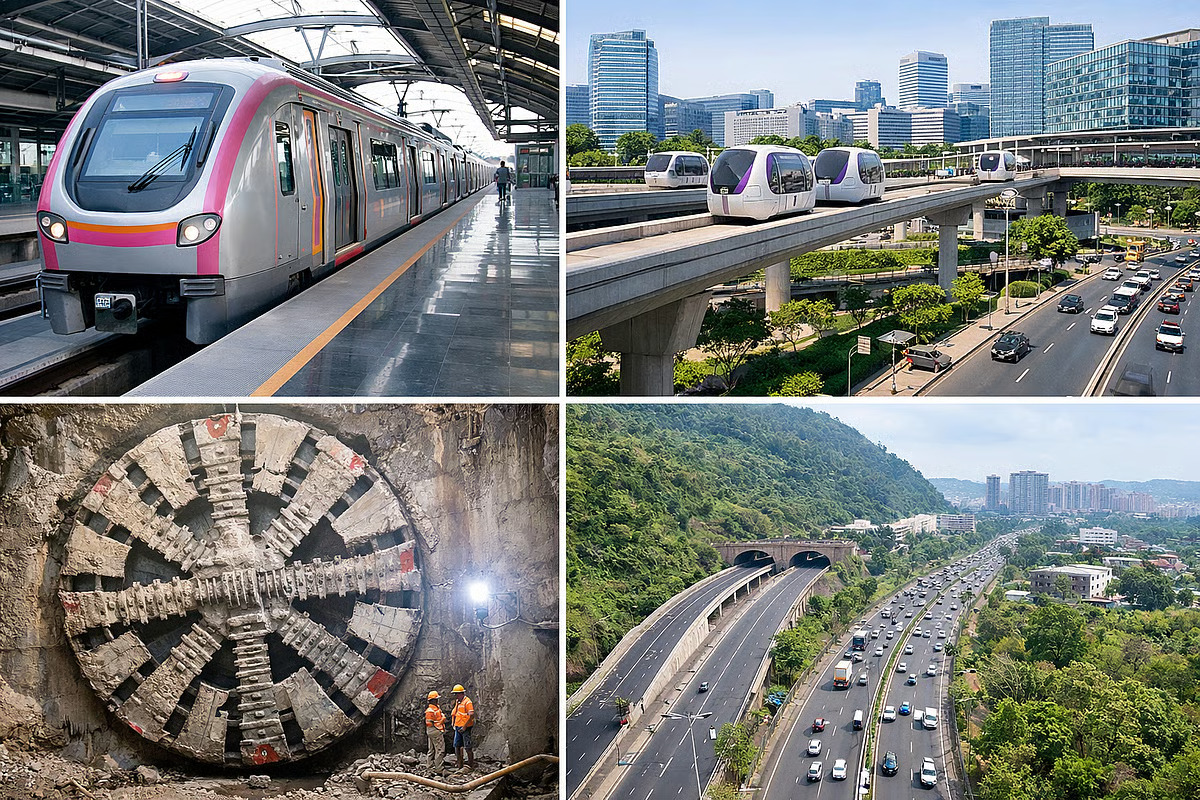
The Mumbai Metropolitan Region Development Authority is preparing to initiate a cluster of large-scale transport interventions across the metropolitan region, marking a coordinated push to upgrade mobility systems in one of India’s most densely populated urban corridors. Scheduled to be rolled out simultaneously, the projects span metro rail expansion, underground connectivity, and emerging last-mile transport solutions.
At the centre of this rollout is the expansion of Mumbai’s metro network, with key corridors under Mumbai Metro set to become operational in phases. These lines are expected to strengthen both east–west and north–south travel links, addressing long-standing connectivity gaps between residential suburbs and commercial districts. Urban mobility experts note that such network integration is essential to reduce dependence on private vehicles and ease pressure on arterial roads. In parallel, the authority is advancing a pilot for a pod-based transit system within Bandra Kurla Complex, a high-density commercial hub that routinely faces traffic congestion. The system, designed as an automated, low-capacity transit mode, is intended to provide efficient last-mile connectivity. If executed effectively, it could signal a shift towards diversified urban mobility options that complement mass transit rather than compete with it.
Another significant component is the commencement of tunnelling work to improve cross-city connectivity between key suburban zones. The proposed underground link is expected to reduce travel time across currently congested routes, where commuters often face long detours due to limited direct corridors. Infrastructure planners highlight that such tunnel projects, though capital-intensive, can unlock substantial economic value by improving access and reducing travel inefficiencies. Taken together, these initiatives reflect a broader strategy to modernise transport infrastructure across the Mumbai Metropolitan Region. By combining high-capacity metro systems with targeted last-mile solutions and strategic road connectivity upgrades, planners aim to create a more balanced and resilient urban transport ecosystem.
From a sustainability standpoint, the emphasis on rail-based transit and shared mobility aligns with efforts to lower emissions in a city grappling with air quality concerns and rising vehicle ownership. Experts suggest that expanding public transport capacity is one of the most effective ways to move towards low-carbon urban growth, particularly in megacities. However, the success of such large-scale rollouts will depend on execution timelines, inter-agency coordination, and commuter adoption. Past infrastructure projects in the region have faced delays due to land acquisition, technical complexities, and funding challenges. Ensuring timely delivery will be crucial to maintaining public confidence.
As Mumbai continues to evolve, the upcoming set of projects signals an attempt to move beyond piecemeal development towards integrated mobility planning. If implemented effectively, these interventions could reshape daily commuting patterns and support a more efficient, inclusive, and environmentally conscious urban future.
MMRDA To Roll Out Four Major Transport Projects