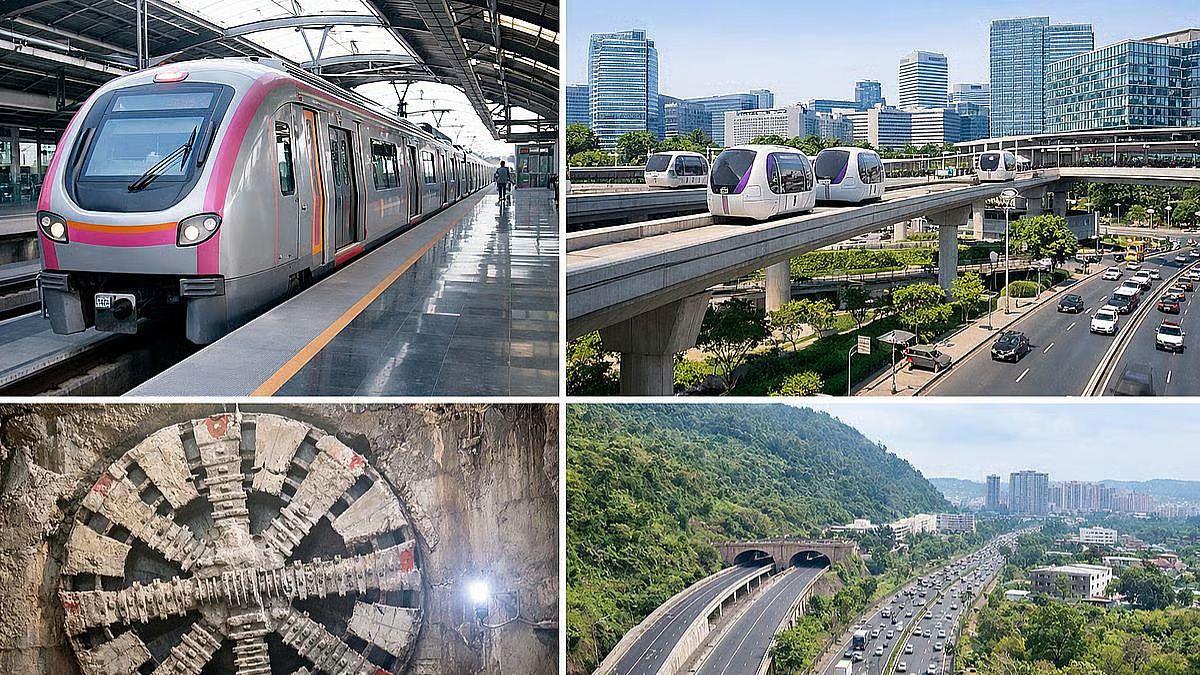
A coordinated rollout of metro corridors and new mobility projects across the Mumbai Metropolitan Region is set to accelerate urban connectivity, with multiple transport systems entering operational and construction phases simultaneously. The development marks a significant step in strengthening high-capacity public transport and reducing dependence on road-based commuting in one of India’s most congested urban regions.
Authorities are preparing to open two new metro stretches covering over 10 km, alongside initiating groundwork for a major underground road link and a driverless pod-based transit system. Together, these projects are expected to reshape commuting patterns across eastern suburbs, peripheral growth centres, and key commercial districts. The first set of operational additions includes new sections of elevated metro corridors that improve east–west and north–south linkages. One corridor connects dense residential pockets in the eastern suburbs, where commuters have historically relied on overcrowded road networks. The second line extends rapid transit access towards the fast-growing Mira-Bhayandar belt, offering a more reliable alternative to suburban rail and arterial highways.
Urban planners point out that such metro expansion is essential for balancing growth between the island city and its extended metropolitan region. Improved rail-based connectivity not only reduces travel time but also supports transit-oriented development, enabling more compact, mixed-use neighbourhoods that lower carbon emissions over time. Alongside metro operations, groundwork is set to begin on a critical underground road tunnel linking Thane and Borivali. The project is expected to cut cross-city travel time drastically, particularly for east–west trips that currently require long detours through congested corridors. Designed with twin tunnels and dedicated safety infrastructure, the link is being positioned as a strategic intervention to ease pressure on surface roads while maintaining traffic resilience.
However, mobility experts caution that road infrastructure must be balanced with sustainable transport priorities. While tunnels can decongest specific routes, their long-term impact depends on integrating them with public transport systems and demand management strategies. In the city’s primary business district, plans are also advancing for a pod taxi system aimed at improving last-mile connectivity. The proposed network will link major transit nodes with commercial hubs, offering a low-emission alternative for short-distance travel. With small automated vehicles operating at high frequency, the system is expected to reduce reliance on private vehicles and intermediate transport modes.
The broader significance of this multi-project push lies in its attempt to address mobility gaps across different scales—from regional commuting to neighbourhood-level access. Infrastructure experts highlight that synchronising metro expansion with last-mile systems and strategic road links is critical to achieving a more efficient and inclusive urban transport ecosystem. As these projects move from planning to execution, their success will depend on seamless integration, affordability, and sustained policy focus on clean mobility. For Mumbai’s expanding metropolitan region, the coming months will be crucial in determining whether these investments translate into tangible improvements in daily commuting and urban liveability.
MMRDA To Open Metro Lines Launch Tunnel And Pod Taxi Projects