


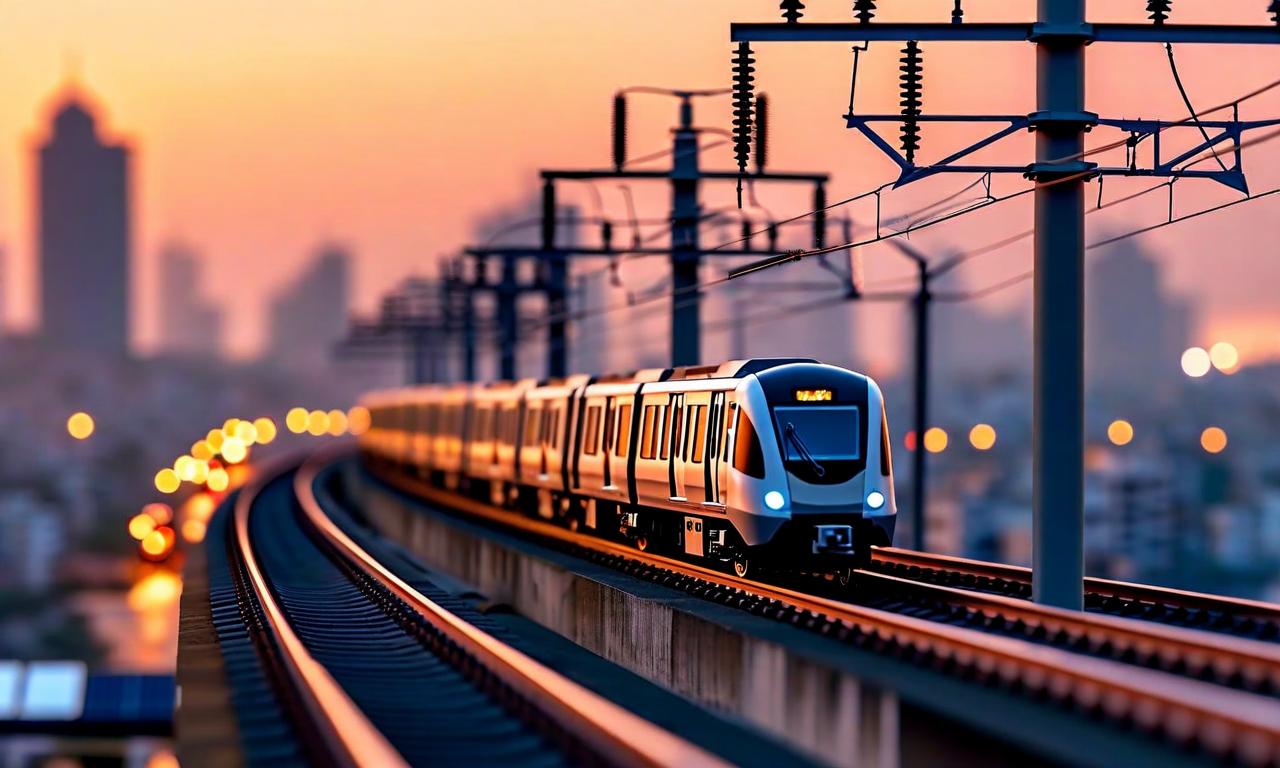
Mumbai Metropolitan Region Development Authority (MMRDA) has deposited INR 560.21 crore with the Bombay High Court in partial compliance with an arbitration award related to Metro Line 1. The settlement, directed by the Supreme Court, marks a turning point in the prolonged legal and financial dispute with Mumbai Metro One Private Limited (MMOPL), the operator of the Versova-Andheri-Ghatkopar corridor.
MMOPL, a public-private joint venture in which Reliance Infrastructure holds 74 percent and MMRDA retains 26 percent, had initiated arbitration proceedings following a sharp escalation in project costs. Originally estimated at INR 2,356 crore, the project cost soared to INR 4,321 crore. The subsequent dispute led to an arbitration tribunal awarding INR 992 crore to MMOPL in August 2023. With interest accrued until May 2025, the total award stood at INR 1,169 crore. While the Bombay High Court initially directed MMRDA to deposit the entire amount by July 15, the authority approached the Supreme Court through a Special Leave Petition. The apex court permitted a 50 percent deposit as an interim measure, allowing the legal proceedings to continue. Accordingly, MMRDA transferred INR 560.21 crore to the High Court registry.
MMOPL confirmed the receipt of the deposit in a regulatory disclosure. The arbitration stems from the inherent complexity of executing large-scale infrastructure under the public-private partnership (PPP) model. Sector experts suggest that the resolution could set a critical precedent for similar disputes, particularly in urban transportation where cost escalations are frequent and contract terms often contentious. The Versova-Andheri-Ghatkopar corridor, Mumbai’s first metro line, was envisioned to provide rapid, sustainable transit to over 4 lakh commuters daily. However, cost overruns and operational disagreements strained the relationship between the stakeholders. With the arbitration award in motion and partial compliance underway, the dispute highlights the need for robust, transparent risk-sharing frameworks in PPP ventures.
Officials indicate that while the legal matter is yet to be resolved entirely, the current compliance reflects institutional respect for arbitration mechanisms. Moreover, the financial implications of such settlements will likely shape how future metro projects are structured across urban India. As Mumbai continues to expand its metro footprint, the resolution of the Metro Line 1 arbitration case serves as a reminder of the evolving legal architecture supporting India’s infrastructure ambitions. The outcome of this case could influence investor confidence and recalibrate risk allocation in similar large-scale public-private infrastructure undertakings.
Also Read : Mumbai Western Railway Locals To Install Kavach Safety System by 2026
