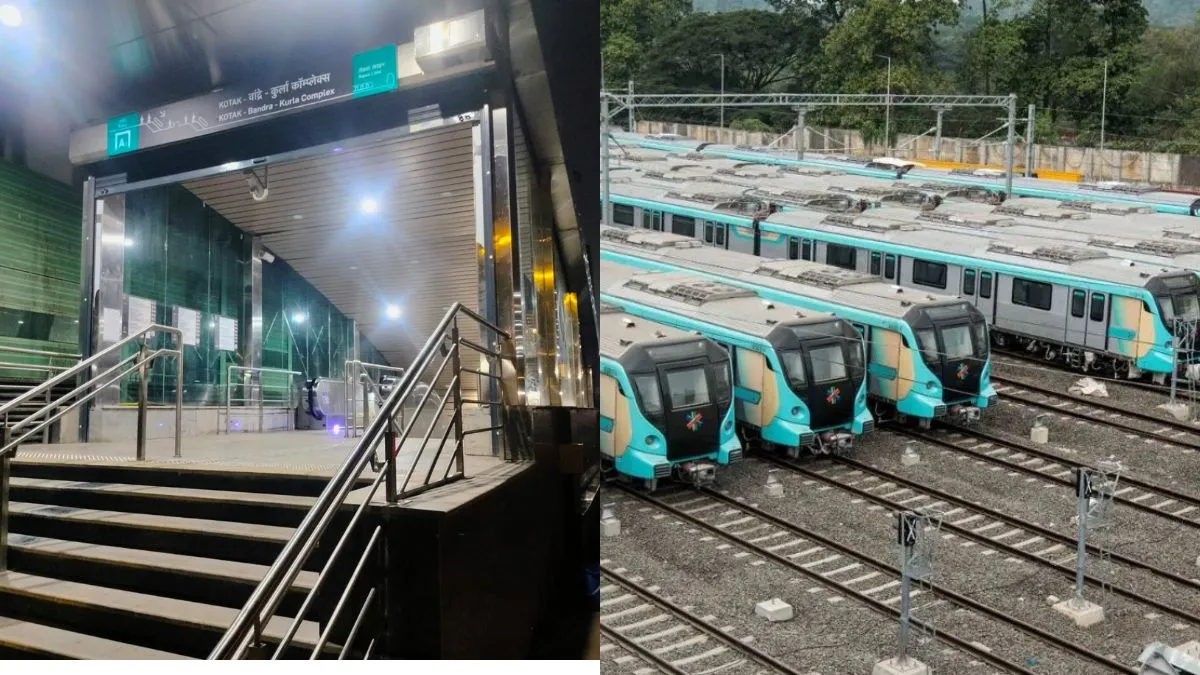
Mumbai is preparing to open two significant metro stretches by the end of December, marking another step toward strengthening the city’s high-capacity public transport network. Officials from the metropolitan development authority indicated that portions of Metro Line 9 and Metro Line 2B are nearly ready for commissioning, with safety clearances expected ahead of the proposed 31 December rollout.
The sections under consideration include the Dahisar East–Kashigaon stretch of Line 9 and the Diamond Garden–Mandale segment of Line 2B. Both corridors form part of the first operational phases of their larger lines and are seen as crucial connectors for commuters in Mumbai’s northern and eastern suburbs. A senior official said clearance from the Commissioner of Metro Rail Safety is in its final stages, noting that the timing aligns with ongoing preparations for local body elections. Metro Line 9, an elevated extension of the existing Line 7 between Dahisar East and Mira-Bhayandar, spans around 13.5 kilometres and is designed to ease pressure on the city’s overburdened road corridors. The upcoming stretch includes key stations such as Pandurang Wadi, Miragaon, Kashigaon, Sai Baba Nagar, and nodes near civic and commercial hubs. The segment is expected to provide improved first- and last-mile integration, which experts say is essential for shifting commuters away from private vehicles.
Line 2B, on the other hand, forms part of the broader east–west connectivity plan meant to enhance mobility between the eastern waterfront and the western suburbs. Urban planners have long argued that east–west corridors are vital for reducing carbon-intensive travel patterns in Mumbai, where large residential zones lie far from employment hubs. By enabling smoother cross-city movement, the line is projected to lower commute times while supporting a more equitable distribution of public transport access. Officials involved in the project said the nearing launch reflects sustained efforts to accelerate metro development following earlier delays linked to land acquisition, utility shifting, and construction bottlenecks. They noted that completing even partial stretches helps familiarise citizens with the network and generates confidence in the broader system’s rollout.
Infrastructure specialists believe that the phased commissioning of corridors is critical to Mumbai’s long-term transport sustainability. With the city aiming to reduce traffic congestion, emissions, and dependence on private vehicles, the metro network is positioned as a backbone of low-carbon mobility. “Every operational link contributes to a more reliable, inclusive public transport grid,” an industry expert said, emphasising that metro lines help bridge mobility gaps for low-income and peripheral communities. As Mumbai prepares for the year-end opening, officials say priority remains on ensuring safety compliance and operational readiness. For commuters, the new stretches promise shorter, cleaner, and more predictable journeys—an essential requirement for building a resilient and climate-friendly metropolitan region.
MMRDA Set To Open Metro Line 2B And Line 9 On December 31