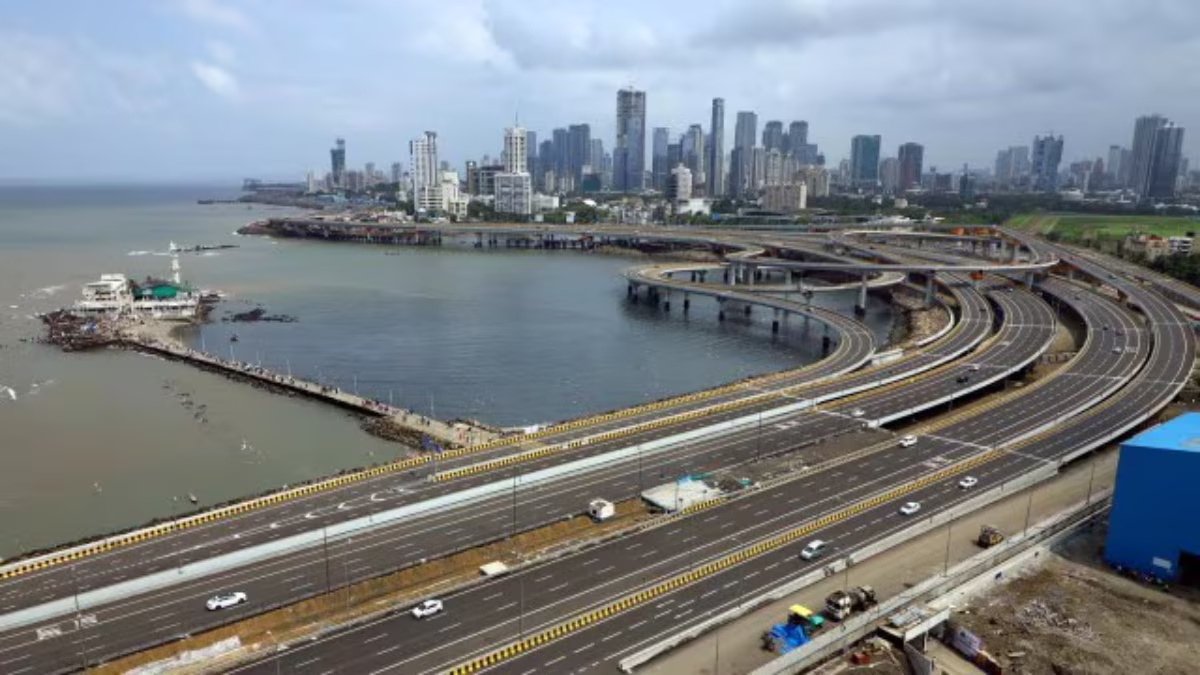
Maharashtra has moved a step closer to reshaping the Mumbai metropolitan region with cabinet approval for a land acquisition and allocation framework to build a large, planned urban centre between the Mumbai Trans Harbour Link and the upcoming Navi Mumbai International Airport. The decision signals a shift towards decentralising growth from the island city while attempting to manage future population, employment and infrastructure pressures more systematically.
The policy enables a regional development authority to plan and distribute nearly 200 sq km of land within the influence zone of the sea link. Urban planners say this area—strategically positioned between a major port corridor, airport infrastructure and new highways—offers one of the last opportunities to design a metropolitan district before unplanned sprawl takes root. The move is intended to provide regulatory clarity, speed up project approvals and reduce disputes that have historically delayed large infrastructure-led developments. Conceptually referred to by policymakers as the Third Mumbai city, the proposed urban district is expected to accommodate new economic clusters rather than replicate the high-density residential patterns of older Mumbai. Planning documents indicate a mix of institutional zones, health and research campuses, data infrastructure, logistics parks and a central business district modelled on existing financial hubs. Officials involved in the process say this diversification is aimed at spreading employment closer to where people live, lowering long-distance commuting and reducing pressure on suburban rail networks.
Sustainability has been positioned as a core planning parameter. Large green buffers, water-sensitive urban design and integrated public transport corridors are expected to be embedded at the master-planning stage. Transport experts note that aligning land use with metro, road and airport connectivity from the outset could significantly cut future carbon intensity compared to retrofitting existing neighbourhoods. The proximity to the sea link also raises expectations of freight and passenger traffic shifting away from congested city roads. Economically, the project is being framed as a long-term growth engine for the state, with internal assessments linking the new urban node to higher investment inflows, expanded services exports and manufacturing support functions. Industry analysts caution, however, that success will depend on phasing, governance capacity and the ability to keep housing affordable for service workers, not just high-value commercial tenants.
The Third Mumbai city proposal also intersects with broader questions of equity and resilience. Urban researchers point out that careful rehabilitation planning, gender-neutral public spaces and accessible social infrastructure will determine whether the new district becomes inclusive or exclusionary. As detailed planning begins, attention will turn to how transparently land is allocated and how quickly essential services follow construction activity. For the Mumbai region, the approval marks the start of a long urban experiment—one that could redefine how India’s largest metropolitan economy grows beyond its historic core.
MMRDA Plans New City Near Atal Setu