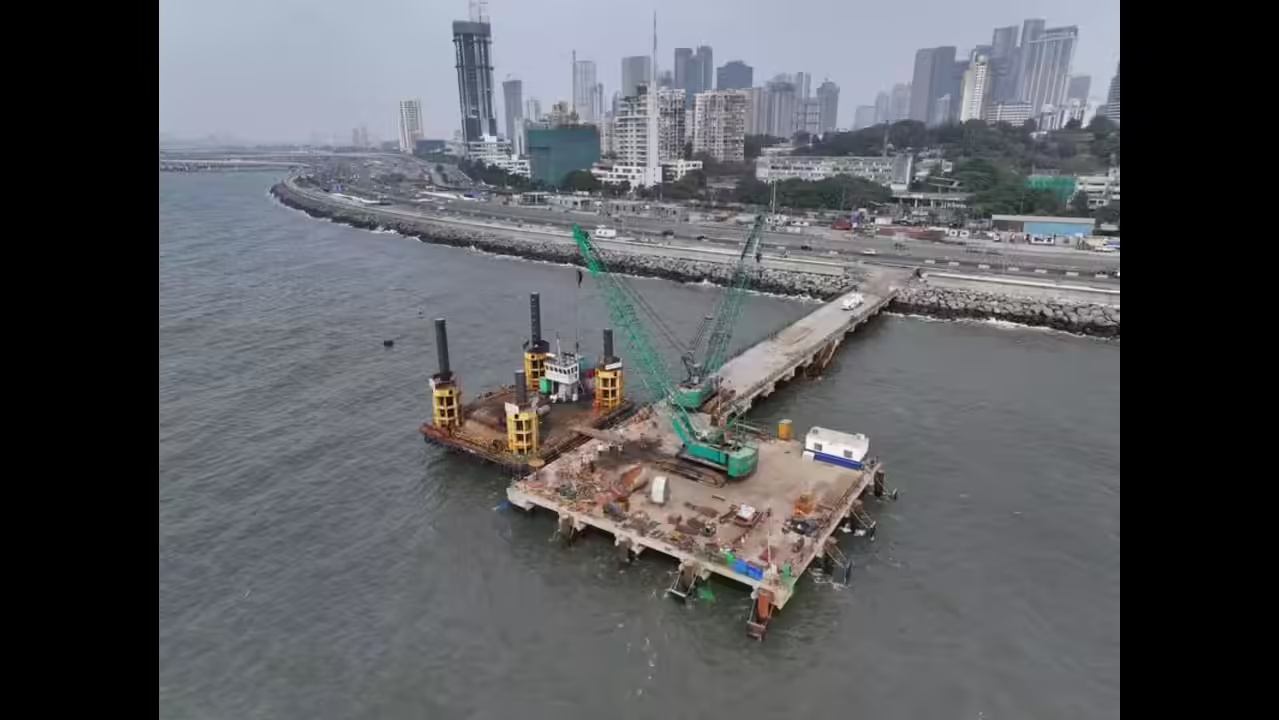
The Bombay High Court has ruled that the Mumbai Metropolitan Region Development Authority (MMRDA) cannot unilaterally offer Transferable Development Rights (TDR) as compensation for land acquired for public infrastructure, mandating monetary payment instead. The directive affects a Kurla resident whose 630-square-metre property was acquired over a decade ago for the Santacruz-Chembur Link Road expansion.
The ruling underscores the legal boundaries surrounding compensation frameworks in urban infrastructure projects. While TDR has become a common tool to offset acquisition costs, the bench clarified that statutory provisions under the Mumbai Metropolitan Region Development Authority Act, 1974, do not permit such imposition without mutual consent between the state and the landowner. A division bench observed that while TDR may be considered if both parties explicitly agree, the state cannot enforce it as the sole form of compensation. In this instance, MMRDA had initially acquired the land in December 2012 and subsequently issued an award granting TDR. The landowners had consistently requested monetary compensation, which the authority denied, citing statutory constraints.
“The statutory language of Section 35 clearly envisages financial compensation calculated as per defined formulas, leaving no room for unilateral alternatives,” a senior legal analyst noted. This decision reiterates the primacy of monetary compensation in acquisitions under the MMRDA Act and aligns with precedents established under the erstwhile MRTP Act, where courts have rejected compulsory TDR in favour of cash payments. Industry experts say the ruling carries broader implications for urban infrastructure agencies in Mumbai. With multiple road widening, metro, and redevelopment projects underway, authorities often rely on TDR to reduce upfront fiscal outlays. Legal clarity now reinforces that consent and transparent negotiation are essential before offering non-monetary compensation.
Urban planners also highlight the human dimension: “Monetary compensation ensures that landowners retain flexibility and security, especially in high-density urban areas where TDR utilisation can be uncertain or delayed,” an urban development consultant explained. The court has directed MMRDA to determine the payable monetary compensation within six months, ensuring timely restitution for the landowners. Observers suggest the decision could encourage a more standardised and predictable approach to land acquisition, which is critical for public infrastructure efficiency, investor confidence, and community trust in the city’s growth processes.
As Mumbai continues to expand transport and connectivity projects, adherence to legal frameworks in compensation will remain central to sustainable urban development and equitable growth, balancing civic needs with property rights.
MMRDA Ordered To Pay Cash Instead Of TDR