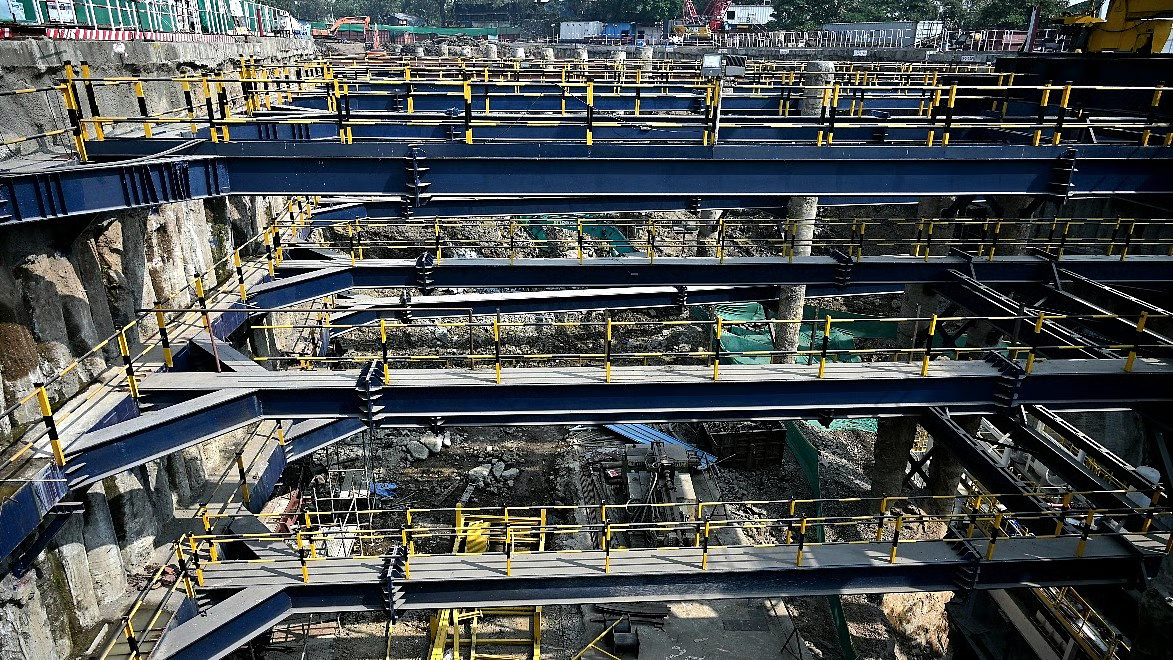
Mumbai has begun full-scale tunnelling for what is expected to be one of India’s most complex underground road projects, linking Orange Gate on the Eastern Freeway to Marine Drive. The 9.96-kilometre corridor, overseen by the Mumbai Metropolitan Region Development Authority (MMRDA), marks a significant shift towards creating a more efficient and less surface-disruptive mobility network for the city’s dense southern precincts.
Officials explained that the corridor includes nearly seven kilometres of deep tunnelling, designed to negotiate coastal geology, zones with heavy water ingress and sensitive heritage districts. The project’s engineering ambition is being positioned as a critical step in reshaping east–west connectivity in South Mumbai, an area long constrained by limited road width, high population density and heritage-protected structures. A refurbished slurry-shield Tunnel Boring Machine (TBM), manufactured under original equipment supervision, has been deployed for the excavation. With a cutterhead diameter of over 12 metres and a length of more than 80 metres, the equipment is similar to the high-precision systems used for the Mumbai Coastal Road tunnels. According to technical teams, the TBM is calibrated to function at depths ranging from 12 metres to over 50 metres, navigating beneath high-rise clusters, historic buildings and two major railway corridors, as well as passing under the Mumbai Metro Line 3 alignment.
The tunnel design includes two traffic lanes and a dedicated emergency lane in each tube, supported by a comprehensive safety framework. Cross passages at regular intervals, modern ventilation systems and an Intelligent Transport System (ITS) are being incorporated to ensure high safety standards and optimise vehicle movement. MMRDA said these measures are intended to promote reliability while reducing long-term operational emissions through smoother travel patterns. Project data indicates that physical progress stands at around 14 per cent, with the overall budget estimated at ₹8,056 crore and a targeted completion period of 54 months. Urban mobility experts believe that once operational, the tunnel could shorten commutes by up to 20 minutes and substantially reduce fuel consumption across private and commercial vehicle segments. They emphasise that improved underground connectivity also helps preserve surface space for pedestrian movement, public transit and green infrastructure—elements essential for future low-carbon city planning.
Officials added that the corridor will connect seamlessly with the Coastal Road network and the Mumbai Trans Harbour Link (MTHL), forming part of a larger integrated mobility grid. They view the tunnelling initiative as an opportunity to shift Mumbai towards a more environmentally responsible infrastructure model, reducing the cumulative impact of road construction on heritage zones and liveability. Urban planners observing the project noted that its long-term value will depend on how effectively it supports cleaner, safer and more inclusive mobility choices. While the tunnel will improve vehicle flow, experts stress that such megaprojects must align with broader goals around equity, air quality and climate resilience. If implemented as part of a balanced mobility strategy, they say the corridor could contribute to a more accessible, less congested and more sustainable South Mumbai.
MMRDA Launches Major Tunnelling Drive For Mumbai’s Deepest Road Tunnel Near Orange Gate